





A glowing iceberg at night is one of the most captivating and mysterious sights found in the polar regions. These unusual ice formations appear to emit an ethereal light in shades of blue, green, or even turquoise, transforming the surrounding darkness into a surreal landscape. While these glowing icebergs look like something from a science fiction film, the phenomenon is rooted in real scientific processes. Their beauty and rarity have made them a popular subject among photographers, researchers, and travelers seeking extraordinary natural wonders.
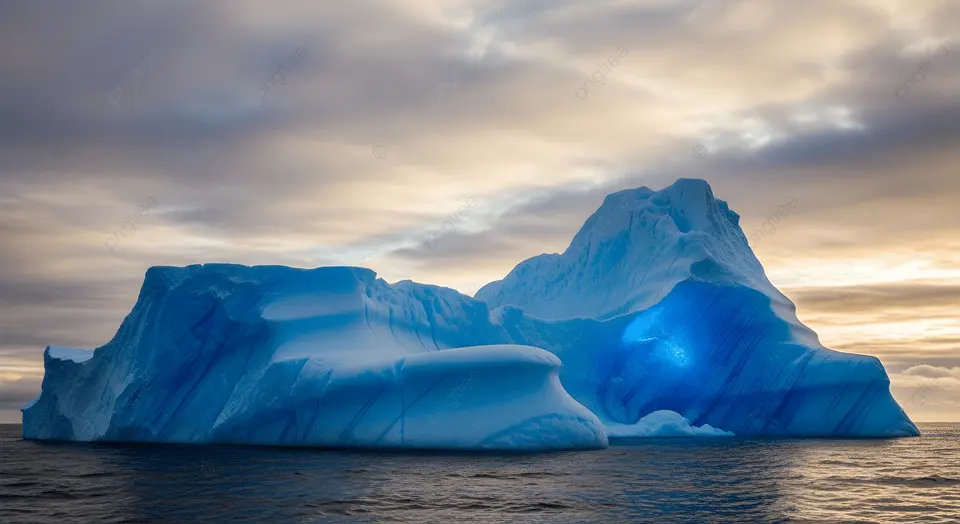
The glowing effect often comes from the unique way ice interacts with light. Icebergs are formed from layers of compacted snow that have been compressed over thousands of years. When ice becomes extremely dense, it absorbs longer wavelengths of light such as red and yellow while scattering shorter wavelengths like blue. This selective scattering creates the stunning blue glow that is commonly seen in glacial ice. At night, when the surrounding environment is darker, this glow becomes more intense and visible, especially when moonlight or faint ambient light passes through the iceberg.
Another factor that contributes to the glowing effect is the presence of impurities or trapped materials within the ice. Some icebergs contain algae, minerals, or sediments that create streaks of color. When light penetrates these layers, it can produce green, turquoise, or teal hues that make the iceberg look illuminated from within. In certain cases, icy cracks or layers reflect and refract the available light in complex ways, enhancing the glowing appearance. These patterns form naturally as icebergs travel through ocean currents and are shaped by weather, wind, and temperature changes.
Bioluminescence can also play a role in the glow of some icebergs. In waters where bioluminescent plankton is abundant, waves crashing against the iceberg can create sparkling blue light that appears to dance around the ice. While the iceberg itself is not glowing from within in these situations, the surrounding water creates an illusion of radiance. This combination of glowing water and reflective ice can make the entire structure look alive. Bioluminescent events tend to be more common during warmer months, although they can occur in colder regions when conditions are right.
From an environmental standpoint, glowing icebergs can provide valuable information about the health of polar ecosystems. Their color, clarity, and layers can reveal clues about past climate conditions. Scientists often study ice cores and iceberg fragments to understand changes in temperature, precipitation, and atmospheric composition over long periods. The rare glowing formations remind us of the complexity and fragility of the polar environment. As global temperatures rise, iceberg calving becomes more frequent, and the characteristics of these icy giants may change.
Glowing icebergs also hold cultural and visual significance. Photographers and adventurers travel to remote locations such as Antarctica, Greenland, and the Arctic coastline in hopes of witnessing this rare spectacle. Nighttime photography of glowing ice requires skill because the light source is subtle and unpredictable. Yet the results are breathtaking. The contrast between the dark sky and the luminous blue ice creates images that capture the awe of nature’s hidden beauty.
For travelers, encountering a glowing iceberg is a moment that feels almost otherworldly. The sight of a massive ice structure shining quietly in the dark ocean is both serene and powerful. However, such experiences also highlight the importance of protecting the polar regions. Melting ice not only affects global sea levels but also impacts wildlife and local ecosystems. Preserving these environments ensures that future generations will still have the chance to witness rare wonders like glowing icebergs at night.
While glowing icebergs may seem like magical creations, they are a combination of science, time, and natural forces. They stand as a reminder that even in the coldest and darkest corners of the planet, nature continues to produce beauty beyond imagination. Their glow is subtle yet unforgettable, making them one of the most mesmerizing phenomena on Earth.
