




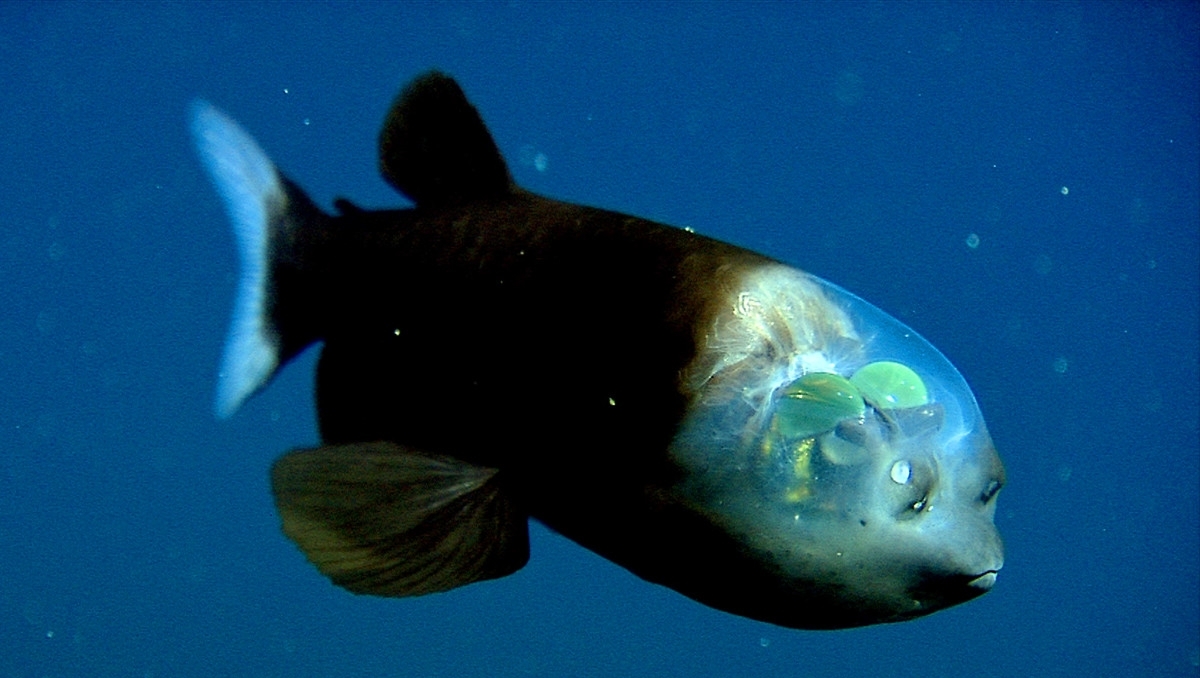
The barreleye fish is one of the most unusual and fascinating creatures in the deep ocean. Known for its transparent head and upward facing tubular eyes, this deep sea fish challenges everything we think we know about marine life. Its strange appearance, rare sightings, and unique adaptations make it a favorite topic among ocean researchers and fans of deep sea mysteries.
This SEO content explores what makes the barreleye fish so extraordinary, how its transparent head works, and why it has become a symbol of the wonders still hidden in the darkest parts of the ocean.
What Is the Barreleye Fish
The barreleye fish, also known as Macropinna microstoma, is a deep sea species that lives at depths of around 600 to 800 meters. These depths are dark, cold, and under high pressure. Over millions of years, the barreleye fish has developed one of the most bizarre adaptations found in nature.
Its most famous feature is its transparent, dome shaped head. Through this clear shield, you can see the fish’s internal organs and its tubular green eyes. This unusual structure helps the barreleye survive in an environment where light barely exists.

Why the Barreleye Fish Has a Transparent Head
The transparent head acts like a protective bubble. In the deep sea, many organisms, including jellyfish, have stinging tentacles or defensive structures. The barreleye fish often steals food from these creatures. The transparent dome protects the fish’s eyes while allowing it to gather food safely.
Inside this dome, the barreleye fish’s eyes can rotate. They usually point upward to detect prey or faint light from above. When the fish prepares to feed, the eyes rotate forward so it can see what is directly in front of its mouth. This eye movement is one of the most remarkable visual adaptations in the animal kingdom.
The Tubular Eyes and How They Work
The barreleye fish’s eyes look like two bright green tubes. These eyes are extremely sensitive, allowing the fish to detect tiny amounts of light in an environment that is almost completely dark. The green pigment in the eyes helps filter out sunlight from above, allowing the fish to focus on bioluminescent creatures in the depths.
This combination of tubular shape, rotation ability, and protection from the transparent dome gives the barreleye fish one of the most advanced visual systems in the deep sea.
How the Barreleye Fish Survives in the Deep Ocean
The deep sea is harsh. Food is scarce and competition is high. The barreleye fish floats almost motionless, using minimal energy. It hovers under jellyfish or siphonophores, waiting for them to catch prey. When a prey item gets stuck in the tentacles, the barreleye carefully steals it.
Its transparent head allows it to see everything happening above while staying safely hidden. This hunting strategy is efficient, energy saving, and perfectly suited to life in the deep sea.
Why the Barreleye Fish Is Rarely Seen
Although the barreleye fish has existed for a very long time, it remained a mystery for decades. Scientists often caught them damaged by nets, making it difficult to understand their true appearance. It was only recently, through deep sea cameras and robotic submarines, that researchers captured live footage of this fish.
Because they live in extremely deep waters and have delicate bodies, sightings are very rare. Each new observation helps scientists learn more about deep sea adaptations and the variety of life on our planet.
The Barreleye Fish as a Symbol of Ocean Discovery
The barreleye fish represents how little we still know about the deep sea. Every year, new species are discovered in the dark parts of the ocean, many of them with strange and unbelievable features. The transparent headed fish is a reminder that Earth still holds mysteries waiting to be explored.
As technology improves, researchers have greater access to the deep ocean. This means the barreleye fish may help unlock more secrets about underwater ecosystems, evolution, and survival strategies in extreme environments.
The barreleye fish is one of the most striking examples of how life adapts in extraordinary ways. Its transparent head, rotating tubular eyes, and deep sea hunting tactics make it unlike any other animal on Earth.
Its existence encourages curiosity, scientific exploration, and appreciation for the hidden wonders beneath the ocean surface.
