




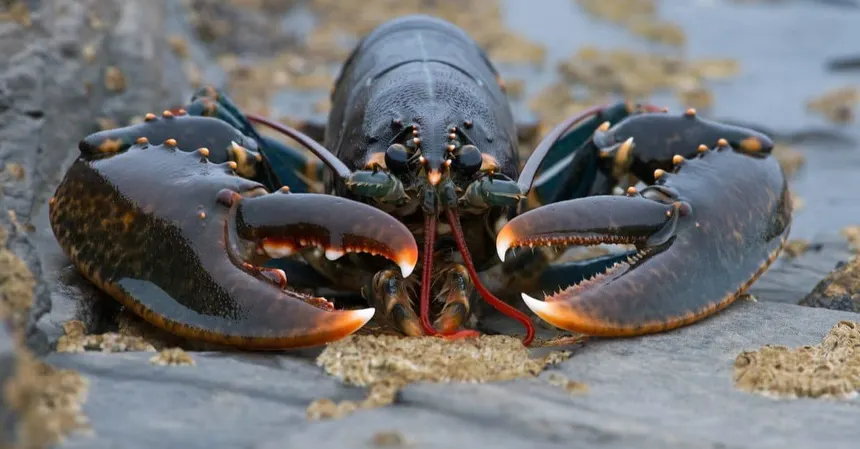
The lobster is one of the most fascinating marine animals due to its unusual growth pattern. Unlike most animals that stop growing after reaching adulthood, lobsters continue to grow throughout their entire lives. This lifelong growth makes the lobster a unique subject of scientific interest and a powerful example of how nature can follow very different biological rules.
What Is a Lobster
Lobsters are marine crustaceans that live on the ocean floor, usually in rocky areas or burrows along the seabed. They are closely related to crabs and shrimp and are known for their hard shells and strong claws. Lobsters are commonly found in cold and temperate oceans, especially in the North Atlantic.
There are several species of lobsters, but the American lobster is the most well known. Lobsters can live for several decades under the right conditions, with some estimated to be more than fifty years old.
Why Lobsters Keep Growing
Lobsters grow through a process called molting. Their hard outer shell does not expand, so as the lobster’s body grows, it must shed the old shell and form a new, larger one. This process continues throughout the lobster’s life, allowing it to increase in size with each molt.
Young lobsters molt frequently, sometimes several times a year. As they age, the molting process slows down, but it never completely stops. This is why lobsters are considered animals that grow for life. Each molt gives them the potential to become larger than before.
The Role of Molting in Longevity
Molting is not only about growth but also about renewal. When a lobster molts, it replaces damaged tissues and regenerates certain body parts. This ability contributes to the lobster’s long lifespan. Some scientists believe lobsters show signs of biological immortality because their cells do not age in the same way as those of many other animals.
Lobsters produce an enzyme called telomerase, which helps maintain the length of telomeres in their DNA. Telomeres are associated with aging in many species. While lobsters are not truly immortal, this enzyme helps explain why they do not show typical signs of aging.
The Risks of Continuous Growth
Although lifelong growth sounds like an advantage, it comes with risks. As lobsters grow larger, molting becomes more physically demanding. Large lobsters require a lot of energy to shed their shells, and the process can be dangerous. Many lobsters die during molting due to stress, injury or predation while their new shell is still soft.
This is one of the reasons extremely large and old lobsters are rare in the wild. Survival becomes more challenging as the animal grows bigger and heavier.
Habitat and Behavior
Lobsters usually live in crevices, burrows and rocky shelters that protect them from predators. They are mostly active at night and feed on fish, mollusks, algae and other small marine organisms. Their strong claws are used both for hunting and defense.
As lobsters grow larger, they often move to deeper waters where there is more space and fewer threats. Their size can become an advantage in competing for territory and food.
Importance in Marine Ecosystems
Lobsters play an important role in maintaining balance in marine ecosystems. As predators and scavengers, they help control populations of smaller animals and clean up organic matter on the ocean floor. Their presence supports a healthy and diverse marine environment.
Because lobsters are sensitive to changes in water quality, they are also used as indicators of ocean health. Declines in lobster populations can signal environmental problems such as pollution or rising ocean temperatures.
Scientific and Cultural Significance
Scientists study lobsters to better understand growth, aging and regeneration. Research on lobster biology has contributed to broader studies on longevity and cellular repair. These insights may one day help inform medical research related to aging in humans.
Culturally, lobsters are valued both as seafood and as symbols of coastal life. In many regions, lobster fishing supports local economies and traditions that have been passed down through generations.
A Remarkable Example of Lifelong Growth
The lobster stands out as a rare example of an animal that continues to grow for its entire life. Through molting, regeneration and unique cellular processes, it challenges traditional ideas about aging and development. While it faces risks as it grows larger, its biology remains one of the most impressive adaptations in the animal kingdom.
The lobster reminds us that nature often defies expectations, offering endless opportunities to learn from even the most familiar creatures in the sea.
