
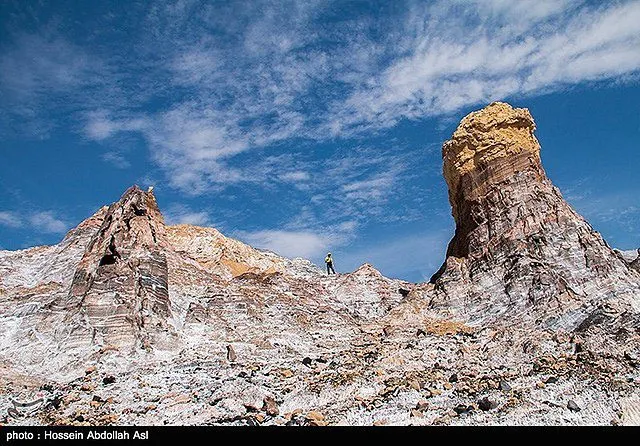
Iran is home to many extraordinary natural landscapes, and one of the most unusual is the salt mountain. Often referred to as a mountain made of salt, this geological wonder looks like something from another planet. Instead of rock or soil, large sections of the mountain are composed almost entirely of salt crystals formed over millions of years. The sight of white, gray and sometimes pink salt flowing down the slopes creates a striking and surreal landscape.
Where the Salt Mountain Is Located
One of the most famous salt mountains in Iran is located near the Zagros Mountains in the southern part of the country. The area is known for its dramatic geology and complex tectonic activity. Salt mountains in this region are often called salt domes. These formations rise above the surrounding land and can be seen from great distances.
The salt mountain is typically found in dry and arid regions where erosion is slow. This allows the salt structure to remain exposed and visible on the surface for long periods of time.
How a Mountain of Salt Is Formed
Salt mountains are formed through a geological process known as salt tectonics. Millions of years ago, large bodies of seawater evaporated, leaving behind thick layers of salt beneath the Earth’s surface. Over time, pressure from overlying rock layers caused the salt to slowly rise upward.
Salt is lighter and more flexible than most rock. As it moves upward, it pushes through cracks and weak points in the Earth’s crust. Eventually, it reaches the surface, forming a salt dome or salt mountain. This process takes millions of years and results in massive formations made primarily of salt.
Why the Mountain Looks So Unique
The surface of a salt mountain looks very different from ordinary mountains. Rain and moisture dissolve the salt slightly, creating smooth curves, sharp ridges and flowing patterns that resemble frozen waterfalls. In some areas, salt crystals sparkle in the sunlight, giving the mountain a bright and reflective appearance.
The color of the salt can vary depending on mineral content. Some sections appear pure white, while others show shades of pink, red or gray. These colors add to the mountain’s striking visual appeal and make it a popular subject for photographers and geologists.
Life Around the Salt Mountain
Despite the harsh conditions, some forms of life can exist around salt mountains. Specialized plants and microorganisms have adapted to survive in salty environments. These organisms are known as halophiles and can tolerate high salt concentrations that would be deadly to most life forms.
Animals in the surrounding area often avoid the salt rich slopes but may use nearby land for shelter and food. The extreme environment highlights the adaptability of life even in the most challenging conditions.
Scientific Importance of Salt Mountains
Salt mountains are important to scientists because they reveal information about Earth’s geological history. By studying the layers and composition of the salt, researchers can learn about ancient seas, climate changes and tectonic movements.
Salt domes are also significant in the study of natural resources. They can trap oil and gas, making them important targets for energy exploration. Understanding how salt moves underground helps geologists predict the location of these resources more accurately.
Cultural and Tourism Value
Salt mountains in Iran are increasingly attracting tourists and nature enthusiasts. Their unusual appearance makes them stand out among more traditional landscapes. Some areas around salt mountains have become destinations for hiking and geological tours.
In local culture, salt has long been a valuable resource used for food preservation and trade. The presence of massive natural salt formations reflects the historical importance of salt in the region’s development.
A Natural Wonder Shaped by Time
A mountain made of salt is a powerful reminder of the Earth’s ability to transform simple materials into extraordinary structures. Shaped by ancient seas, tectonic pressure and erosion, Iran’s salt mountains offer a rare glimpse into deep geological time.
These formations are not only visually stunning but also scientifically valuable. They show how slow and persistent natural forces can create landscapes that appear almost unreal. The salt mountain stands as one of Iran’s most remarkable natural wonders and a testament to the dynamic nature of the planet.
