




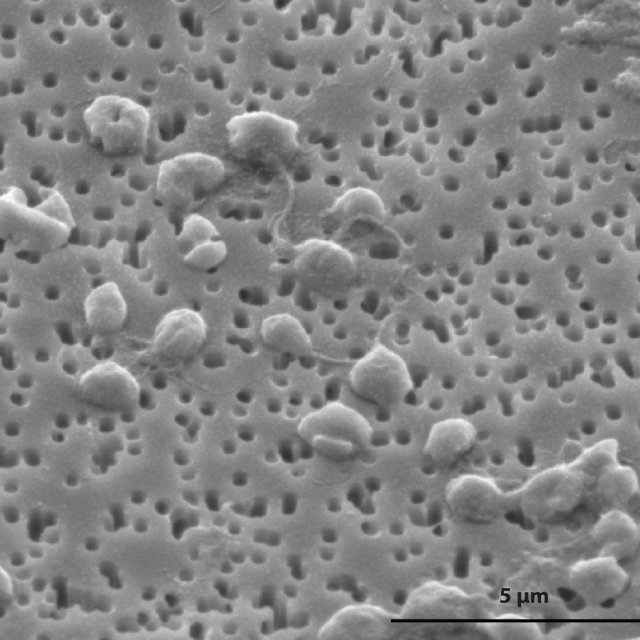
Pyrococcus is one of the most extraordinary forms of life ever discovered on Earth. This microscopic organism belongs to a group known as extremophiles, living in conditions that would instantly kill most other life forms. Pyrococcus microbes are famous for their ability to survive and reproduce in environments associated with intense heat, including areas linked to volcanic activity on the ocean floor. Their existence challenges traditional ideas about where life can survive and offers important insights into biology, evolution, and even the search for life beyond Earth.
Pyrococcus microbes are most commonly found near deep sea hydrothermal vents, which are often associated with underwater volcanic systems. These vents release superheated water rich in minerals and chemicals, creating an environment with temperatures that can exceed 100 degrees Celsius. Despite the extreme heat and pressure, Pyrococcus not only survives but thrives, using chemical energy rather than sunlight to fuel its life processes.
The secret behind Pyrococcus survival lies in its unique cellular structure and biochemistry. Its enzymes are specially adapted to remain stable and functional at very high temperatures. While enzymes in most organisms would break down under such heat, Pyrococcus enzymes become more efficient. This adaptation allows the microbe to carry out essential processes such as DNA replication, metabolism, and cell division in volcanic conditions.
Pyrococcus belongs to the domain Archaea, a group of microorganisms that are genetically distinct from bacteria and eukaryotes. Archaea are known for living in extreme environments, including highly acidic lakes, salt flats, and volcanic systems. The discovery of Pyrococcus helped scientists better understand the diversity of life and the evolutionary history of organisms on Earth. Many researchers believe that early life on Earth may have evolved in similar high temperature environments.
Energy production in Pyrococcus does not depend on oxygen or sunlight. Instead, it relies on chemical reactions involving sulfur and other inorganic compounds found near volcanic vents. This process, known as chemosynthesis, allows Pyrococcus to generate energy in complete darkness. This unique metabolic pathway is especially important because it demonstrates that life can exist without the conditions traditionally considered necessary for survival.
The study of Pyrococcus microbes has practical applications beyond basic science. Enzymes derived from Pyrococcus are highly valuable in biotechnology and industrial processes. Because these enzymes can withstand extreme heat, they are used in applications such as DNA amplification, industrial chemical reactions, and research laboratories. Their stability reduces costs and increases efficiency in processes that require high temperatures.
Pyrococcus also plays a role in shaping volcanic and deep sea ecosystems. Although microscopic, these microbes form the foundation of food webs around hydrothermal vents. Other organisms, such as tube worms and crustaceans, depend directly or indirectly on microbial life for energy. In this way, Pyrococcus supports complex ecosystems in some of the most extreme environments on the planet.
The existence of Pyrococcus has also influenced astrobiology, the study of life beyond Earth. Scientists consider environments like Jupiter’s moon Europa or Saturn’s moon Enceladus, which may contain subsurface oceans with geothermal activity, as potential habitats for similar microorganisms. Pyrococcus provides a model for understanding how life might survive in extraterrestrial volcanic or high heat environments.
In conclusion, Pyrococcus is a remarkable example of life’s resilience and adaptability. As an animal living in volcanoes in a broad biological sense, this microbe redefines the limits of life itself. By thriving in extreme heat and pressure, Pyrococcus expands our understanding of biology and reminds us that life can flourish in places once thought completely uninhabitable.
