




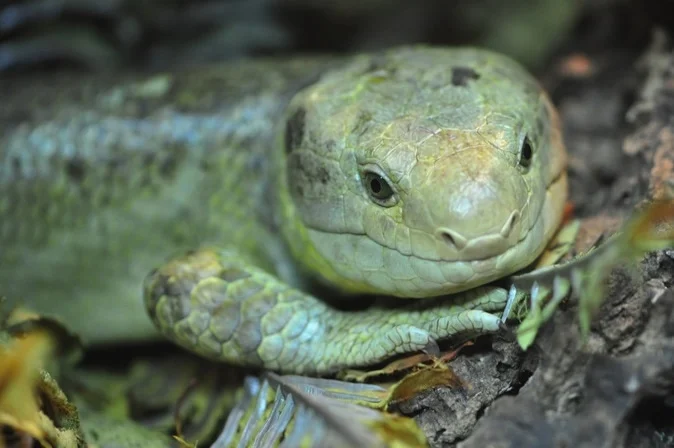
The Prasinohaema skink is one of the most unusual reptiles on Earth because it has green blood. This striking characteristic sets it apart from most other vertebrates, whose blood is typically red. The green blood of the Prasinohaema skink has fascinated scientists, nature lovers, and educators alike. Understanding why this animal has green blood reveals fascinating insights into evolution, adaptation, and the diversity of life.
Prasinohaema skinks are a group of lizards found mainly in the forests of New Guinea. They live in tropical environments rich in vegetation and humidity. These skinks are relatively small, sleek reptiles with smooth scales and typically greenish bodies that help them blend into their surroundings. But it is their blood that truly makes them remarkable.
Unlike most animals that rely on iron based hemoglobin to carry oxygen through the bloodstream, Prasinohaema skinks have high concentrations of a pigment called biliverdin. Biliverdin is a green bile pigment formed when hemoglobin breaks down. In most vertebrates, biliverdin is quickly converted into another compound called bilirubin. However, in these skinks, biliverdin accumulates to extremely high levels, turning the blood, muscles, and even bones a bright green color.
The presence of green blood might seem strange or even harmful, but for Prasinohaema skinks it is a natural and harmless adaptation. Scientists believe that the high biliverdin levels may provide several evolutionary advantages. One theory suggests that biliverdin may help these skinks resist parasites like malaria. In environments where blood parasites are common, having biliverdin rich blood could make it harder for parasites to survive and reproduce. This possible protective benefit remains a focus of ongoing research.
Another interesting aspect of the Prasinohaema skink’s green blood is its potential role in camouflage and heat regulation. The greenish tint of their tissues may help them blend into leafy forest floors and avoid predators. While the primary purpose of blood is oxygen transport, changes in blood chemistry might also influence how the animal interacts with its environment.
The unique blood of Prasinohaema skinks has also made them subjects of scientific studies in physiology and biochemistry. Researchers are curious about how these skinks tolerate extremely high biliverdin levels without suffering from toxic effects. Understanding these mechanisms could provide new knowledge about blood chemistry and potential medical applications for humans.
Despite their unusual physiology, Prasinohaema skinks are typical lizards in many other ways. They are cold blooded, lay eggs, and feed on insects and other small invertebrates. They move quickly among leaf litter, logs, and branches, relying on speed and camouflage to avoid predators such as birds and snakes. Their green bodies and blood help reinforce their secretive lifestyle in dense forest habitats.
The discovery of Prasinohaema skinks challenges common perceptions about what is “normal” in nature. While red blood is ubiquitous among mammals, birds, and many reptiles, the existence of green blood in these skinks demonstrates that evolution can produce surprising variations. Such adaptations remind us that life on Earth has taken many different paths.
In conclusion, the Prasinohaema skink is a living example of nature’s diversity and creativity. Its green blood is more than just a curiosity; it represents a unique biological adaptation that may offer benefits in parasite resistance and camouflage. By studying animals like the Prasinohaema skink, scientists gain deeper insights into the complexity of life and the many ways organisms adapt to survive in their environments.
