




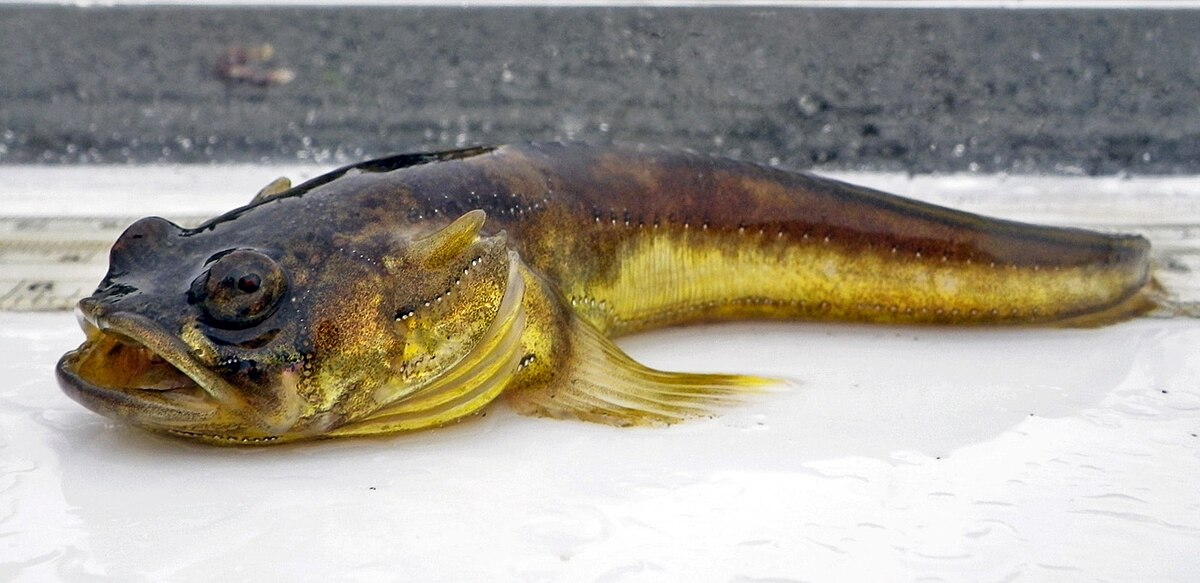
The plainfin midshipman fish is one of the most unusual animals in the ocean because of its ability to sing. Unlike birds or mammals that produce vocal sounds through lungs and vocal cords, this small marine fish creates a deep humming noise that can last for hours. The strange and persistent song of the plainfin midshipman fish has intrigued scientists and coastal communities for decades, earning it a reputation as one of nature’s most unexpected musicians.
The plainfin midshipman fish, scientifically known as Porichthys notatus, is found along the Pacific coast of North America, from Alaska to Baja California. It typically lives in shallow coastal waters, hiding under rocks or buried in sand during the day. At night, especially during the breeding season, the fish becomes active and begins to produce its distinctive sound.
The singing behavior of the plainfin midshipman fish is closely linked to reproduction. Only the males sing, and their goal is to attract females to their nests. During the breeding season, males build nests under rocks in intertidal zones. Once ready, they produce a low frequency hum that can continue uninterrupted for several hours. This sound travels efficiently through water, allowing females to locate singing males even from a distance.
The sound is produced by a specialized muscle attached to the swim bladder. This muscle contracts rapidly, causing the swim bladder to vibrate like a drum. The vibration generates the humming sound that gives the fish its musical reputation. The precision and endurance of this muscle are remarkable, as it can contract hundreds of times per second for long periods without fatigue.
The song of the plainfin midshipman fish is usually described as a drone or hum rather than a melody. However, its consistency and duration make it highly effective for communication. In some coastal areas, the collective humming of many males can become loud enough to be heard above water. Residents living near breeding sites have reported hearing the sound at night, sometimes mistaking it for distant machinery or electrical noise.
Scientists have taken great interest in this singing fish because of its unique biology. Research has shown that the fish’s ability to sing for long periods is supported by specialized neurons and hormonal changes during the breeding season. Studying these adaptations helps researchers better understand how animals produce sound and how muscles and nerves can sustain long lasting activity.
The singing behavior also highlights the importance of acoustic communication in marine environments. While humans rely heavily on visual signals, many marine animals depend on sound to navigate, find mates, and avoid predators. The plainfin midshipman fish is a clear example of how sound plays a vital role in underwater ecosystems.
Despite its fascinating abilities, the plainfin midshipman fish faces environmental challenges. Coastal development, pollution, and noise from boats can interfere with its natural behavior. Excessive underwater noise may disrupt communication between males and females, potentially affecting reproduction. Protecting coastal habitats is therefore important for preserving this unique species and its remarkable singing behavior.
In conclusion, the plainfin midshipman fish proves that music in nature is not limited to birds or whales. Its ability to sing through the night using a vibrating swim bladder is a rare and extraordinary adaptation. By studying this fish, scientists gain valuable insight into animal communication, muscle endurance, and the hidden soundscape of the ocean. The plainfin midshipman fish stands as a reminder that even beneath the waves, nature has its own musicians.
