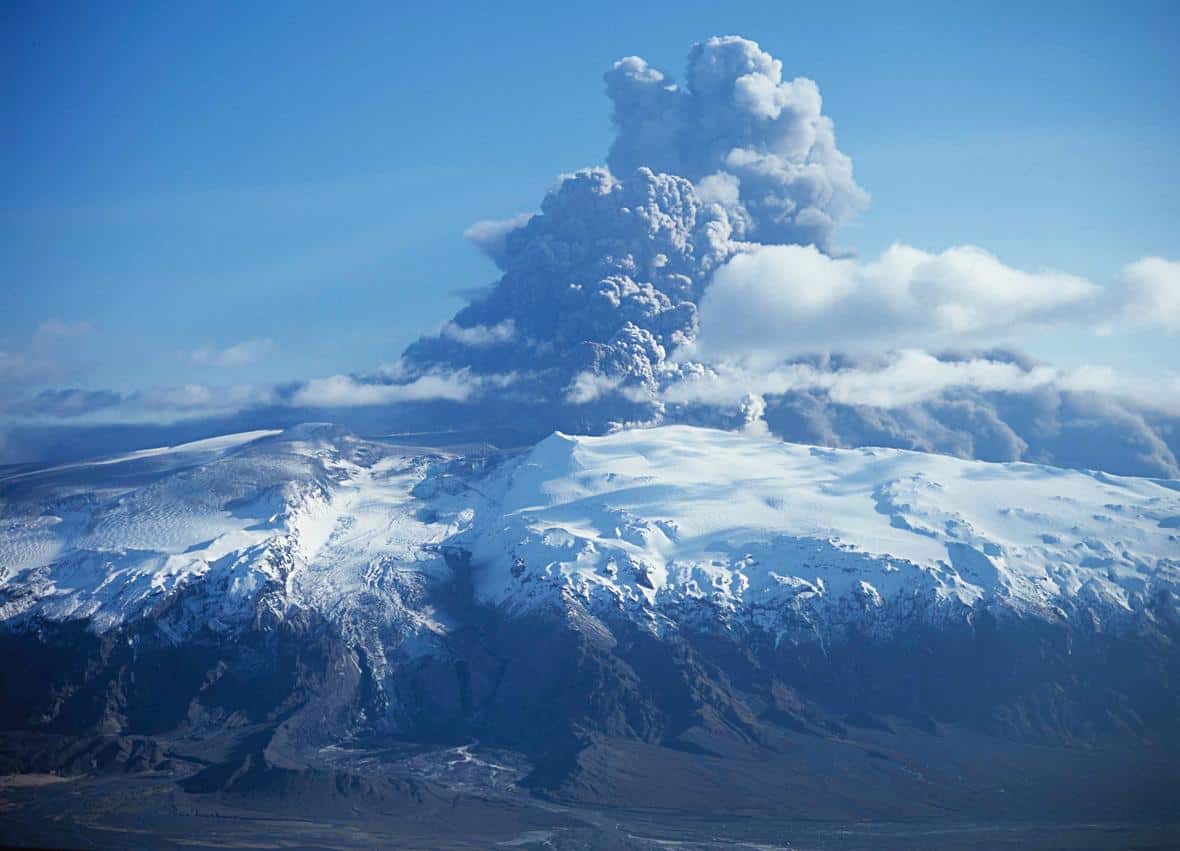
Iceland is one of the few places on Earth where fire and ice exist side by side in a dramatic and unforgettable way. Among its most striking natural wonders is the phenomenon of a volcano amid ice, where active volcanic systems lie beneath massive glaciers. This rare combination creates a landscape unlike anywhere else in the world and highlights the powerful forces shaping the planet.
Iceland sits directly on the Mid Atlantic Ridge, where two tectonic plates slowly pull apart. This geological setting fuels intense volcanic activity, while the country’s northern location supports large glaciers and ice caps. As a result, volcanoes and ice coexist in close proximity. Some of Iceland’s most famous volcanoes, including Katla, Grímsvötn, and Eyjafjallajökull, are partially or completely covered by ice.
When a volcano erupts beneath a glacier, the interaction between molten lava and ice produces extraordinary effects. The intense heat melts large volumes of ice, creating sudden floods known as glacial outburst floods. These powerful flows of water, ice, and volcanic debris can reshape the land in a matter of hours. At the same time, steam clouds rise into the air, giving the eruption an otherworldly appearance.
Volcanoes amid ice also create unique landforms. As lava cools rapidly against ice or meltwater, it forms unusual shapes and textures not seen in typical volcanic landscapes. Over time, these processes can create ridges, flat topped mountains, and complex networks of tunnels and caves. Many of Iceland’s geological features are the direct result of repeated eruptions beneath glaciers during past ice ages.
This dramatic environment plays an important role in scientific research. Studying volcanoes under ice helps scientists understand how volcanic activity interacts with climate and glacial systems. These studies are also valuable for understanding similar processes on other planets and moons, where ice and volcanic activity may coexist. Iceland serves as a natural laboratory for this kind of research.
The volcano amid ice phenomenon also has a strong cultural and emotional impact. Icelandic folklore often portrays volcanoes and glaciers as powerful spirits or giants locked in eternal struggle. This imagery reflects the real life tension between fire and ice that defines the country’s identity. Even today, Icelanders live with deep respect for these natural forces and the risks they pose.
Tourism in Iceland has grown significantly due to interest in its volcanoes and glaciers. Visitors are drawn to the chance to witness steaming volcanic areas, ice covered peaks, and vast glacial landscapes in a single journey. While direct access to active volcanic sites is carefully controlled, guided tours and observation points allow people to safely experience this rare combination of natural elements.
Climate change is adding a new dimension to the relationship between volcanoes and ice in Iceland. As glaciers retreat due to rising temperatures, volcanic systems may become more exposed. This could alter eruption patterns and increase geological instability in some areas. Scientists closely monitor these changes to better understand future risks and protect local communities.
In conclusion, a volcano amid ice in Iceland represents one of nature’s most powerful contrasts. The coexistence of intense heat and deep cold reveals the dynamic processes shaping the Earth beneath its surface. Iceland’s fiery volcanoes and ancient glaciers together create a landscape that is both beautiful and formidable, reminding us of the planet’s constant transformation.
