
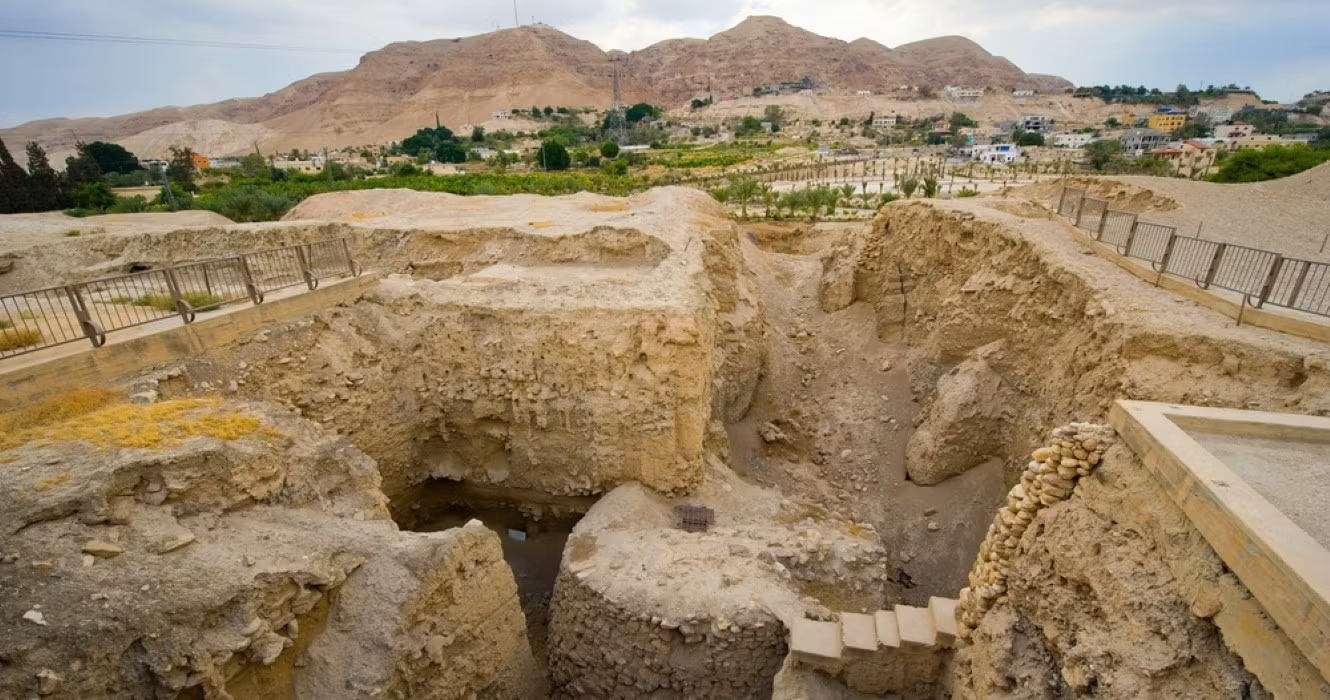
Jericho is widely recognized as the oldest continuously inhabited city in the world. Located in the Jordan Valley near the Jordan River, Jericho has a history that stretches back more than ten thousand years. This ancient city offers a remarkable window into the early development of human civilization, making it one of the most important archaeological and historical sites on Earth.
Archaeological evidence shows that Jericho was first settled around 9000 BCE, during the Neolithic period. Early inhabitants were among the first people to transition from a nomadic lifestyle to permanent settlement. They built simple houses, cultivated crops, and domesticated animals. This shift marked a major turning point in human history, laying the foundation for organized communities and complex societies.
One of the most impressive discoveries in Jericho is the ancient stone wall and tower, believed to date back to around 8000 BCE. These structures suggest that early residents had advanced knowledge of construction and social organization. The presence of defensive walls indicates that Jericho was not only a place to live but also a community worth protecting, possibly from floods or rival groups.
Jericho’s location played a crucial role in its long survival. Situated near natural springs, especially the famous Spring of Elisha, the city had a reliable water source in an otherwise arid region. This access to water supported agriculture and made continuous habitation possible for thousands of years. Fertile land around the city allowed residents to grow crops such as wheat, barley, and dates, supporting a stable population.
Throughout its long history, Jericho has been inhabited by many different civilizations. It has seen the rise and fall of Canaanite, Israelite, Babylonian, Persian, Greek, Roman, Byzantine, and Islamic cultures. Each era left its mark on the city, creating layers of history that archaeologists continue to study today. This uninterrupted sequence of settlement is what truly sets Jericho apart from other ancient cities.
Jericho also holds deep religious significance. It is mentioned in the Hebrew Bible, the Christian Old Testament, and Islamic tradition. One of the most well known biblical stories is the fall of Jericho, where the city’s walls are said to have collapsed after the Israelites marched around them. While interpretations vary, these stories highlight the city’s importance in ancient religious and cultural narratives.
Modern Jericho remains a living city, home to thousands of residents. While much of the ancient settlement lies in archaeological sites such as Tell es Sultan, the modern city continues nearby. This coexistence of ancient ruins and modern life makes Jericho a unique place where past and present meet. Visitors can walk among remains that date back thousands of years while experiencing a community that is still alive today.
The climate of Jericho is another distinctive feature. It is often referred to as the lowest city on Earth, located more than 250 meters below sea level. Its warm climate has earned it the nickname City of Palms, reflecting its long history of agriculture and date farming. This environment has helped sustain human life in the area for millennia.
In conclusion, Jericho stands as a powerful symbol of human endurance and continuity. Its status as the oldest continuously inhabited city is supported by extensive archaeological evidence and a rich historical record. From its earliest stone structures to its modern streets, Jericho tells the story of humanity’s journey from prehistoric settlement to contemporary civilization. Studying Jericho helps us better understand where we come from and how human societies have evolved over time.
