




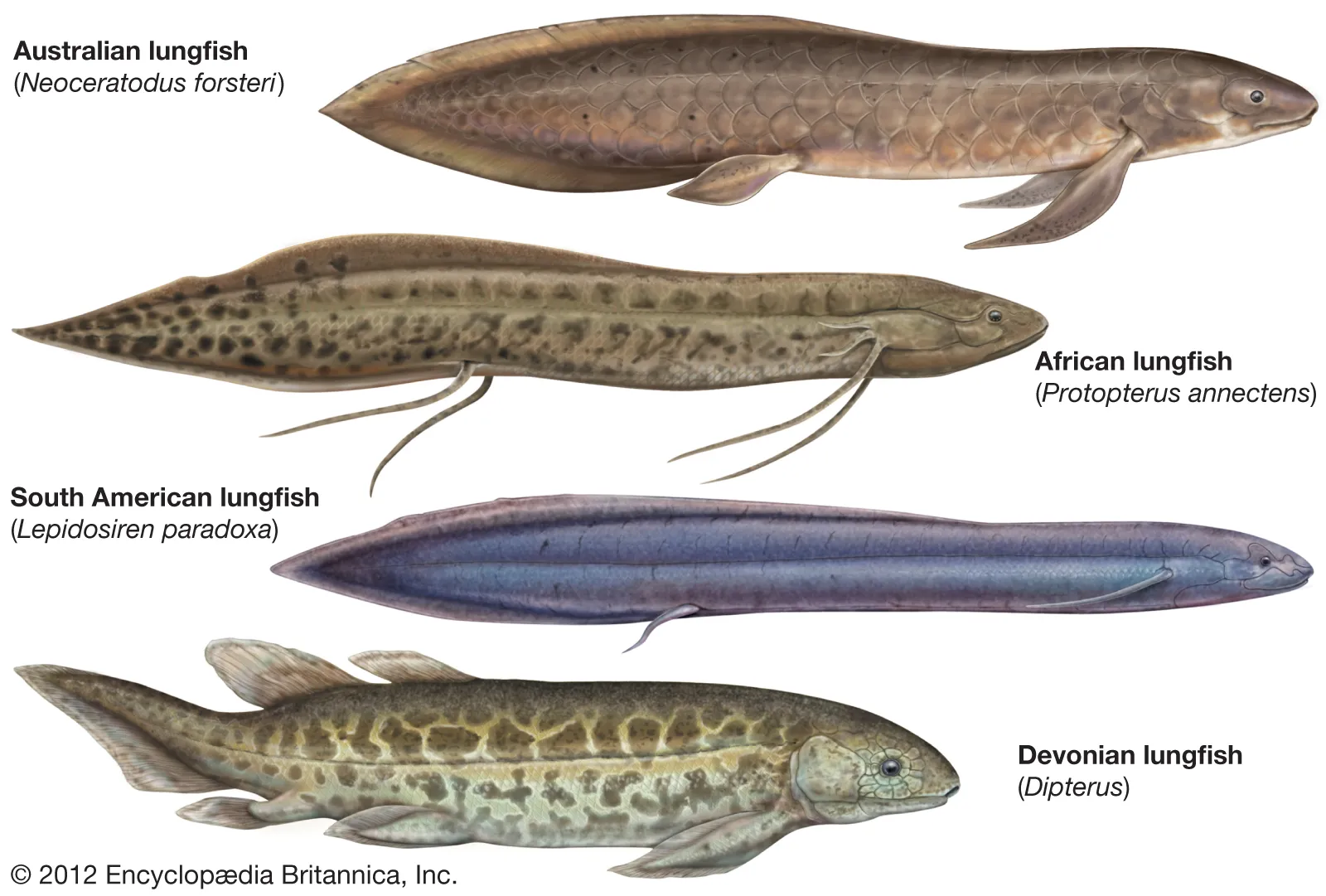
The lungfish is one of the most extraordinary animals on Earth. Often described as a living fossil, this ancient fish has survived for hundreds of millions of years by developing a rare and fascinating ability: it can breathe using both lungs and gills. This unique adaptation allows lungfish to thrive in environments where most aquatic animals would not survive. From muddy rivers to seasonal swamps, lungfish continue to amaze scientists and nature enthusiasts alike.
What Is a Lungfish
Lungfish belong to the class Sarcopterygii, also known as lobe finned fishes. There are only a few living species today, found in Africa, South America, and Australia. Despite being fish, lungfish possess true lungs that are structurally similar to those of land animals. This feature places them at a crucial point in evolutionary history, linking aquatic life to the first vertebrates that moved onto land.
Unlike most fish, lungfish can survive in oxygen poor waters. When dissolved oxygen levels drop, they rise to the surface and gulp air, using their lungs to breathe. This ability gives them a major advantage in harsh environments.
How Lungfish Use Both Lungs and Gills
Lungfish respiration is highly adaptable. When living in well oxygenated water, they rely mostly on their gills, just like other fish. However, when water quality declines or during dry seasons, their lungs become essential.
African and South American lungfish have paired lungs, while the Australian lungfish has a single lung. These lungs are connected to the throat and function much like those in amphibians. In extreme conditions, lungfish can depend almost entirely on lung breathing, allowing them to survive when other fish cannot.
Surviving Drought Through Estivation
One of the most remarkable traits of lungfish is their ability to survive long periods of drought. In parts of Africa and South America, rivers and lakes can dry up completely during dry seasons. When this happens, lungfish burrow into the mud and enter a state known as estivation.
During estivation, the lungfish secretes a protective mucus cocoon and slows its metabolism dramatically. It breathes air using its lungs through a small opening in the cocoon. In this state, a lungfish can survive for months or even years until water returns. This adaptation is a key reason why lungfish have endured for so long in changing climates.
Evolutionary Importance of Lungfish
Lungfish are considered living evidence of the evolutionary transition from water to land. Their lungs, limb like fins, and breathing behavior provide clues about how early vertebrates adapted to terrestrial environments. Scientists study lungfish to better understand the origins of amphibians, reptiles, birds, and mammals.
Fossil records show that lungfish have existed for over 400 million years. While many ancient species went extinct, modern lungfish retain many primitive features, making them invaluable to evolutionary biology.
Habitat and Diet
Lungfish inhabit freshwater environments such as rivers, lakes, floodplains, and swamps. Their diet varies by species but generally includes insects, small fish, crustaceans, worms, and plant matter. They use strong jaws and specialized teeth to crush hard prey, such as snails and shells.
Their slow moving nature and ability to survive low oxygen conditions allow them to dominate habitats where competition is limited.
Why Lungfish Matter Today
Beyond their evolutionary significance, lungfish play an important role in their ecosystems. They help control populations of small aquatic animals and contribute to nutrient cycling in freshwater systems. However, habitat destruction, pollution, and climate change pose growing threats to their survival.
Conservation efforts are especially important for lungfish species with limited ranges, such as the Australian lungfish. Protecting wetlands and freshwater habitats is essential to ensure these ancient creatures continue to survive.
The lungfish is truly one of nature’s most remarkable animals. With the rare ability to breathe using both lungs and gills, survive extreme droughts, and offer a living window into Earth’s evolutionary past, lungfish stand apart from almost all other fish. Their resilience and adaptability serve as a powerful reminder of how life can endure even in the most challenging environments.
