

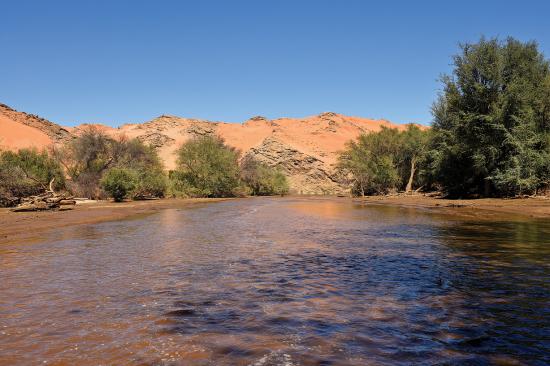
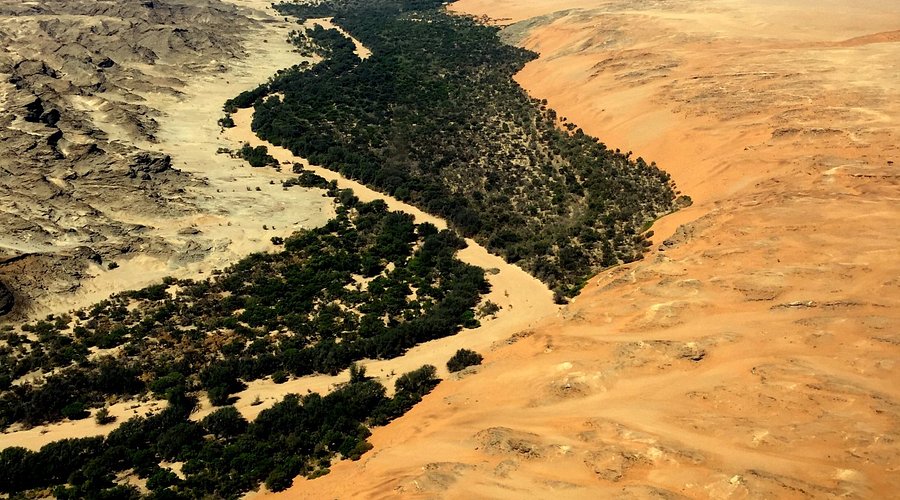
The Namib Desert in Namibia is one of the driest places on Earth, yet it’s crisscrossed by remarkable ephemeral rivers dry riverbeds that occasionally roar to life after rare heavy rains. These “rivers flowing through the desert” are mostly sand-filled channels that flow only briefly, creating stunning contrasts of green oases against red dunes and barren gravel plains.
Famous examples include the Kuiseb, Tsauchab, Hoanib, and Swakop rivers, which carve dramatic canyons, support unique ecosystems, and shape iconic landscapes like Sossusvlei.
What Are Ephemeral Rivers?
Ephemeral rivers flow only during or after significant rainfall in their upstream catchments, often in Namibia’s central highlands. For years or decades, they remain dry sandy beds, but sudden floods can transform them into powerful torrents. Underground aquifers recharge during these events, sustaining “linear oases” strips of vegetation that act as vital corridors for wildlife in the hyper-arid Namib.
Iconic Ephemeral Rivers in the Namib Desert
1. Kuiseb River
One of Namibia’s longest (560 km), the Kuiseb starts near Windhoek, carves the dramatic Kuiseb Canyon, and forms a natural barrier preventing southern dunes from advancing north. It supports Topnaar communities and rarely reaches the Atlantic near Walvis Bay.
2. Tsauchab River
This river ends in the world-famous Sossusvlei pan, surrounded by towering red dunes. When it flows (rarely), it creates temporary lakes; otherwise, it leads to Deadvlei a surreal white clay pan with ancient dead acacia trees.
3. Hoanib River
In the remote northern Namib (Kaokoveld), the Hoanib is a lifeline for desert-adapted elephants, lions, and giraffes. Its ribbon of greenery contrasts sharply with surrounding barren plains.
4. Other Notable Ones
- Swakop River: Occasionally reaches the sea at Swakopmund.
- Ugab River: Known for ancient rock art and desert elephants.
Ecological and Cultural Importance
These rivers sustain biodiversity in an otherwise inhospitable environment. Ana trees, acacias, and reeds line the beds, attracting wildlife and providing resources for indigenous communities. They prevent dune migration and recharge groundwater essential for human settlements.
Visiting Namibia’s Ephemeral Rivers
Explore via 4×4 drives, hiking ), or scenic flights. Highlights Sossusvlei in Namib-Naukluft Park, Skeleton Coast for Hoanib. Best after rains for potential water sightings, but dry beds offer timeless beauty year-round.
Why These Rivers Captivate the World
In the ancient Namib one of Earth’s oldest deserts these fleeting rivers remind us of nature’s resilience, turning arid sands into temporary lifelines.
