

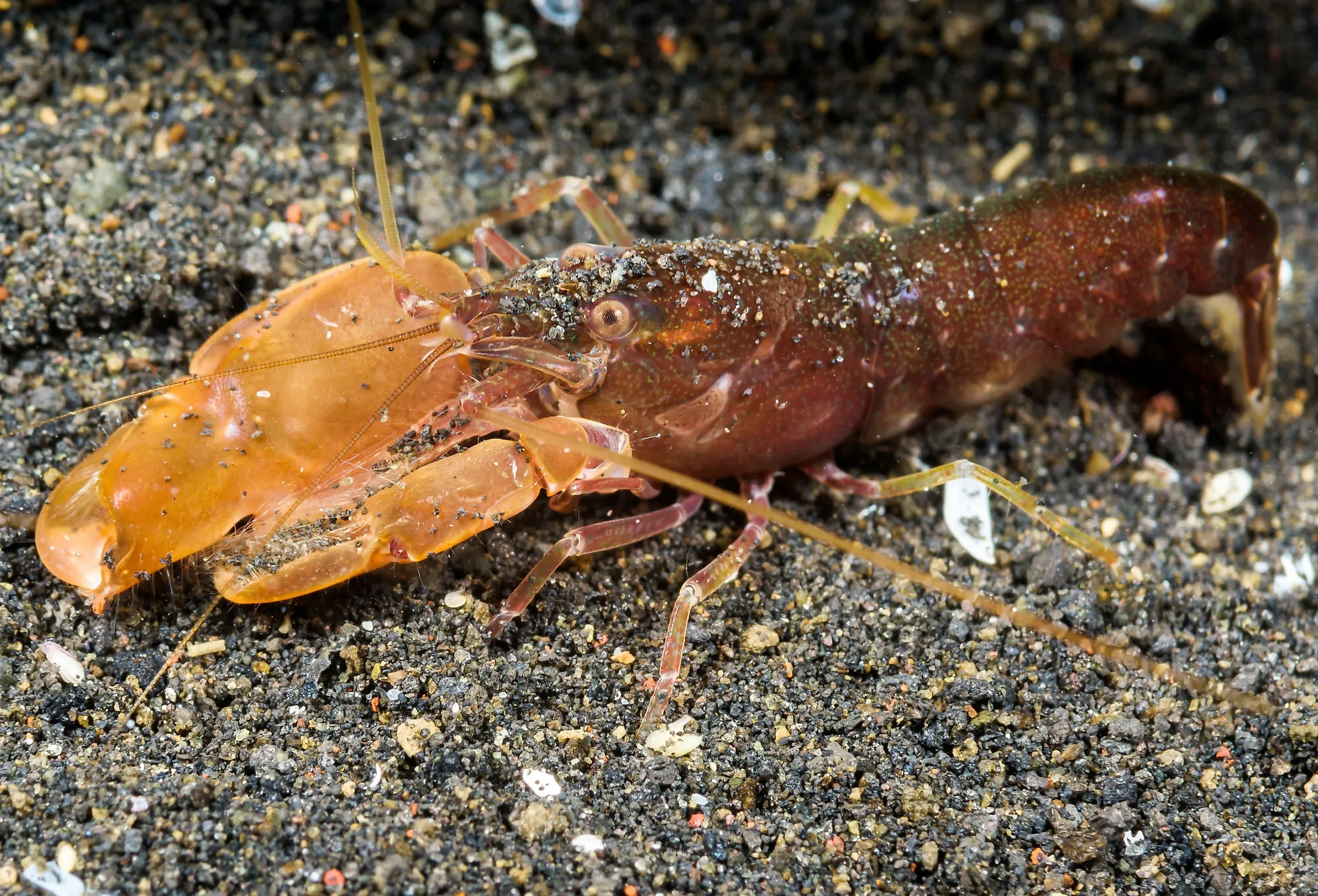
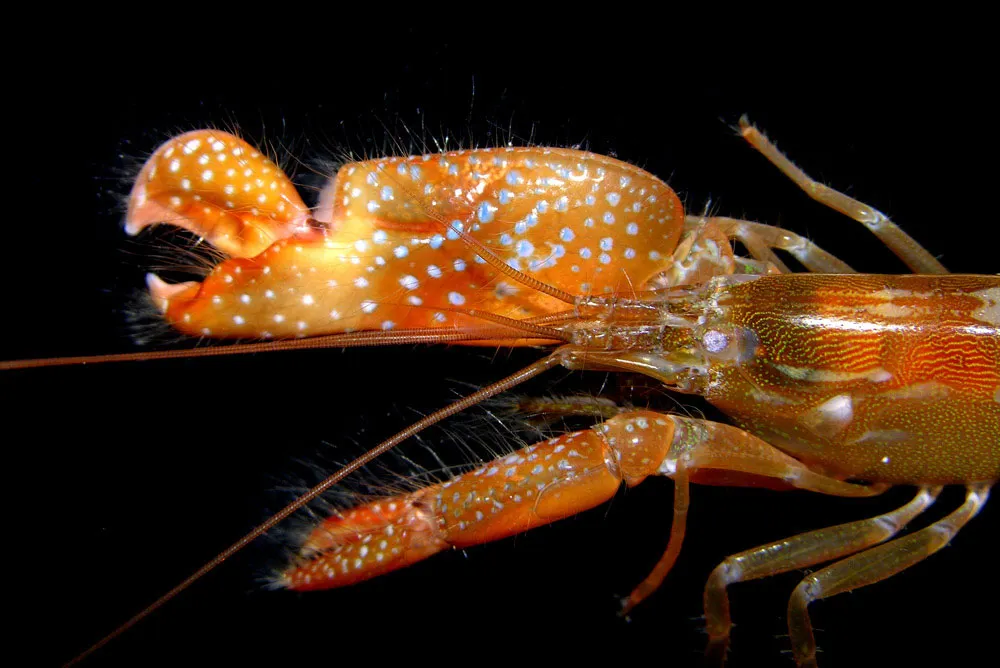
The pistol shrimp (family Alpheidae), also known as snapping shrimp, is a tiny but mighty marine creature famous for “shooting” light through an extraordinary phenomenon called sonoluminescence. With a specialized oversized claw, it snaps shut at blinding speed, creating a cavitation bubble that collapses with such force it produces intense heat, a shockwave, and a brief flash of light essentially firing a glowing “bullet” underwater to stun prey or defend itself.
How Does the Pistol Shrimp “Shoot” Light?
The magic happens in milliseconds:
- The pistol claw closes at over 100 km/h (60 mph), ejecting a water jet faster than a bullet.
- This creates a low-pressure cavitation bubble.
- When the bubble collapses, temperatures reach ~4,700°C (8,500°F) nearly as hot as the sun’s surface emitting a flash of blue light via sonoluminescence (sound turning into light).
- The snap also produces a 218-decibel sound (louder than a gunshot) and a shockwave that stuns or kills small fish.
This “pistol shot” is one of nature’s most extreme weapons, all from a shrimp just 3-10 cm long!
Habitat and Symbiotic Lifestyle
Over 600 species of pistol shrimp live in tropical and temperate oceans worldwide, often burrowing in coral reefs, seagrass, or sand. Many form symbiotic partnerships with gobies: the shrimp digs and maintains the burrow (it’s nearly blind), while the goby acts as a lookout for predators, touching the shrimp’s antennae to signal danger.
Physical Features
- Asymmetrical claws: One huge “pistol” claw (up to half its body weight), the other small for grooming.
- Colorful bodies: Often banded in red, pink, yellow, or translucent.
- Collective noise: Swarms create a crackling sound loud enough to interfere with sonar during WWII!
Fun Facts About the Pistol Shrimp
- The light flash lasts just picoseconds but is visible in dark conditions.
- Inspired research into nuclear fusion and medical applications (e.g., breaking kidney stones).
- Some species named creatively, like Synalpheus pinkfloydi after the band for its pink claw and loud snap.
- Harmless to humans but dominant in reef ecosystems.
