


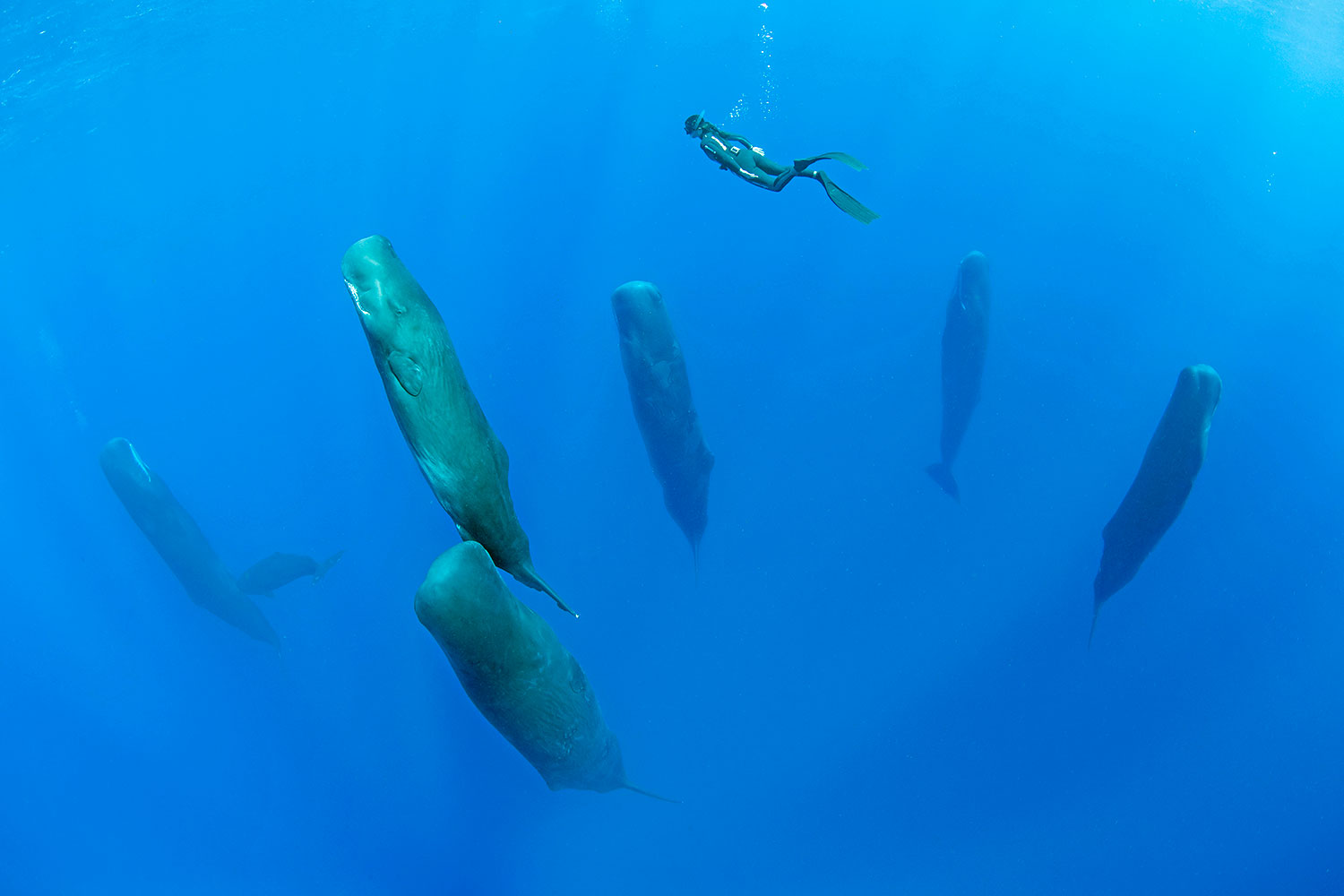
The sperm whale (Physeter macrocephalus) holds the title of the only large animal known to sleep vertically floating upright like silent sentinels in the deep sea. This bizarre “vertical sleeping” behavior, captured in rare photographs, reveals one of the ocean’s most fascinating mysteries and highlights the unique adaptations of the world’s deepest-diving mammal.
How Do Sperm Whales Sleep?
Unlike most mammals that need constant movement or surface breathing, sperm whales enter short, deep naps in a vertical posture:
- Position: Heads pointed downward (most common) or upward, bodies straight and motionless.
- Duration: Only about 10–15 minutes per session, totaling just 7% of their day the least sleep of any mammal studied.
- Group behavior: Pods synchronize naps, floating together like a forest of giants for protection.
This “drift diving” allows them to rest while remaining alert enough to surface for air. They take a deep breath, dive to 10–50 meters, nap, then slowly ascend.
Why Sleep This Way?
Sperm whales face unique challenges as air-breathing deep divers:
- Unihemispheric sleep: Like dolphins, they shut down one brain hemisphere at a time, keeping half aware for threats and breathing.
- Energy conservation: Short naps suit their lifestyle of long, deep hunts for giant squid (dives over 2 km lasting up to 90 minutes).
- Vulnerability reduction: Vertical posture in groups minimizes predation risk from orcas or sharks.
Fascinating Sperm Whale Facts
- Size: Largest toothed predator males up to 20 meters (67 ft) long, weighing 57 tons.
- Brain: The heaviest brain on Earth (~9 kg).
- Echolocation: Powerful clicks for hunting in total darkness.
- Lifespan: Up to 70+ years; matriarchal family pods.
Anatomy diagrams and size comparisons highlighting the massive scale of sperm whales.
Discovered through tagging studies in the 2000s, this behavior remains rarely observed due to the whales’ deep-ocean habitat.
