
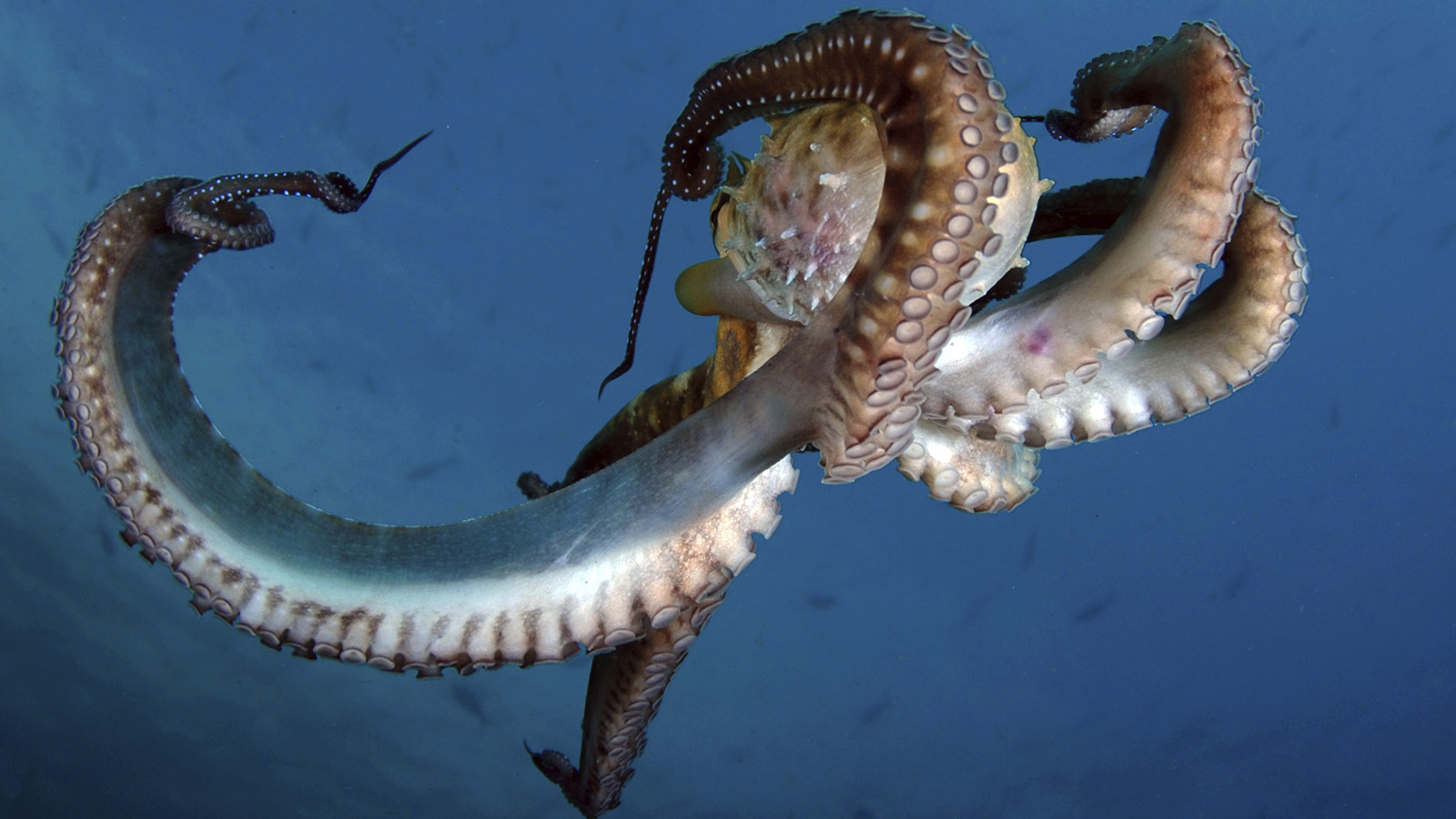
The freezing waters of Antarctica push marine animals to evolve remarkable survival strategies. One of the most fascinating is blood color adaptation, where certain species alter or eliminate traditional red blood pigments to thrive in sub-zero temperatures. While no single animal dramatically “changes” its blood color on demand, Antarctic creatures like octopuses and icefish showcase blood that ranges from blue to completely clear perfect adaptations to extreme cold.
Antarctic Octopus: Blue Blood for Better Oxygen in the Cold
The Pareledone charcoti (Antarctic octopus) has vibrant blue blood thanks to hemocyanin, a copper-based protein that turns blue when oxygenated. Unlike hemoglobin (iron-based, red in humans and most vertebrates), hemocyanin performs better in low-oxygen, frigid environments.
Why blue blood?
- Hemocyanin binds oxygen more efficiently at near-freezing temperatures (around -1.9°C or 28°F in Antarctic seas).
- It remains effective even when oxygen levels drop, crucial in deep, cold waters.
- The copper molecules give the blood its striking sky-blue hue when drawn.
This adaptation isn’t unique to octopuses all cephalopods (octopuses, squids) and some mollusks/crustaceans use hemocyanin, but it’s especially vital in polar species.
Crocodile Icefish: The Vertebrate with Clear, Colorless Blood
The ultimate extreme: The Antarctic icefish (family Channichthyidae, like Chaenocephalus aceratus) is the only known vertebrate with completely clear blood no hemoglobin at all!
Key facts about this “bloodless” wonder:
- Blood appears transparent or white, lacking red pigments entirely.
- They survive without hemoglobin by absorbing oxygen directly through their skin and gills in super-oxygenated Antarctic waters (cold water holds more dissolved oxygen).
- Antifreeze glycoproteins in their blood prevent ice crystal formation, stopping freezing from the inside out.
- Larger hearts and blood vessels pump more volume to compensate for lower oxygen-carrying capacity.
This evolutionary loss of hemoglobin occurred about 10-30 million years ago, making icefish a living example of “disadaptive” evolution in stable, extreme conditions.
Other Antarctic Marine Adaptations: Polychaete Worms and More
While not primarily known for changing blood color, Antarctic polychaete worms (bristle worms) often have green or colorless blood due to chlorocruorin or other pigments, aiding oxygen transport in low-light benthic environments. Some deep-sea worms host symbiotic bacteria for added resilience in harsh cold.
Why These Blood Adaptations Matter
In temperatures that would freeze most animals’ blood:
- Blue/clear blood avoids viscosity issues hemoglobin thickens in cold, but hemocyanin and no-pigment systems flow freely.
- They highlight how evolution tailors biochemistry to polar extremes, offering insights into climate change impacts on marine ecosystems.
Antarctica’s underwater world is full of these alien-like survivors. From blue-blooded octopuses to ghostly clear-blooded fish, these animals prove life finds incredible ways to conquer the coldest place on Earth.
