


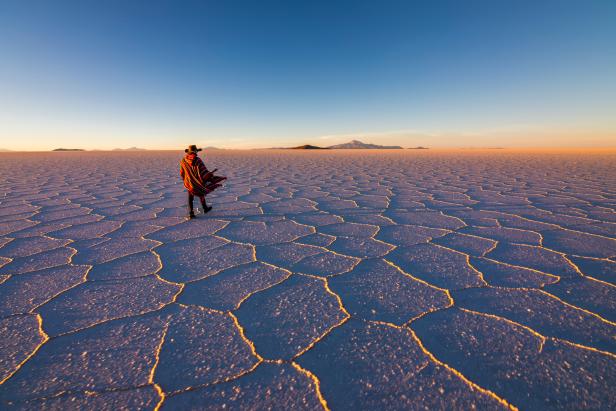
The Salar de Atacama, located in Chile’s Atacama Desert the driest place on Earth rarely sees rain. Yet, when heavy rains do fall, this vast salt flat can temporarily flood, creating shallow lakes that turn the stark white landscape into a reflective wonder. Unlike the famous mirror effect of Bolivia’s Salar de Uyuni, flooding in Salar de Atacama is much rarer and often more localized, but it reveals the dramatic power of water in an extreme desert environment.
Why Does the Salar de Atacama Flood So Rarely?
The Atacama Desert receives less than 30mm of rain annually on average, with some areas going decades without a drop. Salar de Atacama is an enclosed basin with no outlets, surrounded by the Andes mountains. Rain typically occurs during the South American summer (January-February) due to occasional moisture from the Amazon or cut-off low-pressure systems.
Major flooding events are triggered by:
- Extreme weather phenomena: Such as cut-off lows bringing tropical moisture, often linked to El Niño or warmer Pacific waters.
- Historical examples: Devastating floods hit nearby areas in 2015 and 2022, with flash floods stirring sediments and creating temporary water bodies.
- Water from rare rains or mountain runoff pools on the flat, evaporating quickly due to high evaporation rates (over 3,500mm per year).
When flooded, the salt crust dissolves slightly, forming briny lagoons that reflect the sky and surrounding volcanoes like Licancabur.
What Happens When the Desert Floods?
Flooding transforms the Salar de Atacama:
- Mirror-like reflections: Shallow water creates stunning mirror effects, though less extensive than Uyuni.
- Wildlife boost: Lagoons like Laguna Chaxa attract flocks of Andean, James’s, and Chilean flamingos feeding on brine shrimp.
- Geological changes: Floods deposit sediments, clays, and salts, reshaping the crust over time.
- Rare but impactful: Events can cause flash floods in surrounding areas, eroding landscapes and affecting infrastructure.
Normally, the salar features a rugged, cracked salt surface dotted with evaporation ponds for lithium mining the world’s largest lithium source.
Fun Facts About Salar de Atacama Flooding
- It’s home to unique ecosystems, including flamingos thriving in hypersaline lagoons year-round.
- Lithium extraction relies on the dry conditions, but rare floods highlight the basin’s vulnerability.
- Visiting during or after rain offers surreal views, but access can be limited due to mud.
The rare flooding of Salar de Atacama reminds us of nature’s extremes: a hyperarid desert briefly turned into a watery oasis. If you’re planning a trip to Chile’s Atacama region, watch for rainy season surprises!
For similar wonders, check out Salar de Uyuni’s famous mirror effect. Share if you’ve seen a flooded desert!
