


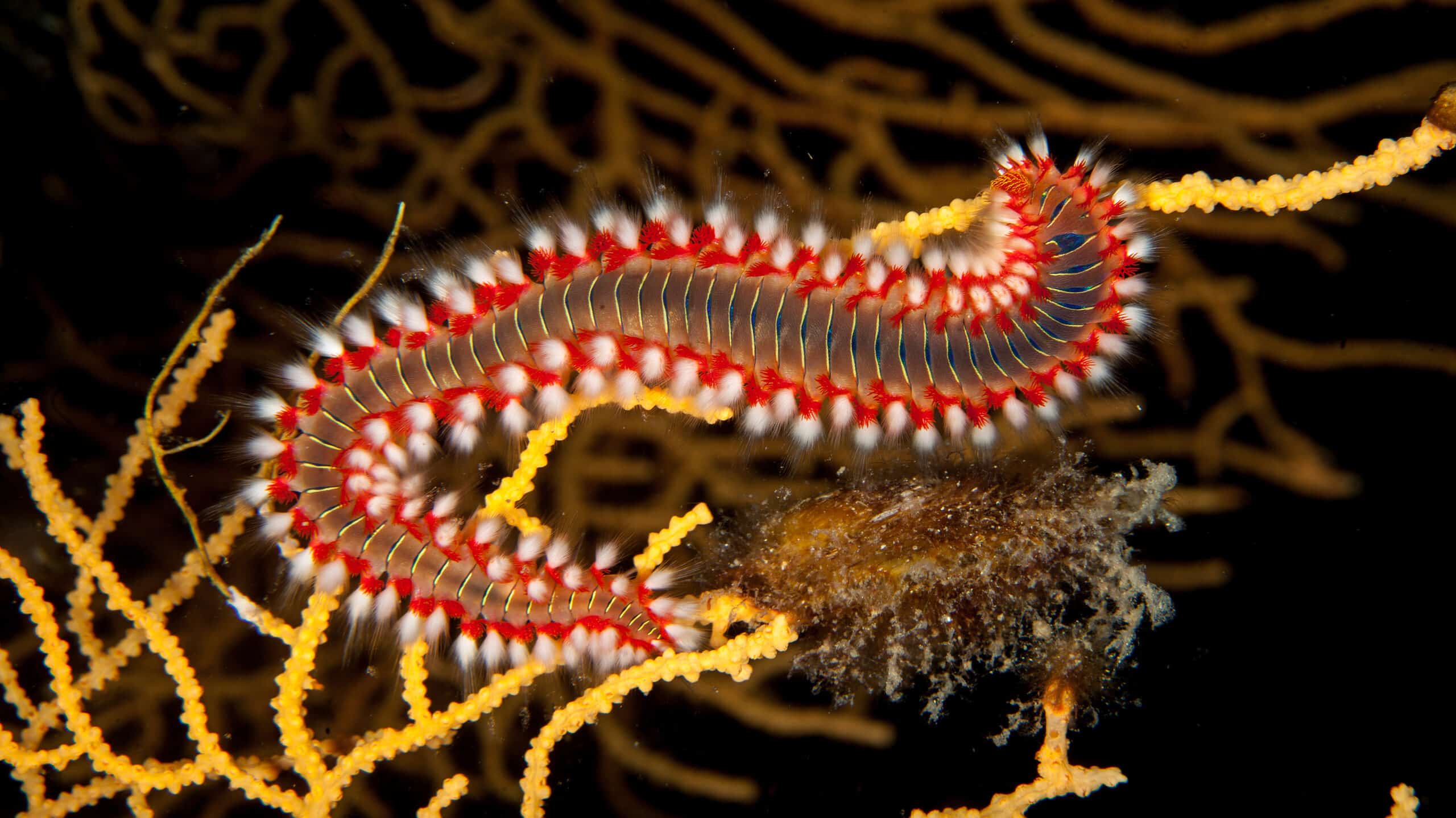
Fireworms, particularly species like the bearded fireworm (Hermodice carunculata), are striking marine polychaetes known for their fiery appearance and defensive bristles. While most famous for their painful stings and bright reddish-orange coloration, certain fireworms exhibit bioluminescence, often glowing in greenish-blue hues during spectacular mating displays. However, some deep-sea or related polychaete worms can produce red or reddish bioluminescence, adding to the “glowing red” allure in the ocean’s depths.
The Glowing Magic of Fireworms
Bioluminescence in fireworms serves multiple purposes:
- Mating rituals: Syllid fireworms (like the Bermuda fireworm) perform synchronized swarming, where females release glowing eggs and males flash lights to attract partners creating underwater “fireworks” often in green-blue tones.
- Defense: Some species flash light when disturbed to startle predators.
- Red glows are rarer but occur in certain polychaetes, possibly for communication in deeper waters where red light penetrates differently.
The bearded fireworm itself doesn’t typically glow brightly, but its vivid red and white bristles make it look like it’s “on fire” during the day.
Why Are Fireworms So Dangerous?
Those beautiful bristles are hollow, venom-filled chaetae that break off in skin, causing intense burning pain hence the name “fireworm.”
- Found in tropical reefs worldwide, they feed on corals, anemones, and small invertebrates.
- Handle with extreme caution: Stings can last hours and require careful removal of bristles.
Close-ups reveal their segmented bodies and tufted white bristles against red segments.
Fun Facts About Fireworms
- Bioluminescent displays are precisely timed with lunar cycles (e.g., Bermuda fireworms glow 55 minutes after sunset).
- Some species can regenerate lost segments.
- Not to be confused with beneficial bristle worms in aquariums.
Fireworms blend beauty and danger, with their potential red glows and fiery looks making them ocean enigmas. A true highlight for night divers!
