
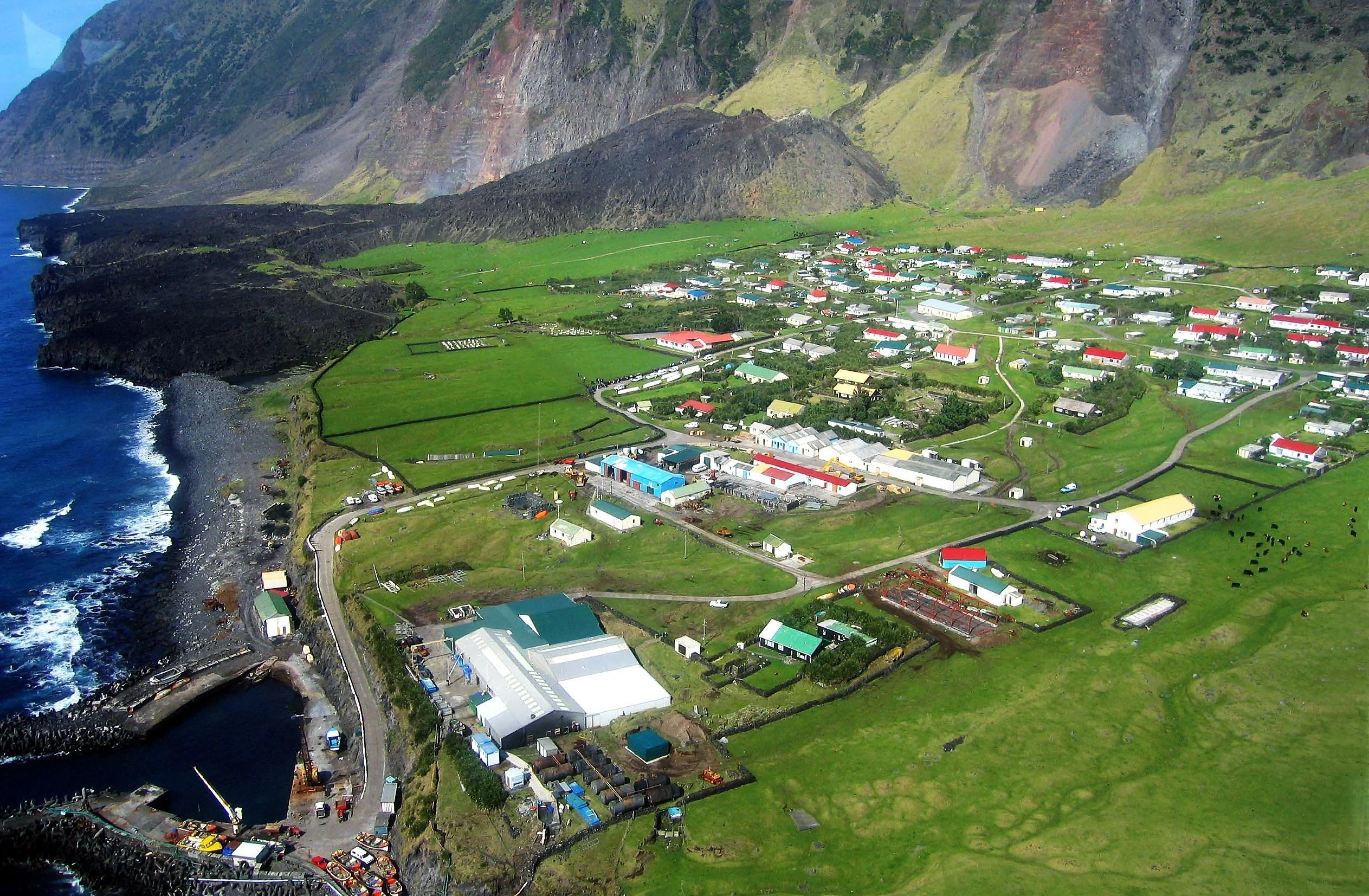
Tristan da Cunha, a volcanic archipelago in the vast South Atlantic Ocean, holds the title of the most remote inhabited island on Earth. Its only settlement, Edinburgh of the Seven Seas, is home to around 250 people, with the nearest land over 2,400 km (1,500 miles) away. This British Overseas Territory offers dramatic landscapes dominated by the towering Queen Mary’s Peak volcano, rugged cliffs, and abundant wildlife, making it a true haven of isolation and natural beauty.
Why Is Tristan da Cunha So Remote?
Located midway between South Africa and South America, Tristan da Cunha sits in one of the loneliest stretches of ocean:
- Distance to civilization: 2,437 km to Saint Helena, 2,778 km to Cape Town, South Africa.
- Access challenges: No airport visitors arrive by ship, with scheduled boats from Cape Town taking 6-10 days (only 8-9 trips per year).
- Volcanic origin: The main island features a 2,062-meter active volcano, last erupting in 1961, forcing evacuation to the UK.
The tiny settlement clings to the northern coast, with colorful houses, a harbor, and potato patches against dramatic backdrops.
Life on the Remotest Island
Residents lead a self-sufficient life:
- Economy: Based on lobster fishing, postage stamps, and limited tourism.
- Community: Everyone shares just a few surnames; decisions made by an island council.
- Daily routines: Fishing boats in the harbor, farming, and enjoying vast starry skies free from light pollution.
Wildlife thrives, including millions of seabirds and northern rockhopper penguins.
Fun Facts About Tristan da Cunha
- Internet arrived in 2018 via satellite slow but transformative.
- Home to endemic species like the Tristan thrush and Inaccessible Island rail.
- Visiting requires advance permission; strict biosecurity protects the pristine ecosystem.
Tristan da Cunha embodies ultimate remoteness: a peaceful, close-knit world far from modern hustle. If adventure calls, this South Atlantic gem awaits the bold!
