
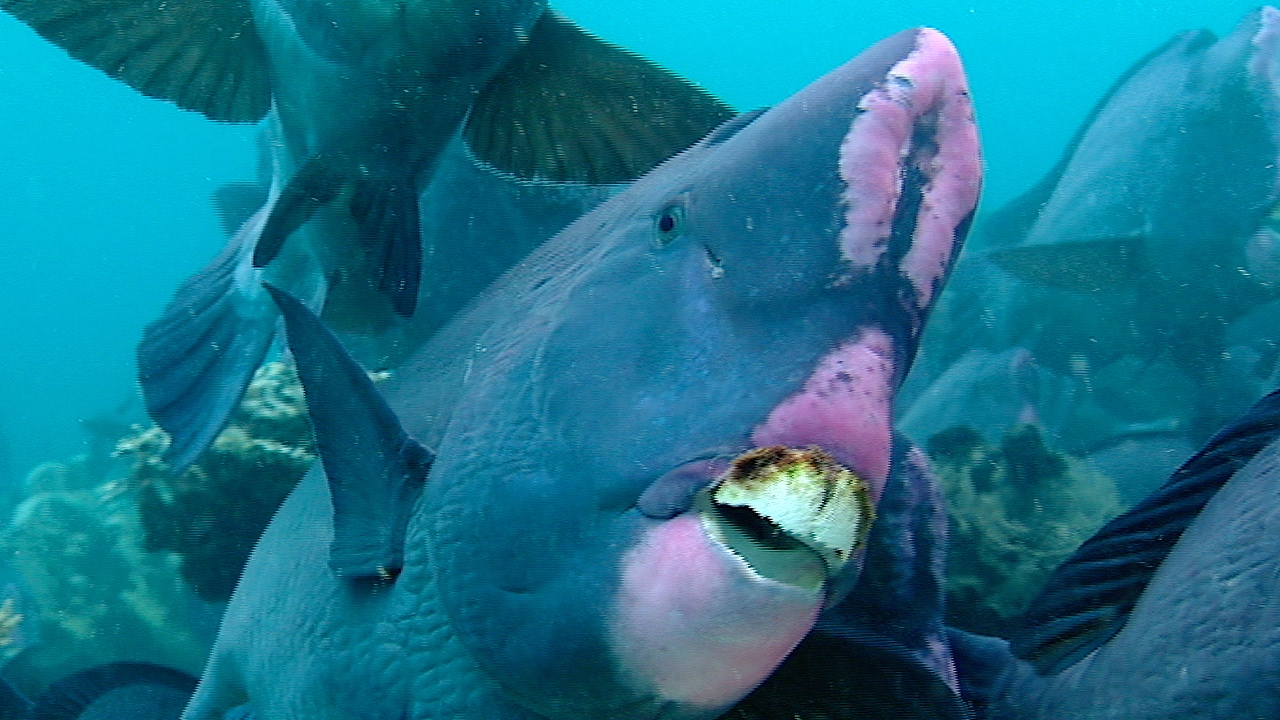
Have you ever relaxed on a pristine white sand beach and wondered where all that fine, powdery sand comes from? Surprisingly, a big part of it is fish poop! The colorful parrotfish is one of the few animals that effectively “eats rock” by grinding up hard coral skeletons and excreting them as sand.
What Makes Parrotfish a Rock-Eating Wonder?
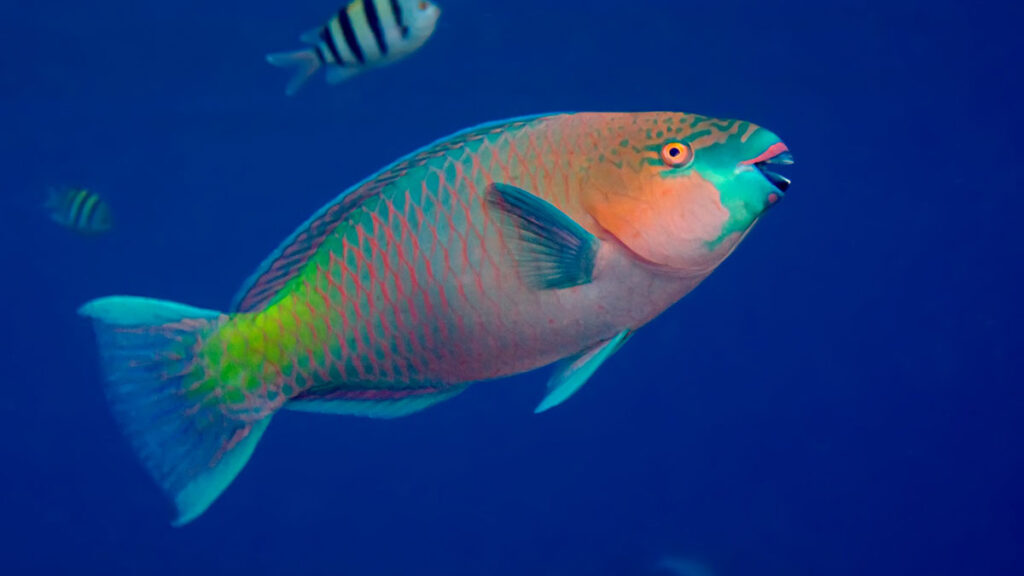
Parrotfish are vibrant tropical fish found in coral reefs around the world, from the Caribbean to the Indo-Pacific. Named for their beak-like mouths formed by fused teeth, they spend up to 90% of their day feeding.
These fish don’t eat the coral for the rock itself they target the algae, polyps, and microorganisms living on or in it. Their powerful beaks bite into the calcium carbonate structure (essentially rock-hard coral skeleton), and throat teeth grind it into fine particles.
After digesting the edible parts, the indigestible ground-up coral is expelled as fine white sand often visible as a cloudy trail behind swimming parrotfish.
How Much Sand Does One Parrotfish Produce?
A single large parrotfish (like the bumphead species) can produce up to 320-450 kg (700-1,000 lbs) of sand per year enough to fill several wheelbarrows! In reef-heavy areas like Hawaii, the Maldives, or the Caribbean, parrotfish are responsible for a significant portion of the iconic white beaches.
Why Parrotfish Are Heroes of the Reef
Beyond creating beaches, parrotfish play a crucial role in reef health:
- They control algae growth that can smother corals.
- Their grazing creates space for new coral to settle.
- Overfishing of parrotfish has led to reef decline in some areas protecting them helps preserve both reefs and sandy shores.
