

Nestled high in a mountain valley at over 2,200 meters (7,200 feet) above sea level, Sana’a, the capital of Yemen, is one of the world’s oldest continuously inhabited cities, with a history spanning more than 2,500 years. While its pre-Islamic roots trace back to ancient kingdoms, Sana’a holds a profound place in Islamic history as a major center for the early propagation of Islam in the 7th and 8th centuries.
Why Sana’a Stands Out in Islamic History
Sana’a’s significance in the Islamic world stems from its early adoption of the faith and its role in spreading Islam:
- Conversion to Islam: The city embraced Islam around 632 CE, shortly after the Prophet Muhammad’s era, under the influence of Ali ibn Abi Talib.
- Early Islamic Center: In the 7th and 8th centuries, Sana’a became a key hub for Islamic propagation, reflected in its religious architecture.
- The Great Mosque of Sana’a: One of the oldest mosques in the world, believed to have been constructed as early as the Prophet’s lifetime (around 633 CE). It features ancient columns and archaeological remains from pre-Islamic times.
The Old City boasts 103 mosques, 14 traditional hammams (bathhouses), and over 6,000 houses built before the 11th century, many showcasing exquisite Islamic-era design.
Iconic Architecture: The Tower Houses of Sana’a
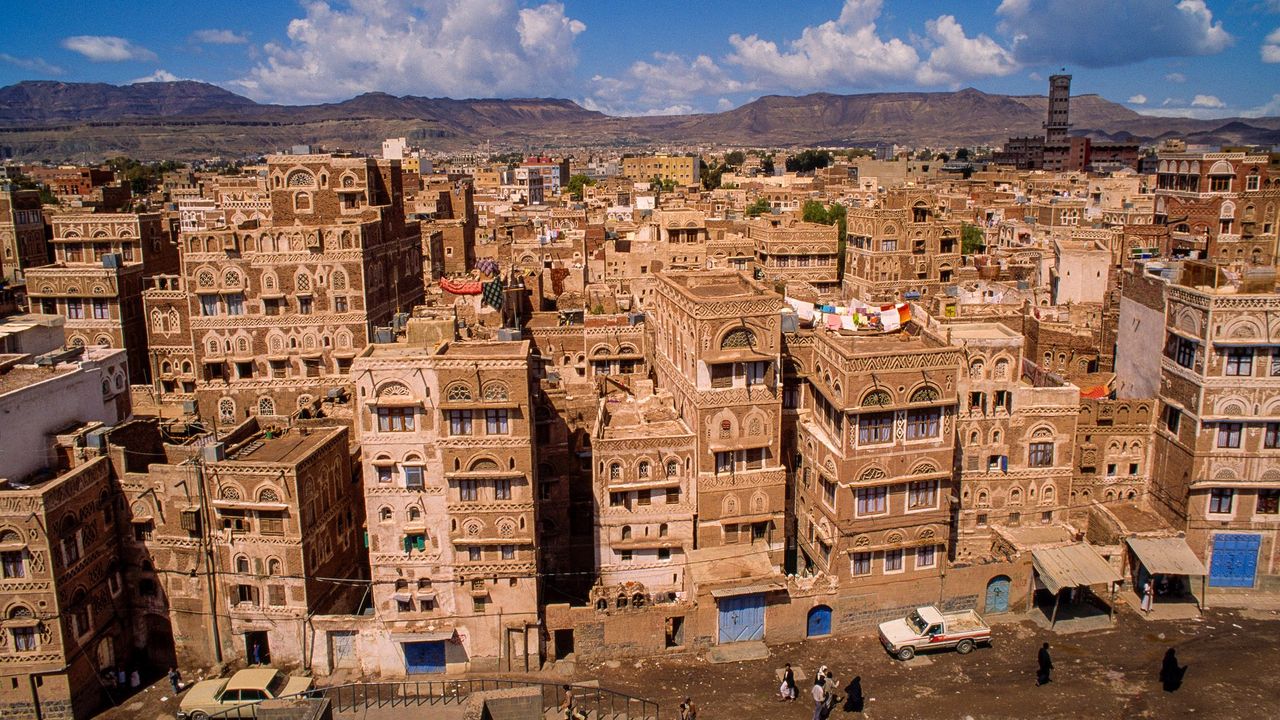
What makes Sana’a visually unforgettable are its multi-story tower houses made of rammed earth and burnt brick, rising up to 9 stories high. Decorated with intricate geometric patterns and white gypsum friezes, these structures create a fairy-tale skyline often called the “Manhattan of the Desert” (though that nickname belongs to nearby Shibam).
- UNESCO World Heritage Site: Designated in 1986 for its outstanding universal value, representing a masterpiece of human creative genius in Islamic urban planning and architecture.
- Ancient Roots: Legends attribute its founding to Shem, son of Noah, while historical evidence points to the Sabaean kingdom.
Other Fascinating Facts About Sana’a
- High Altitude Capital: One of the highest capital cities in the world.
- Bustling Souks: Traditional markets like Souq al-Milh offer spices, silverware, and antiques.
- Cultural Legacy: Home to influential Islamic scholars and a crossroads of ancient trade routes.
Despite challenges from conflict and environmental threats, Sana’a remains a living testament to early Islamic civilization, blending ancient heritage with profound religious importance.
