




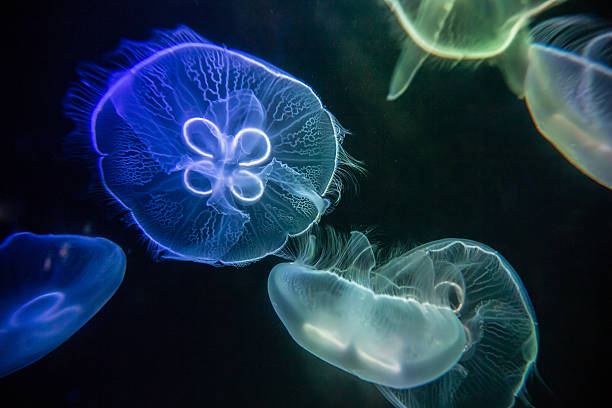
In the mysterious depths of the ocean and shimmering coastal waters, few creatures captivate like the Moon Jellyfish (Aurelia aurita). Also known as the common jellyfish, moon jelly, or saucer jelly, this translucent beauty is famous for its ethereal, almost magical glow especially when disturbed or gently touched. This gentle giant of the jelly world turns night into a light show, making it one of nature’s most enchanting bioluminescent animals.
Watch these mesmerizing Moon Jellyfish pulse and glow in dark aquarium waters:
These stunning visuals show the soft, blue-green bioluminescence that appears when the jelly is touched or disturbed a natural defense mechanism and pure ocean magic!
What Makes the Moon Jellyfish So Special?
The Moon Jellyfish (scientific name Aurelia aurita) is one of the most widespread and recognizable jellyfish species on Earth. Found in coastal waters of the Atlantic, Pacific, and Indian Oceans, as well as many seas and harbors, it’s harmless to humans with a very mild sting (often barely noticeable).
Key features that make it unforgettable:
- Translucent, saucer-shaped bell, Up to 12 inches (30 cm) wide, almost completely see-through with four distinctive horseshoe-shaped gonads (pink in females, white in males) visible in the center.
- Short, delicate tentacles, Hundreds of them fringe the bell, forming a gentle “feeding net” for catching tiny plankton.
- Bioluminescence ,When touched, disturbed, or in dark conditions, it produces a soft, glowing light through a chemical reaction involving luciferin and luciferase. This glow is often blue, green, or pinkish a dazzling display used to startle predators or communicate.
Many sources describe Moon Jellies as glowing when touched or disturbed, creating flashes of light as a survival trick in the dark ocean.
Why Does the Moon Jellyfish Glow?
Bioluminescence in Moon Jellies serves practical purposes:
- Defense, A sudden flash of light can surprise and deter predators.
- Communication, In darker waters, the glow may help jellies interact.
- Attraction ,Some bioluminescent displays help in mating or luring prey.
Unlike more intense glowers like comb jellies (which sparkle with iridescence), the Moon Jelly’s light is subtle yet breathtaking especially in aquariums where touch or water movement triggers the glow.
Here are more close-up views of their glowing, translucent beauty in motion:
Fun Facts About Moon Jellyfish
- Short lifespan Most live only 1–2 years.
- Reproduction magic They can reproduce both sexually and asexually; females carry larvae on their tentacles before releasing them.
- Harmless to humans Safe to touch gently (though always respect marine life!).
- Aquarium favorites Popular in public aquariums due to their graceful pulsing and stunning glow under black lights.
Experience the Magic Yourself
Whether drifting in coastal waters under moonlight or illuminated in an aquarium, the Moon Jellyfish reminds us how alien and beautiful our oceans truly are. Its gentle glow when touched isn’t just a trick of light it’s nature’s way of saying, “Look closer… there’s wonder here.”
