
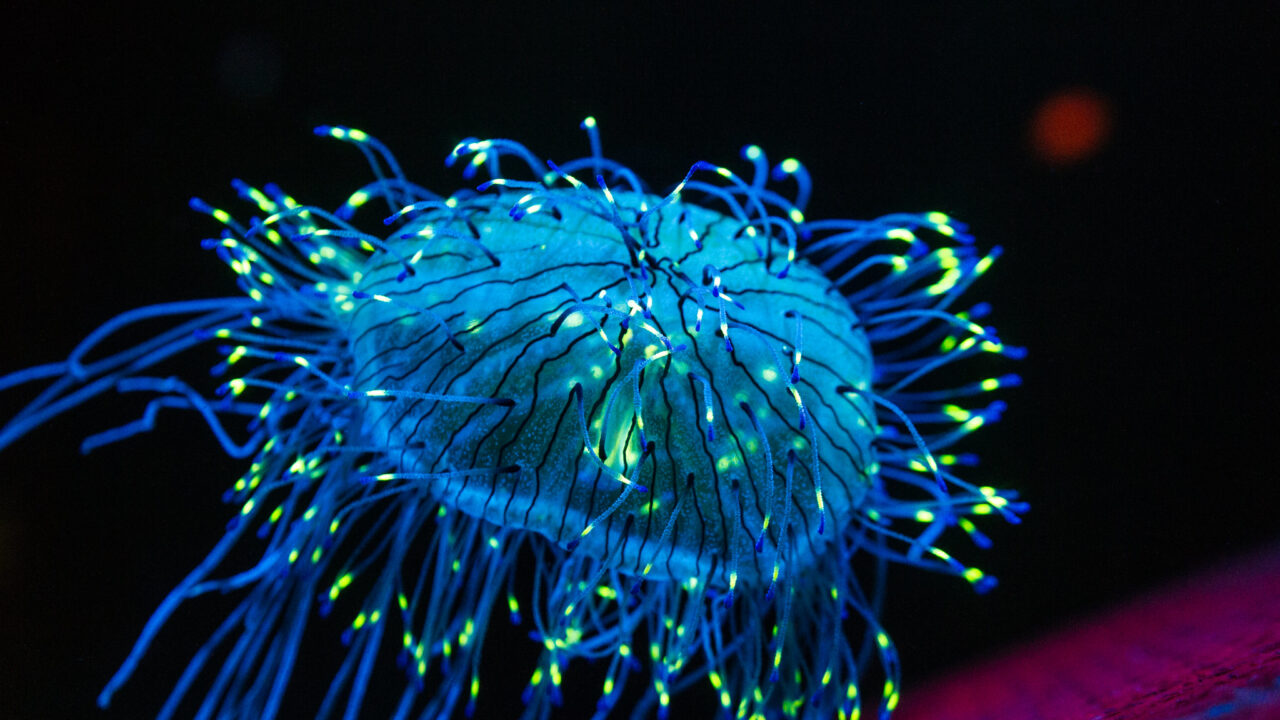



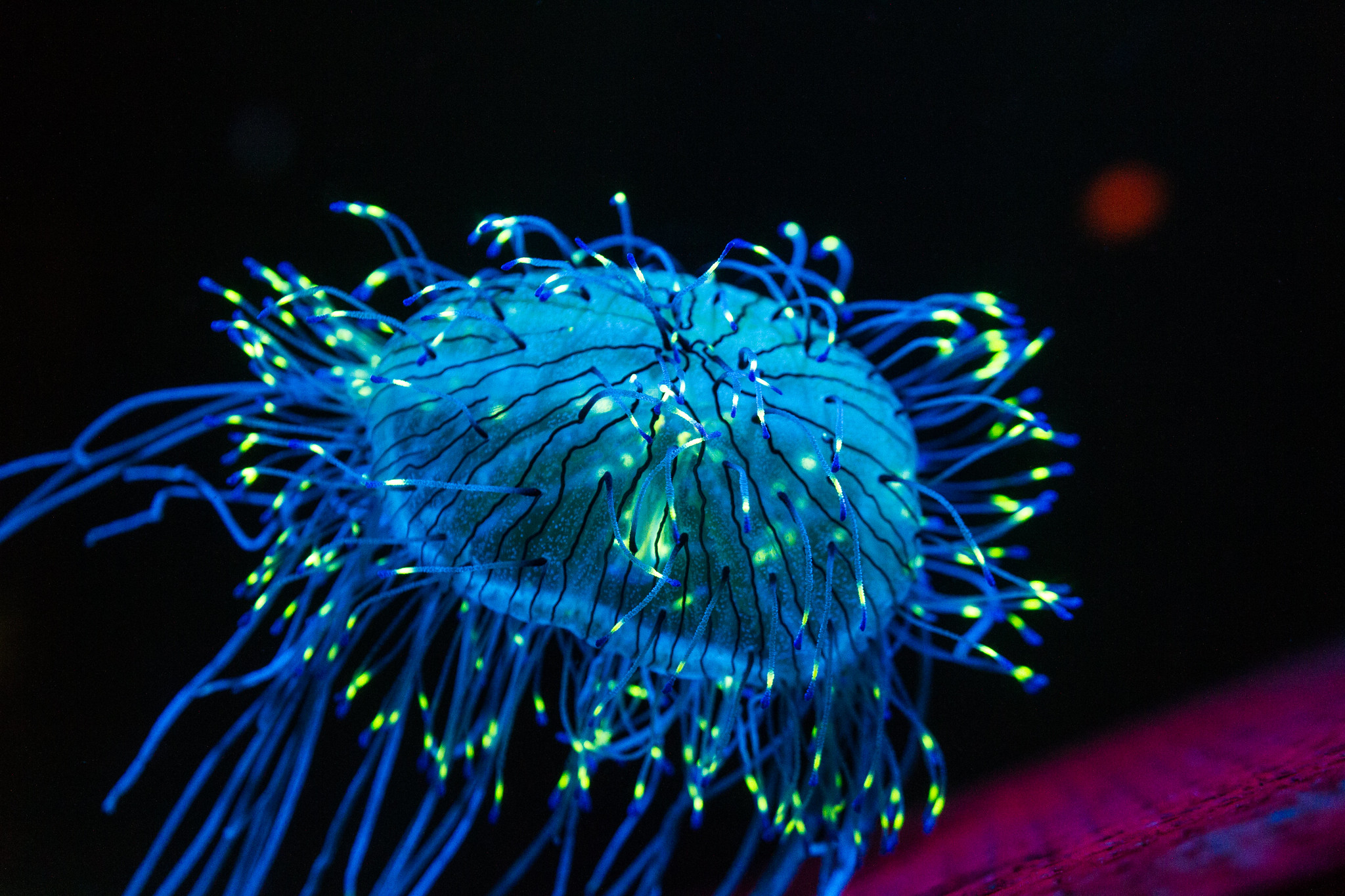
The deep ocean is one of the most mysterious environments on Earth, home to creatures that seem almost alien in appearance and behavior. Among these extraordinary organisms is a bioluminescent parasite often referred to as the “lantern parasite.” This rare deep-sea animal is known for its ability to glow inside the stomachs of fish, creating one of the most unusual survival strategies in the natural world.
What Is the Lantern Parasite?
The lantern parasite is a bioluminescent deep-sea organism that lives inside the bodies of host fish. Unlike many parasites that remain hidden, this creature produces light through a biological process known as bioluminescence. The glow originates from specialized cells that generate light using chemical reactions involving luciferin and luciferase.
This glowing ability has earned the parasite its nickname, as it resembles a small lantern illuminating the dark interior of its host. Scientists believe this light plays a crucial role in the parasite’s survival and reproduction in the deep ocean.
Life in the Deep Sea
Deep-sea environments are characterized by complete darkness, extreme pressure, and low temperatures. In these conditions, bioluminescence is a common adaptation. Many deep-sea animals use light to attract prey, communicate, or confuse predators.
For the lantern parasite, glowing inside a fish’s stomach may help it attract additional prey or even lure other organisms closer to the host fish. This strategy increases the parasite’s chances of feeding and spreading to new hosts.
How Does It Glow?
The bioluminescence of the lantern parasite is produced through a chemical reaction within its cells. When luciferin reacts with oxygen in the presence of the enzyme luciferase, light is emitted without producing heat.
In some cases, symbiotic bacteria are responsible for the light production. These bacteria live within the parasite’s tissues and continuously generate light, making the glow long-lasting and efficient. This adaptation is especially valuable in the pitch-black environment of the deep sea.
Parasitic Relationship with Host Fish
The lantern parasite attaches itself to the internal organs of deep-sea fish, often residing in the stomach or digestive tract. It feeds on nutrients from the host while remaining protected from external predators.
While the parasite benefits from shelter and food, the host fish may suffer reduced health, slower growth, or impaired digestion. However, in the deep sea, such relationships are relatively common, as survival often depends on exploiting limited resources.
Evolutionary Advantage of Glowing Inside a Host
Glowing inside a fish’s stomach may seem counterintuitive, but it offers several evolutionary advantages. The light can attract smaller organisms toward the host fish, increasing feeding opportunities for both the fish and the parasite.
In addition, bioluminescence may help the parasite attract mates or signal its presence to others of its kind. In the vast darkness of the deep ocean, light becomes one of the most effective tools for communication and survival.
Scientific Interest and Discovery
The lantern parasite remains a subject of ongoing scientific research. Due to the difficulty of exploring deep-sea environments, much of what is known comes from rare observations and deep-sea trawling expeditions.
Researchers study these parasites to better understand bioluminescence, host-parasite relationships, and the evolution of extreme adaptations. Discoveries related to bioluminescent organisms have also inspired technological innovations, including medical imaging and low-energy lighting.
Role in the Deep-Sea Ecosystem
Despite its small size, the lantern parasite plays a role in the deep-sea food web. By interacting with host fish and attracting other organisms, it influences energy transfer in an ecosystem where food is scarce.
Bioluminescent parasites highlight the complexity of deep-sea life and demonstrate how even the most unusual adaptations can serve a vital ecological function.
Why the Lantern Parasite Fascinates Humans
The idea of an animal glowing inside another living creature captures the imagination and challenges our understanding of biology. The lantern parasite represents the extreme creativity of evolution, showing how life can adapt to even the harshest environments.
As deep-sea exploration continues, creatures like the lantern parasite remind us that much of Earth’s biodiversity remains hidden beneath the ocean’s surface, waiting to be discovered.
