



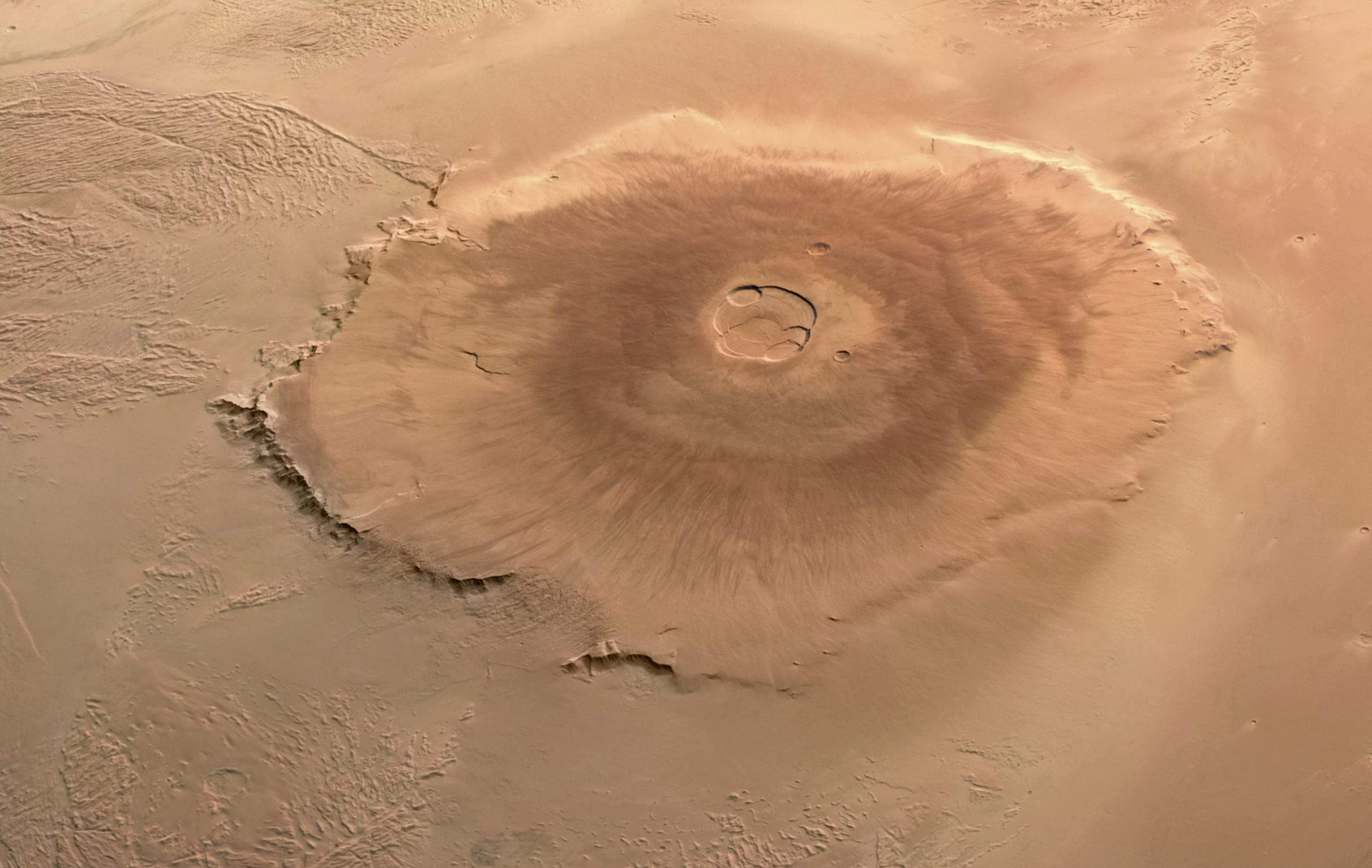
Olympus Mons is the largest volcano and tallest mountain in the solar system. Located on Mars, it towers above the surrounding plains and dwarfs any mountain found on Earth.
Its immense size makes it one of the most extraordinary geological structures ever discovered.
How Tall Is Olympus Mons
Olympus Mons rises approximately 22 kilometers above the Martian surface. This is nearly three times the height of Mount Everest from sea level.
Its base is so wide that it would cover an entire country on Earth.
Why Olympus Mons Grew So Large
Mars lacks active plate tectonics. On Earth, moving tectonic plates shift volcanoes away from their magma source.
On Mars, the crust remained stationary, allowing Olympus Mons to erupt repeatedly over millions of years at the same location.
Shape and Structure
Olympus Mons is a shield volcano with gentle slopes. Despite its height, its slopes are so gradual that standing on the surface would make it difficult to see the summit.
The volcano features:
- A massive caldera with multiple collapse pits
- Lava flows extending hundreds of kilometers
- Steep cliffs around the base
Age and Volcanic Activity
Scientists estimate that Olympus Mons formed over billions of years. Some lava flows appear relatively young, suggesting volcanic activity may have continued until recent geological times.
Atmospheric Effects on Mars
Mars has a thin atmosphere and lower gravity, which allowed lava to flow farther and build taller structures.
These conditions were ideal for the formation of a giant volcano.
Comparison with Earth Volcanoes
If Olympus Mons were placed on Earth:
- Its base would sink into the crust under its own weight
- Atmospheric pressure would alter eruption styles
- Plate movement would prevent long term growth
This highlights how planetary conditions shape geological features.
Scientific Importance
Olympus Mons helps scientists understand:
- Volcanic processes on other planets
- Differences between Earth and Mars
- The geological history of Mars
Future Exploration
Future missions may study the slopes and lava plains of Olympus Mons to learn more about Mars’s interior and volcanic past.
Olympus Mons stands as a monument to Mars’s unique geology. As the tallest mountain in the solar system, it reminds us that planetary forces can create structures beyond imagination.
