

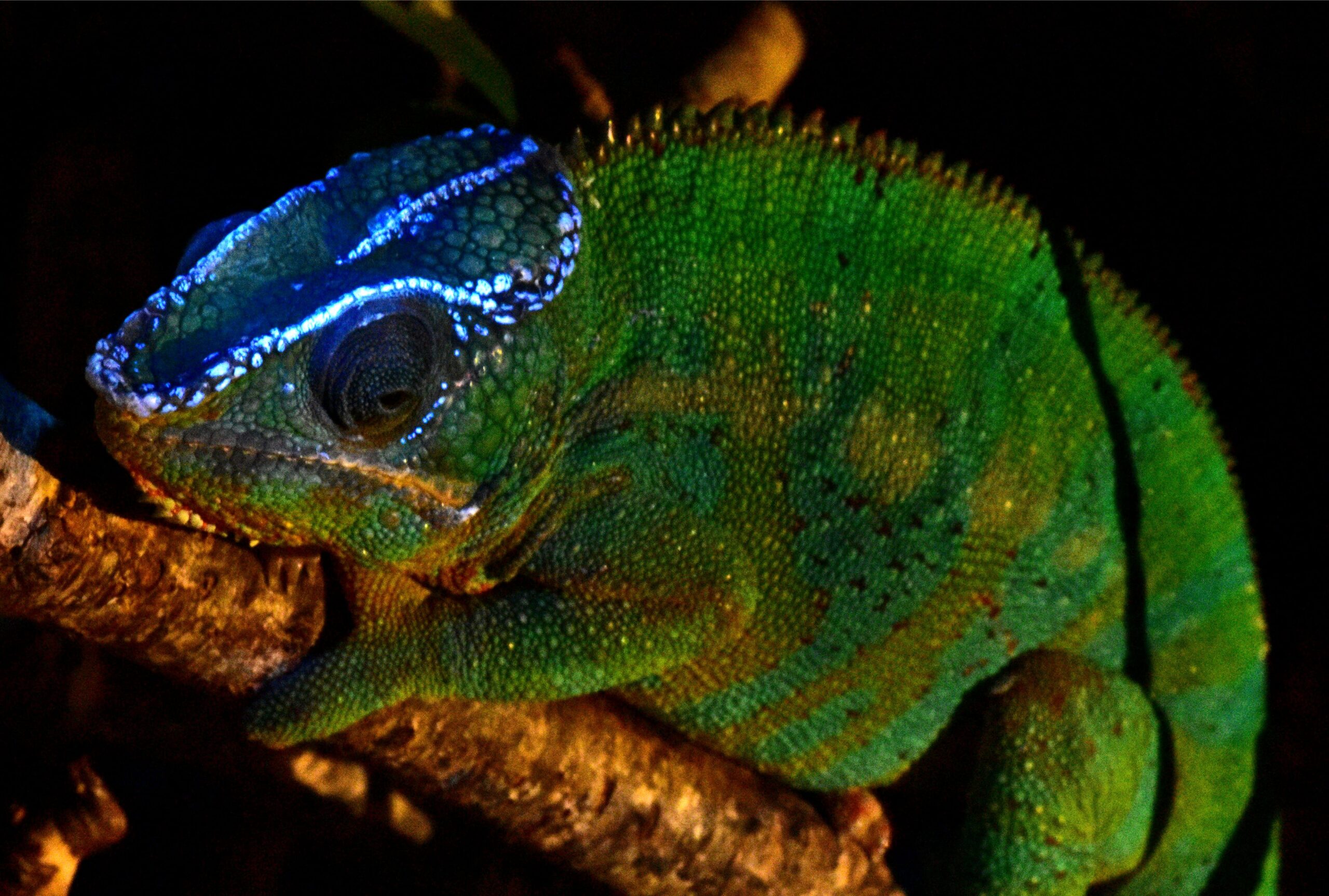
Chameleons are widely known for their ability to change skin color, but few people realize that this color transformation can extend beyond the skin. Certain species of chameleons possess bones that reflect light through their translucent skin, giving the appearance that their bones change color as well.
This remarkable trait is the result of chemical and structural adaptations that evolved over millions of years.
How Chameleons Change Color
Chameleons do not change color by using pigments like paint. Instead, they rely on specialized skin cells called chromatophores and iridophores.
These cells manipulate light by altering the spacing of nanocrystals, which reflect different wavelengths. This allows chameleons to shift from green to yellow, red, or blue depending on mood, temperature, and social signals.
Bone Fluorescence and Light Reflection
In some chameleon species, parts of the skull and bones fluoresce under certain lighting conditions. Their skin is thin enough to allow reflected light from bone structures to pass through.
This creates the illusion that the bones themselves are changing color, especially under ultraviolet light.
Chemical and Structural Adaptations
The phenomenon is not caused by pigment in the bones, but by:
- Mineral composition of bone tissue
- Light scattering through translucent skin
- Interaction between skin layers and underlying bone
These adaptations may enhance visual signaling during mating or territorial displays.
Evolutionary Advantages
Scientists believe this trait provides several benefits:
- Enhanced communication without increased movement
- Improved camouflage while displaying subtle signals
- Attraction of mates using visual cues invisible to predators
Species Known for Bone Color Effects
Not all chameleons display this trait equally. It is most prominent in certain forest dwelling species with lighter skin tones.
Research continues to uncover how widespread this adaptation truly is.
Scientific Importance
Studying chameleon bone color reflection helps scientists understand:
- Light manipulation in biological systems
- Evolution of visual communication
- Potential applications in optical materials
Chameleons are far more complex than simple color changers. Their ability to reflect color from skin to bone highlights nature’s incredible ingenuity in adapting form and function.
