History and Creation
The Hundertwasserhaus in Vienna, Austria, stems from artist Friedensreich Hundertwasser’s 1950s advocacy for nature-integrated architecture. In 1977, Chancellor Bruno Kreisky and Mayor Leopold Gratz invited him to design social housing. Collaborating with architect Josef Krawina (later disputed in court), construction ran from 1983 to 1985. Hundertwasser took no fee, prioritizing beauty over profit. A 2010 ruling affirmed co-creation. His earlier TV models influenced ideas like roof forests and “window rights.”
Architectural Features
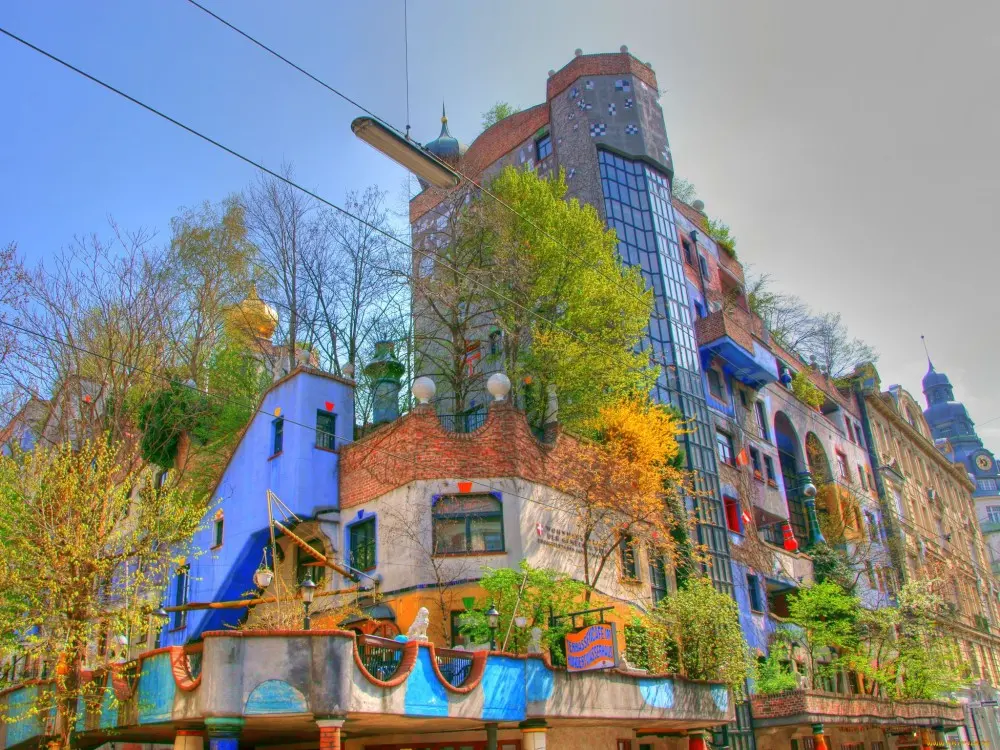
This expressionist building rejects straight lines, featuring undulating floors, a grass-covered roof with 250 trees, and colorful, irregular facades. It includes 53 apartments, offices, and terraces, with trees as “tenants” protruding from windows. Parabolic arches and organic shapes create a living, decaying harmony with nature.
Why It’s Unique and Visitor Attractions
Unique for embedding nature in urban living roofs as meadows and tenant-customized windows it protests modernist grids. In Landstraße district at Kegelgasse and Löwengasse, it’s Vienna’s most visited site. Tourists admire the fountain, terraces, and vibrant exteriors; interiors are private. Fact: Hundertwasser’s philosophy inspired global eco-designs. It’s a cultural icon promoting humane habitats.
