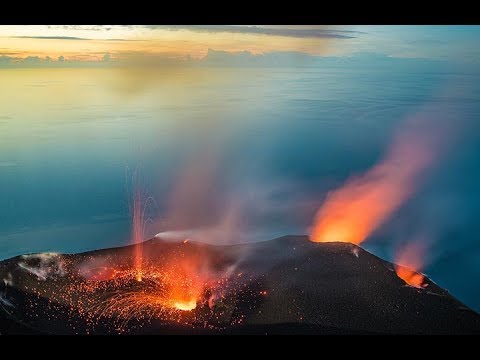
Stromboli Volcano, often called the “Lighthouse of the Mediterranean,” is renowned for its two active peaks and small eruptions that occur almost hourly. This Italian island volcano offers a unique spectacle for volcanologists and tourists alike. In this comprehensive guide, we’ll explore Stromboli’s geology, eruption patterns, and visitor tips. If you’re searching for “Stromboli volcano two peaks” or “volcano with hourly eruptions,” this article delves into the fiery heart of this natural wonder.
Geological Formation and Dual Peaks
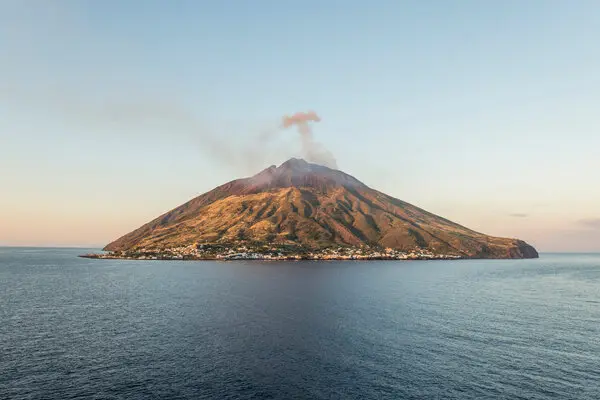
Stromboli is part of the Aeolian Islands arc, formed by the subduction of the African plate beneath the Eurasian plate. Rising 924 meters above sea level, it features two prominent peaks: the main summit and a secondary vent, both active and contributing to its persistent activity.
The volcano’s structure includes a sciara del fuoco (fire slope) where lava flows descend to the sea. Eruptions are Strombolian-style short bursts of lava and ash occurring from these peaks every 10-20 minutes on average. This dual-peak system allows for simultaneous activity, creating a dynamic landscape.
Geological surveys by the Italian National Institute of Geophysics and Volcanology (INGV) monitor these peaks, noting that the northern peak often produces more explosive events, while the southern one favors effusive lava flows.
Eruption Patterns and Hourly Spectacles
What sets Stromboli apart is its near-constant activity, with small eruptions happening almost hourly. These events eject incandescent bombs and ash up to 100-200 meters, visible especially at night as glowing arcs against the sky.
Historical records date back to ancient times, with Homer possibly referencing it in the Odyssey. Modern monitoring shows cycles of increased activity, like the 2019 paroxysm that tragically claimed a life, underscoring the need for safety.
For “Stromboli small eruptions hourly,” these bursts are driven by gas bubbles rising through magma, exploding at the surface. This predictability makes it a living laboratory for studying volcanic processes.
Climate change may influence eruption frequency through altered seismic activity, though research is ongoing.
Flora, Fauna, and Human Impact
Despite its volatility, Stromboli supports unique ecosystems. Hardy plants like capers and figs cling to slopes, while seabirds nest on cliffs. The island’s 500 residents rely on tourism and fishing, adapting to the volcano’s rhythms.
Volcanic soil enriches agriculture, producing renowned wines. However, eruptions pose risks, leading to evacuation plans and restricted zones.
Visiting Stromboli Tips and Safety
Tourists flock to witness the eruptions via guided hikes or boat tours. Night excursions offer the best views of the glowing peaks. Always check INGV alerts and hire certified guides.
For eco-tourism, support local initiatives that promote sustainable visits. In conclusion, Stromboli’s dual peaks and hourly eruptions embody nature’s raw power, inviting awe and respect.
