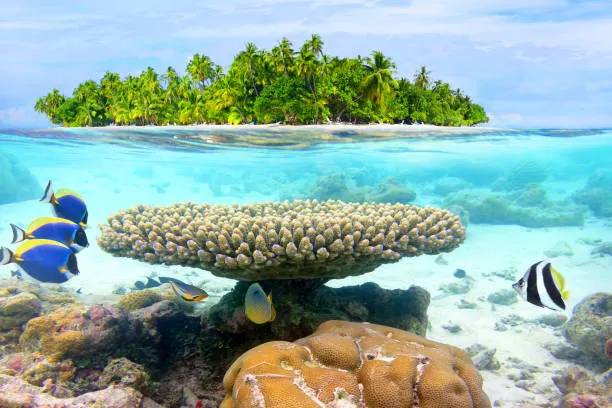
Islands come in many forms, but few are as unique as those made entirely from coral debris. Coral islands, or cays, are formed when coral skeletons accumulate over time, creating habitable land masses. These islands are not only geological wonders but also hotspots of biodiversity.
Coral: The Building Blocks of Islands
Coral reefs are composed of tiny animals called polyps, which secrete calcium carbonate to form protective exoskeletons. Over centuries, the skeletons of dead corals accumulate and compact, gradually forming the foundation of islands. This process demonstrates the significant role small organisms play in shaping our planet.
Formation Process
Coral islands usually begin as fringing reefs around volcanic or continental islands. As corals grow and die, their skeletons break into fragments through wave action. These fragments accumulate and solidify over time, eventually rising above the water surface to form a coral cay. Some islands may take thousands of years to form.
Unique Ecosystems
Coral islands support diverse ecosystems. They provide nesting grounds for seabirds, turtles, and invertebrates. Vegetation often starts with salt-tolerant plants like mangroves and shrubs, which stabilize the sandy soil and create habitats for terrestrial animals. The surrounding reefs are home to colorful fish, mollusks, and crustaceans.
Threats to Coral Islands
Despite their resilience, coral islands face numerous threats. Climate change leads to coral bleaching, where polyps expel symbiotic algae and die. Rising sea levels can submerge islands, while pollution and overfishing disrupt marine ecosystems. Conservation efforts are critical to preserving these natural wonders.
Human Interaction
Humans have long inhabited coral islands, particularly in the Pacific and Indian Oceans. Traditional lifestyles include fishing, small-scale agriculture, and sustainable use of coral and shell resources. Tourism, however, can pose significant environmental challenges, requiring careful management to prevent ecosystem degradation.
The Beauty of Coral Islands
The aesthetic appeal of coral islands is unmatched. Turquoise waters, white sandy beaches, and abundant marine life make them popular destinations. Their formation from living organisms highlights the intricate connections between life and land.
Conservation Efforts
Global initiatives aim to protect coral reefs and islands through marine protected areas, coral restoration projects, and sustainable tourism practices. Public awareness campaigns emphasize the importance of preserving these fragile ecosystems for future generations.
Islands made from dead coral exemplify the remarkable interplay between life and geology. They are living testaments to the resilience of coral reefs and the biodiversity they support. Protecting these islands ensures that they continue to enchant and sustain life for generations to come.
