
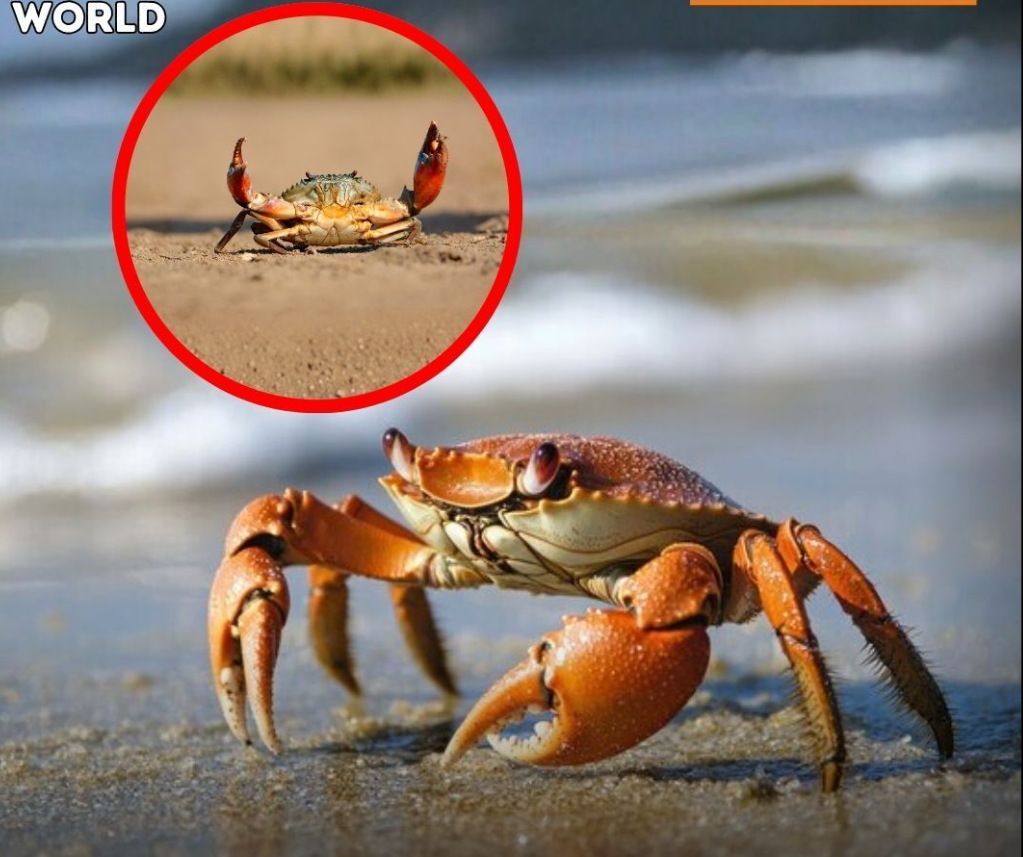
Deep-sea crabs are among the ocean’s most fascinating creatures, renowned for their quirky movements and survival strategies in the harsh underwater world. While many animals lumber forward, these crustaceans often defy expectations by moving backward or sideways with surprising agility. This article delves into the antics of deep-sea crabs, exploring why they prefer backward locomotion, their unique adaptations, and how this behavior aids their survival in extreme environments.
The Science Behind Backward and Sideways Walking in Crabs
Crabs, including deep-sea varieties like king crabs and spider crabs, have evolved a body structure that makes sideways or backward movement more efficient than forward progression. Their legs are attached to the sides of their bodies, with joints that bend outward, allowing for swift lateral scuttles. In deep-sea settings, where visibility is low and predators abound, this adaptation proves crucial. For instance, spider crabs, often found in deep waters, can walk forward but excel at rapid backward retreats to evade threats. Research shows that sideways walking helps crabs avoid tripping over their own legs, making it faster and more stable in uneven terrains like ocean floors. Deep-sea crabs, such as the red king crab, demonstrate this by navigating rocky abyssal plains with ease, often appearing to “dance” backward when startled.
In controlled observations, crabs have been seen switching directions seamlessly, darting backward at speeds that outpace their forward gait. This backward prowess is not just for escape; it’s integral to foraging. Deep-sea crabs use their claws to probe sediments while moving in reverse, scooping up prey like small fish or detritus without halting. The antics become even more pronounced in species like the spanner crab, which uniquely walks forward and backward instead of solely sideways, showcasing a versatility rare among crustaceans. This behavior highlights evolutionary efficiency, where energy conservation in low-oxygen deep waters is key.
Deep-Sea Habitats: Where Antics Meet Survival
The deep sea, plunging to depths over 1,000 meters, is a realm of perpetual darkness, crushing pressure, and frigid temperatures. Here, crabs like the golden king crab thrive by employing backward antics to maneuver through hydrothermal vents and sediment drifts. These environments demand quick reflexes; a backward scuttle can mean the difference between capturing a meal or becoming one. Videos from submersible explorations reveal crabs “moonwalking” backward over volcanic rocks, their legs propelling them with meta-chronal gait patterns—sequential leg movements that enhance speed and stability.
Interestingly, some deep-sea crabs exhibit playful or erratic behaviors, dubbed “antics,” such as waving claws or rapid directional changes. This isn’t mere whimsy; it’s a defense mechanism. For example, when threatened by predators like octopuses, crabs reverse direction abruptly, confusing attackers. In the Antarctic deep sea, king crabs have been observed migrating backward en masse, covering distances faster than forward movement would allow. Their ability to swim using paddle-shaped back legs further amplifies this, enabling quick escapes in open water. These adaptations underscore how backward locomotion provides an edge in survival, turning what seems like a quirk into a superpower.
Evolutionary Origins and Adaptations
The preference for backward or sideways movement traces back to crabs’ ancestors, who shed heavy tails like those of lobsters for a more compact form. This evolution favored side-bending joints, making forward walking cumbersome. Deep-sea species, isolated in extreme conditions, have refined this trait. The yeti crab, for instance, farms bacteria on its claws while shuffling backward through vent fields, optimizing energy use in nutrient-scarce zones.
Physiologically, crabs’ exoskeletons and muscle arrangements support faster backward bursts. Studies indicate that in emergencies, they can accelerate backward up to twice as fast as forward, thanks to powerful extensor muscles in their trailing legs. This is evident in fiddler crabs’ relatives in deeper waters, where males wave oversized claws while retreating backward to attract mates or deter rivals. Such antics not only aid reproduction but also enhance foraging efficiency, allowing crabs to cover more ground without expending excess energy.
Human Interactions and Conservation Challenges
Human activities, like deep-sea trawling, disrupt these crabs’ habitats, threatening their populations. Conservation efforts focus on sustainable fishing to preserve these unique behaviors. Observing deep-sea crabs through remotely operated vehicles (ROVs) has provided insights into their antics, revealing social interactions like group backward migrations during breeding seasons.
In aquariums, captive deep-sea crabs often display similar backward preferences, educating the public on ocean biodiversity. Protecting these species ensures the continuation of their evolutionary marvels, reminding us of the ocean’s hidden wonders.
Fun Facts and Myths Debunked
Contrary to myths, not all crabs walk only sideways; deep-sea varieties show flexibility. A fun fact: some can “swim” backward faster than they walk forward, using fin-like appendages. These antics inspire robotics, with engineers mimicking crab movements for underwater drones.
In summary, deep-sea crabs’ backward prowess is a testament to nature’s ingenuity, blending speed, survival, and spectacle in the ocean’s depths. Whether evading predators or foraging, their movements captivate and educate, highlighting the importance of marine conservation.
