

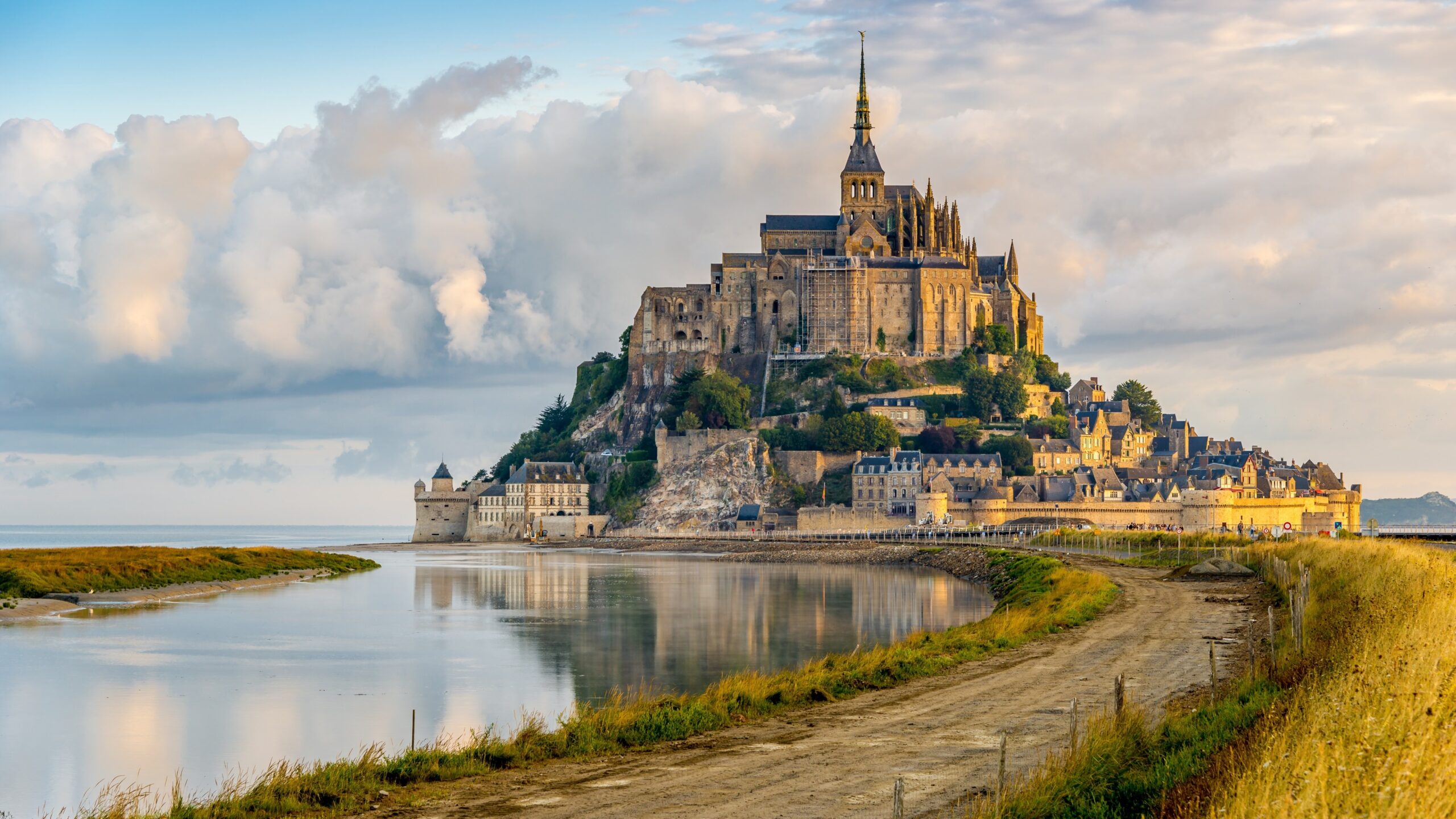
Nestled in Normandy, France, Mont Saint-Michel is a medieval marvel that captivates with its dramatic tidal transformations. This UNESCO World Heritage site emerges as a majestic abbey atop a rocky island at low tide, only to be encircled by the sea at high tide, creating a sense of isolation and mystery. Separated by the waves twice daily, it draws millions of visitors eager to experience its history, architecture, and natural spectacle. This comprehensive guide explores its origins, visitor tips, and the tidal phenomenon that makes it unique.
The Historical Roots of Mont Saint-Michel
Founded in the 8th century, Mont Saint-Michel began as a small oratory built by Bishop Aubert after a vision of Archangel Michael. Over centuries, it evolved into a fortified abbey, surviving sieges during the Hundred Years’ War and serving as a prison during the French Revolution. Its Gothic architecture, with spires piercing the sky, reflects Romanesque and Gothic influences.
The site’s position on a tidal island provided natural defense accessible only at low tide via a causeway. Today, a modern bridge replaces the old path, allowing safe access while preserving the ecosystem. The abbey’s interiors house stunning chapels, cloisters, and halls, offering glimpses into monastic life.
The Tidal Phenomenon: How the Sea Shapes the Landscape
Mont Saint-Michel Bay boasts one of Europe’s highest tidal ranges, up to 15 meters. At low tide, vast sandbanks expose the bay floor, turning the site into a peninsula walkable from the mainland. High tide rushes in at speeds likened to a galloping horse, isolating the mount and creating an island effect.
This cycle occurs twice daily, influenced by lunar phases. Supertides, like the 2015 event, fully submerge the causeway, drawing crowds. The bay’s siltation once threatened the island status, but restoration projects, including a dam removal, have revived the tides. Visitors can check tide tables to time their arrival—low tide for mudflat walks, high for dramatic photos.
Exploring the Site: Attractions and Activities
Climb the 350 steps to the abbey summit for panoramic views. Inside, admire the refectory and knights’ hall. The village below features cobblestone streets lined with shops, creperies, and museums like the Maritime Museum detailing tidal history.
Guided bay crossings at low tide reveal quicksand pitfalls and marine life book with certified guides for safety. Nearby, explore Normandy’s D-Day beaches or Avranches for broader context. For an immersive stay, hotels like La Mère Poulard offer views of the tides.
Conservation and Modern Challenges
As a protected site, Mont Saint-Michel faces overtourism and climate change. Efforts include limiting vehicle access and promoting eco-tours. The bay’s biodiversity home to seals, birds, and shellfish benefits from these initiatives.
Seasonally, spring and fall avoid summer crowds. Admission to the abbey is around €11, with free village entry. Accessibility aids like shuttles help those with mobility issues.
Cultural Significance and Visitor Stories
Mont Saint-Michel inspires art, literature, and film, symbolizing resilience. Pilgrims still trek here, echoing medieval traditions. Personal anecdotes from visitors describe the awe of watching the sea reclaim the land, fog shrouding the spires like a fairytale.
In depth, the site’s dual nature land and sea mirrors life’s ebb and flow. Whether for history buffs, nature lovers, or photographers, Mont Saint-Michel offers profound experiences.
Planning Your Visit: Practical Advice
Arrive early to beat queues; park in designated lots and take the free shuttle. Wear sturdy shoes for uneven terrain. For overnight stays, book ahead options range from budget to luxury.
In conclusion, Mont Saint-Michel’s tidal dance creates a living monument, where history emerges and recedes with the sea. This French icon promises adventure, reflection, and wonder for all.
