

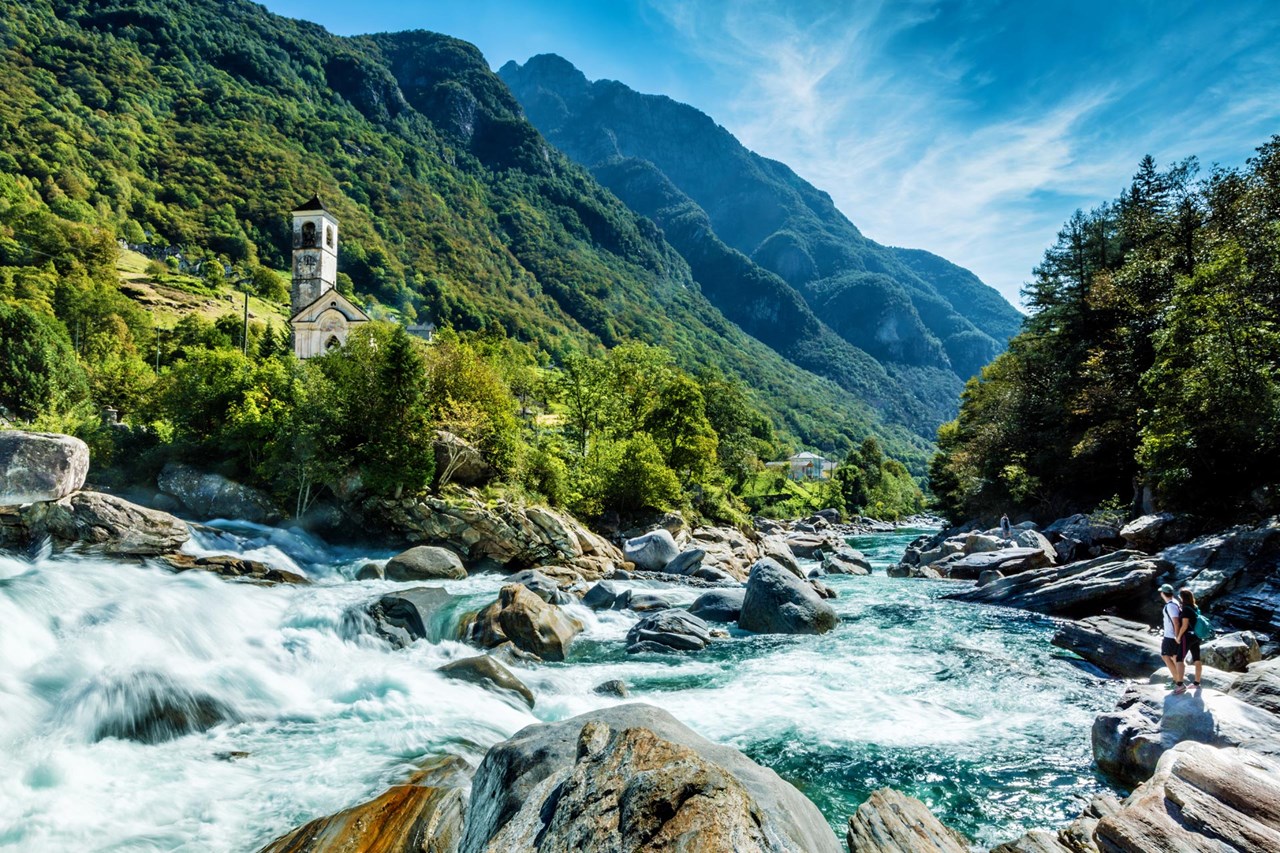
Tucked in Switzerland’s Ticino canton, the Verzasca River is a symphony of nature, where polished stones on the riverbed create melodic tones as water flows over them. This emerald-green river, carving through alpine valleys, offers a sensory experience blending visual beauty with auditory delight. Known for its crystal-clear waters and unique acoustics, it’s a haven for hikers, swimmers, and nature enthusiasts. In this detailed exploration, we’ll uncover its geology, activities, and the “music” that defines it.
Geological Formation and the River’s Unique Soundscape
The Verzasca River originates from the Swiss Alps, fed by glacial melt, flowing 30 km to Lake Maggiore. Its bed features smooth, rounded stones granite and gneiss eroded over millennia by swift currents. These stones, when struck by water, produce resonant tones resembling chimes or whispers, earning it the “singing river” moniker.
The acoustics amplify in narrow gorges, where echoes create a natural orchestra. Low water levels in summer enhance the effect, as exposed stones vibrate more freely. This phenomenon, akin to lithophones (stone instruments), draws sound artists and scientists studying hydroacoustics.
Iconic Spots Along the Verzasca: Bridges, Pools, and Valleys
Ponte dei Salti, a double-arched Romanesque bridge in Lavertezzo, is the river’s star. Built in the 17th century, it offers jumps into deep pools below popular for thrill-seekers. The valley’s trails, like the Sentierone, wind through chestnut forests, revealing waterfalls and rock formations.
Sonogno village marks the upper valley, with traditional stone houses and museums on local crafts. Downstream, Brione features swimming holes with turquoise waters, ideal for picnics. The river’s color comes from mineral suspensions, creating a fairytale vibe.
Activities and Adventures in the Verzasca Valley
Hiking dominates, with paths suiting all levels from easy riverside strolls to challenging ascents. Canyoning tours navigate rapids and slides, hearing the stones’ “music” up close. Swimming in natural pools is refreshing, though currents demand caution.
Winter brings snowshoeing, with frozen sections muting the tones but adding icy beauty. Cultural festivals celebrate the river, including music events inspired by its sounds.
Ecological Importance and Conservation
The Verzasca’s biodiversity includes trout, birds, and alpine flora. Protected as a natural reserve, efforts combat pollution and overdevelopment. Sustainable tourism promotes leave-no-trace principles.
Climate change affects flow, with drier summers reducing the musical effect. Local initiatives, like river cleanups, ensure preservation.
Cultural and Historical Context
Ticino’s Italian-speaking region blends Swiss precision with Mediterranean flair. The river inspired folklore tales of singing spirits and modern media, like James Bond’s bungee jump in “GoldenEye” from the nearby Contra Dam.
Visitors share stories of meditative moments by the water, where stone tones aid relaxation.
Practical Tips for Visiting the Singing River
Access via Locarno by bus or car; summer is peak season. Pack swimwear, sturdy shoes, and a picnic. Entry is free, but guided tours cost €50-100.
