

In the dense forests of Australia, the lyrebird reigns as nature’s ultimate impersonator, capable of mimicking everything from chainsaws to car alarms sounds eerily like machines. This extraordinary avian talent has fascinated ornithologists and birdwatchers, making the lyrebird a symbol of evolutionary ingenuity. In this in-depth exploration, we’ll cover the lyrebird’s biology, mimicking abilities, habitat, and conservation, ideal for those searching “lyrebird bird sounds like machines.” With its elaborate courtship displays and acoustic prowess, the lyrebird offers profound insights into animal behavior and adaptation.
Biology and Physical Characteristics of the Lyrebird
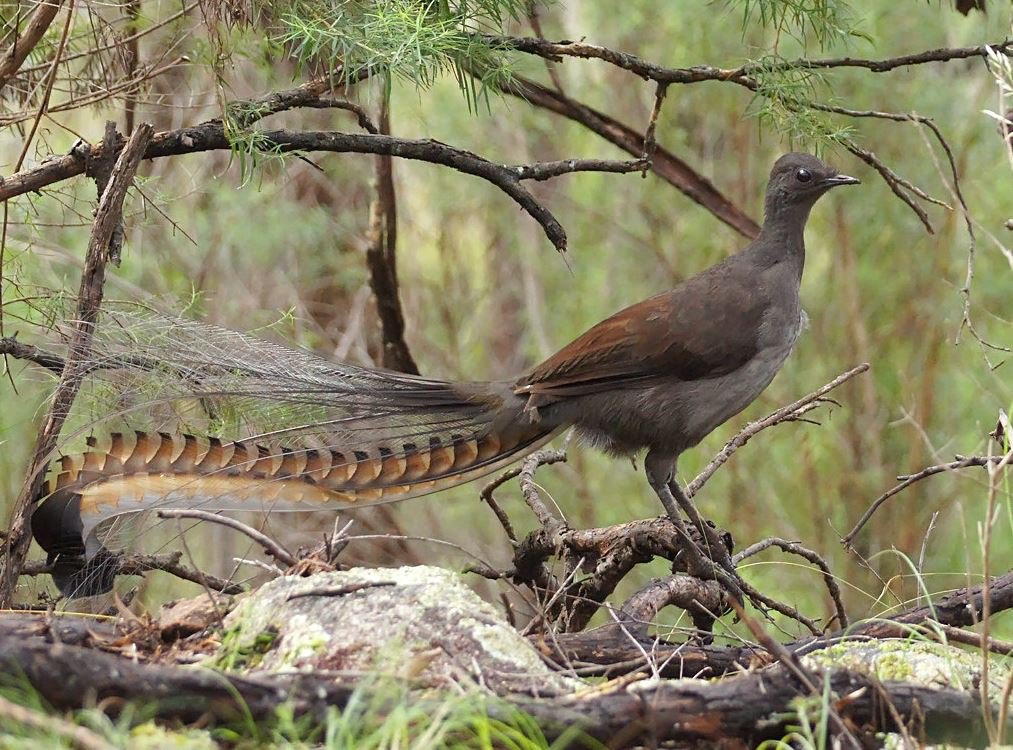
The lyrebird belongs to the genus Menura, with two species: the superb lyrebird (Menura novaehollandiae) and the Albert’s lyrebird (Menura alberti). Native to southeastern Australia, these ground-dwelling birds measure up to 1 meter long, including their iconic lyre-shaped tail feathers in males.
Physically, lyrebirds have brown plumage for camouflage, strong legs for scratching leaf litter, and keen hearing. Their syrinx the bird equivalent of vocal cords is highly developed, allowing complex sound production. Females are smaller and lack the elaborate tails, focusing on nesting duties.
Evolutionarily, lyrebirds diverged from other passerines millions of years ago, retaining primitive traits while evolving sophisticated mimicry. Fossils suggest their ancestors roamed Gondwana, linking them to ancient ecosystems.
The Art of Mimicry How Lyrebirds Imitate Machines and Nature
What sets the lyrebird apart is its mimicry repertoire, including machine sounds like camera shutters, drills, and even laser guns from video games picked up from human encroachment. Males use this during courtship, stringing together up to 80% mimicked sounds in elaborate songs lasting hours.
Scientifically, this is phonemimicry, where lyrebirds replicate amplitude, frequency, and timbre with astonishing accuracy. Research from Cornell Lab of Ornithology shows they learn from their environment, incorporating chainsaw noises from logging areas or car horns from nearby roads.
In the wild, mimicry serves multiple purposes: attracting mates, deterring rivals, and possibly confusing predators. Females select mates based on song complexity, driving evolutionary pressure for better imitations. Documentaries like David Attenborough’s “The Life of Birds” capture this, boosting interest in “lyrebird machine sounds.”
Habitat and Lifestyle in Australian Forests
Lyrebirds inhabit wet sclerophyll forests and rainforests in Victoria, New South Wales, and Queensland. They forage for insects, seeds, and small vertebrates by raking soil with powerful claws, aerating the earth and aiding decomposition.
Mating season peaks in winter, with males building display mounds and performing dances. Nests are domed structures on the ground, where females incubate a single egg for 50 days. Chicks fledge after months, learning mimicry from parents.
Human activities like urbanization fragment habitats, forcing lyrebirds into smaller areas where machine sounds become more prevalent in their repertoire. National parks like Sherbrooke Forest protect key populations, offering hiking trails for observation.
Conservation Challenges and Efforts
Threats to lyrebirds include habitat loss from logging, fires, and invasive predators like foxes and cats. The 2019-2020 Australian bushfires devastated populations, prompting recovery programs.
Conservation groups like BirdLife Australia monitor numbers through citizen science apps, where users report sightings and recordings. Reintroduction efforts in protected areas aim to bolster genetics. Education campaigns highlight the lyrebird’s role as a bioindicator its mimicry reflects environmental health, incorporating more human noises as disturbance increases.
For eco-tourists, guided tours in Dandenong Ranges provide ethical viewing, emphasizing minimal impact. SEO keywords like “lyrebird sounds like machines” drive awareness, funding research.
Cultural Significance and Scientific Insights
In Indigenous Australian lore, lyrebirds feature in Dreamtime stories as tricksters or creators of song. Modern culture celebrates them in literature, like “The Land of the Lyre Bird,” chronicling early settlements and their encounters.
Scientifically, studying lyrebird mimicry informs bioacoustics and AI voice synthesis. Their ability to replicate complex sounds aids understanding of neural plasticity in birds, with implications for human language evolution.
Future research uses AI to analyze songs, tracking environmental changes. As climate shifts alter forests, lyrebirds may adapt their mimics, perhaps incorporating new machine sounds from renewable energy installations.
In summary, the lyrebird’s machine-like vocalizations are a window into nature’s creativity, urging us to protect these feathered virtuosos for generations to come.
