A Myth, a Marvel, and a Desert Survivor
The idea of a bird hiding its head in the sand has long been used as a metaphor for avoidance. Surprisingly, this myth is often linked to a real desert bird: the Sandgrouse. While sandgrouse do not actually bury their heads to escape danger, their unique behaviors and extraordinary adaptations to harsh environments make them one of the most fascinating birds on Earth.
What Is a Sandgrouse?
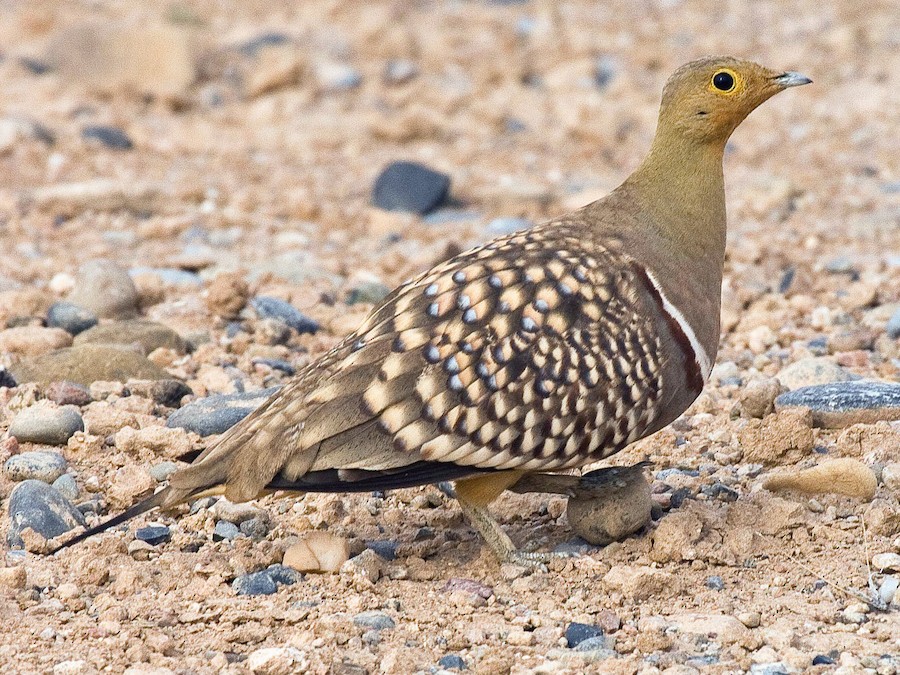
Sandgrouse belong to the family Pteroclidae and are found across arid regions of Africa, the Middle East, Central Asia, and parts of Europe. They are medium-sized birds with compact bodies, long pointed wings, and strong flight capabilities, allowing them to travel long distances in search of water.
Unlike many birds, sandgrouse are ground dwellers. Their feather coloration blends perfectly with sandy landscapes, providing excellent camouflage from predators.
The Origin of the “Head in the Sand” Myth
The misconception likely comes from the sandgrouse’s feeding behavior. These birds often lower their heads to the ground while pecking for seeds or resting during extreme heat. From a distance, this posture may look like they are burying their heads.
In reality, sandgrouse are highly alert animals with excellent vision and survival instincts.
Extraordinary Water-Carrying Feathers
One of the most remarkable features of the sandgrouse is its ability to transport water. Male sandgrouse have specially adapted belly feathers that can absorb and hold water like a sponge. After soaking these feathers at a water source, the male flies back to the nest, sometimes traveling over 30 kilometers, so chicks can drink directly from his feathers.
This adaptation is critical for survival in environments where water is scarce.
Habitat and Diet
Sandgrouse thrive in deserts, semi-arid plains, and dry grasslands. Their diet consists mainly of seeds and grains, which they digest efficiently despite limited water availability.
Why Sandgrouse Matter
Sandgrouse play an important ecological role by dispersing seeds and serving as indicators of desert ecosystem health.
