

Unveiling the African Wildcat’s Mysterious Nature
The African wildcat (Felis lybica), ancestor to our domestic cats, is a elusive nocturnal hunter roaming Africa’s savannas, deserts, and woodlands. Known for its piercing eyes that glow eerily in the dark, this small feline embodies adaptability and stealth. Weighing 3-6 kg, with sandy fur camouflaging it against arid landscapes, it hunts small mammals, birds, and reptiles under the cover of night. Its shining eyes, a result of evolutionary prowess, make it a symbol of the wild’s enigmatic beauty.
The Science Behind the Glowing Eyes
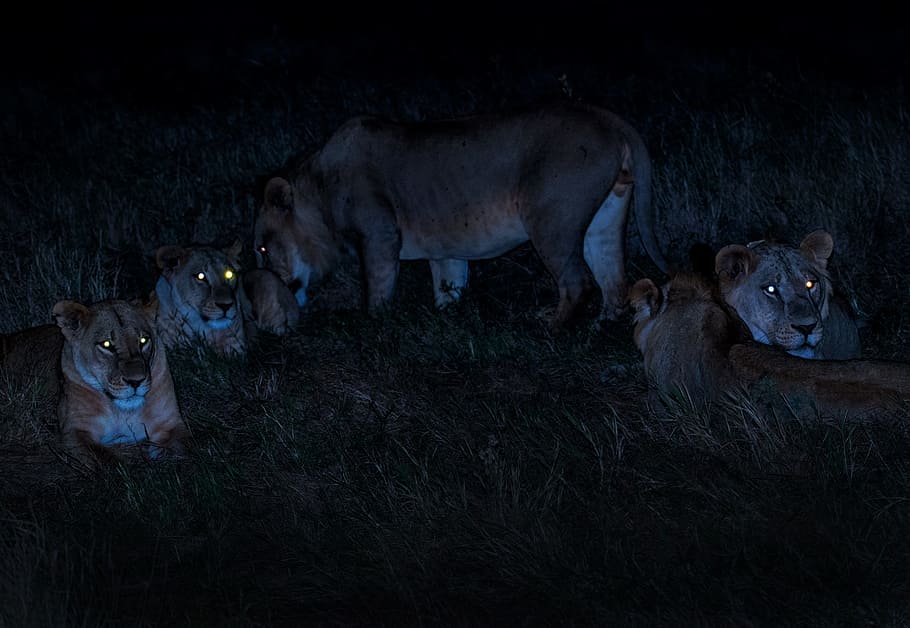
The mesmerizing glow in the African wildcat’s eyes stems from the tapetum lucidum, a reflective layer behind the retina. This structure, composed of riboflavin crystals, bounces light back through the retina, enhancing low-light vision up to six times better than humans. In darkness, incoming light hits the tapetum, causing the shine—often green or yellow—visible in headlights or flash photography.
This adaptation aids nocturnal hunting, allowing the cat to detect prey in near-total darkness. Unlike humans with more cones for color, wildcats have abundant rods for motion detection, prioritizing survival over vibrancy. The tapetum’s iridescence varies by species; in wildcats, it’s optimized for African twilight.
Habitat and Behavioral Adaptations
African wildcats inhabit diverse ecosystems from the Sahara to South African grasslands, avoiding dense forests. Solitary and territorial, males defend ranges up to 10 km², marking with urine. They are crepuscular, active at dawn and dusk, using acute hearing and whiskers for navigation.
In deserts, they conserve water by obtaining it from prey, surviving without drinking for days. Hybridization with domestic cats poses threats, diluting pure genetics, yet they remain resilient.
Hunting Strategies and Diet
As apex small predators, African wildcats employ ambush tactics, pouncing with speeds up to 50 km/h. Their diet includes rodents (up to 70%), birds, insects, and occasionally snakes. Night vision from the tapetum allows efficient foraging, reducing energy expenditure.
Observations in Kruger National Park show them stalking in tall grass, using eye shine minimally to avoid detection.
Vocalizations like purring or growling communicate during mating seasons.
Evolutionary History and Domestication
Originating 200,000 years ago, the African wildcat diverged from European counterparts. Around 10,000 years ago in the Fertile Crescent, they associated with humans for pest control, leading to domestication. Genetic studies reveal minimal changes, with domestic cats retaining wild traits like night vision.
Conservation focuses on hybridization risks, with IUCN listing them as Least Concern but noting regional declines.
Cultural Symbolism and Modern Encounters
In African folklore, wildcats symbolize cunning and mystery, their glowing eyes inspiring tales of spirits. Safari tourists spot them via night drives, where eyeshine betrays their presence.
Research uses camera traps to study behavior, revealing social flexibility in high-prey areas.
Threats and Conservation Efforts
Habitat loss, roadkill, and poisoning threaten populations. Programs in Namibia and South Africa promote coexistence, educating farmers on non-lethal controls. Captive breeding preserves genetics.
The African wildcat’s shining eyes remind us of nature’s ingenuity, a bridge between wild and tame.
