
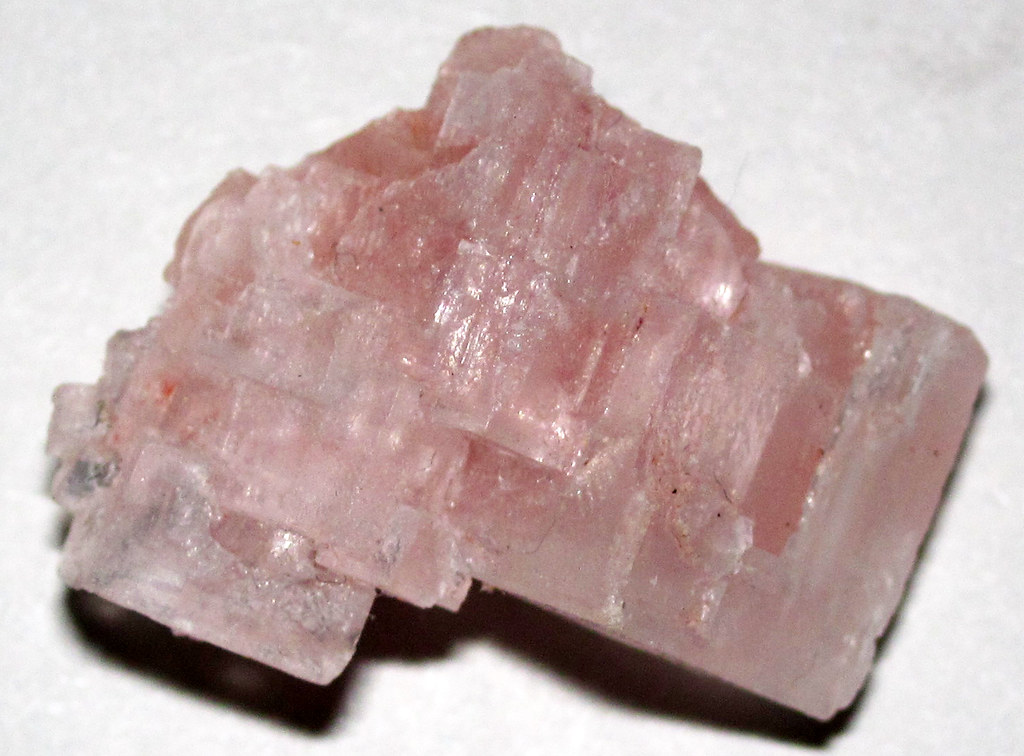
Halophilic Wonders
Deep within the Earth’s ancient salt deposits lies a hidden world of microscopic life that has defied time itself. Halophilic microbes, often referred to as “salt-loving” organisms, have been discovered preserved inside salt crystals dating back hundreds of millions of years. These extremophiles thrive in hypersaline environments where most life forms would perish, offering profound insights into the resilience of life and the potential for extraterrestrial biology. From 830-million-year-old crystals in Australia to Permian-era salts in the U.S., these findings challenge our understanding of longevity in microbial life.
Scientists have uncovered evidence that some of these microbes may still be viable, sparking debates about revival and the implications for astrobiology.
The Discovery of Ancient Life in Halite
Halite, or rock salt, forms in evaporative environments like ancient seas or lakes, trapping fluids and tiny organisms within its crystal lattice as it crystallizes. In 2022, researchers examining Browne Formation halite from central Australia found prokaryotic and algal remnants inside fluid inclusions—tiny brine pockets—dating to 830 million years ago. These microbes, primarily halophilic archaea and bacteria, were likely entombed during the Neoproterozoic era, a time when Earth’s oceans were teeming with early life. Similar discoveries in the U.S. include 34,000-year-old bacteria revived from salt crystals in Death Valley, California, where rapid crystal growth imprisoned living cells in microns-wide bubbles.
The process begins with evaporation concentrating salts, allowing halophiles like Haloarchaea to dominate. As crystals form, these microbes get sealed in, entering a state of dormancy. Studies show that some, like Bacillus species from 250-million-year-old Permian salts, have been isolated and cultured, proving their astonishing survival. This longevity is attributed to low metabolic rates, DNA repair mechanisms, and the protective, anoxic environment inside the crystals.
Survival Mechanisms of Halophilic Microbes
Halophiles possess unique adaptations for extreme salinity. They accumulate compatible solutes like glycine betaine to balance osmotic pressure, preventing cellular dehydration. Haloarchaea, such as Halobacterium salinarum, use bacteriorhodopsin for light-driven energy production, enabling survival without oxygen. In salt crystals, they form spores or enter viable but non-culturable states, resisting radiation, desiccation, and time.
Research on 1.4-billion-year-old halite from Australia has even unlocked secrets of ancient atmospheres by analyzing trapped gases, revealing oxygen levels and climate conditions from the Proterozoic eon. These microbes’ genomes provide clues to evolutionary history, showing genes for salt tolerance that may have originated in primordial oceans.
Implications for Science and Beyond
The preservation of halophilic microbes in salt crystals has far-reaching implications. In astrobiology, similar halite deposits on Mars or Europa could harbor ancient life, guiding future missions. Reviving these organisms raises ethical questions about contamination and biosafety, but also offers biotechnological potential, like enzymes for industrial use in high-salt conditions.
Field studies in places like the Atacama Desert or Dead Sea mimic these environments, helping scientists understand how life persists. Recent findings of potentially alive 830-million-year-old cells in Australian rock emphasize that life can endure geological timescales.
Modern Research and Future Prospects
Ongoing research involves non-destructive imaging techniques like Raman spectroscopy to study inclusions without cracking crystals. A 2025 study cracked ancient salts to analyze 1.4-billion-year-old air, providing data on Earth’s oxygenation history. Laboratories simulate entrapment to test viability limits, with some haloarchaea surviving simulated Martian conditions.
These discoveries underscore life’s tenacity, suggesting that microbial “sleeping beauties” could awaken after eons. As we probe deeper, salt crystals may reveal more about our planet’s biological past and the universe’s potential for life.
