


Discovering the Ocean-Faring Lizard
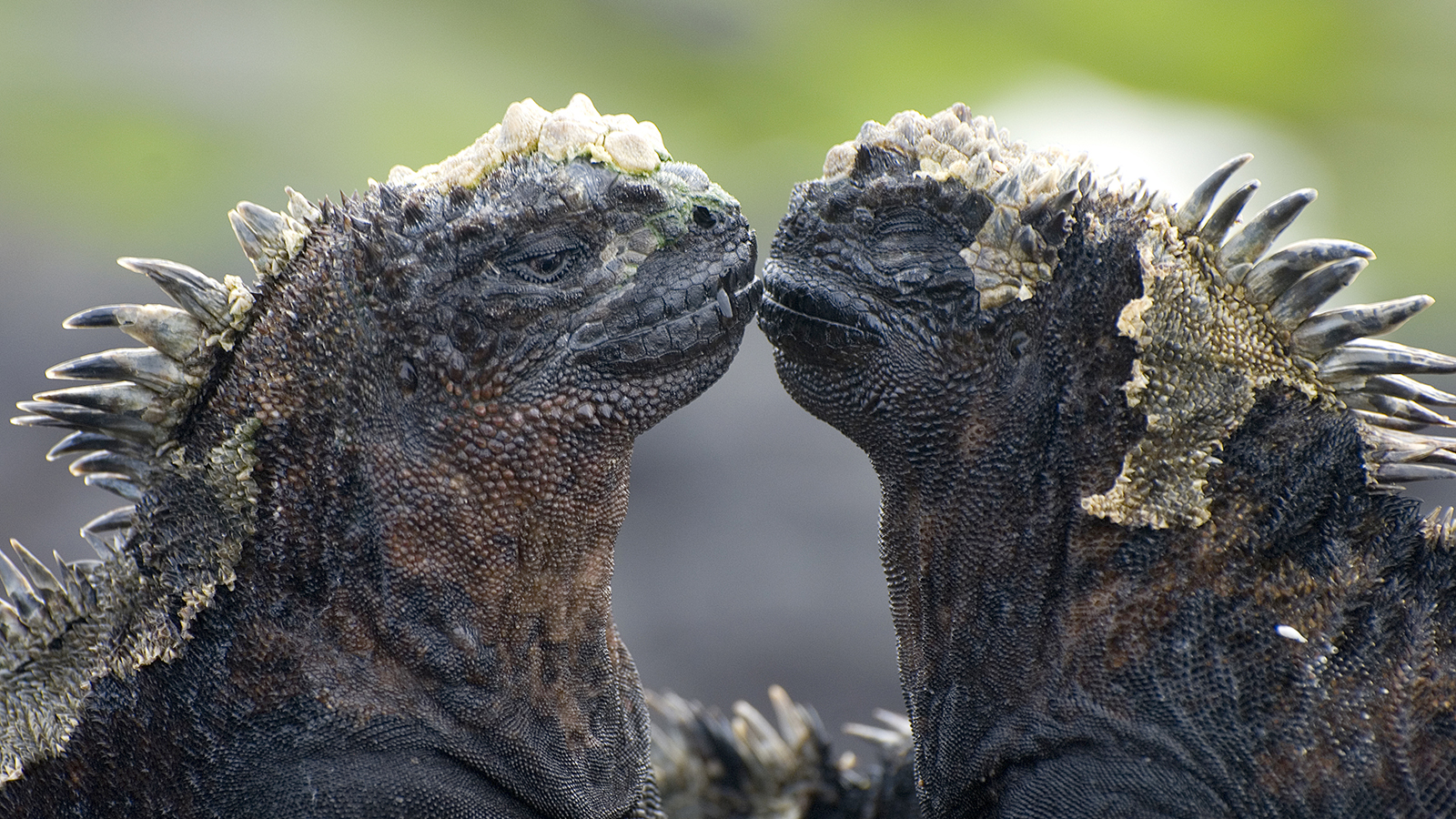
The marine iguana (Amblyrhynchus cristatus), unique to the Galápagos Islands, is the only lizard that forages in the sea. These “sea dragons” dive up to 30 meters for algae, spending most time basking on lava rocks to regulate temperature.
Dark-skinned for heat absorption, they have flattened tails for swimming and sharp claws for gripping rocks. Males display vibrant colors during mating, from red to green.
Evolutionary Adaptations for Amphibious Life
Evolving from land iguanas 4-9 million years ago, marine iguanas adapted to volcanic islands’ scarce food by entering the ocean. They expel excess salt via nasal glands, “sneezing” white crystals.
Diving lasts 5-10 minutes, with slowed heart rates conserving oxygen. On land, they huddle for warmth, a behavior noted by Darwin.
Subspecies vary by island, like pink ones on Isabela.
Habitat, Diet, and Behavior
Endemic to Galápagos, they inhabit coastal zones. Diet is 100% algae, grazed underwater or at low tide. Females dig nests in sand for eggs.
El Niño events cause starvation by warming waters, reducing algae. Populations rebound resiliently.
Socially, males defend territories with head-bobbing displays.
Threats and Conservation Efforts
Vulnerable per IUCN, threats include introduced predators like cats, oil spills, and climate change. Galápagos National Park protects them, with research monitoring impacts.
Tourism educates but requires guidelines to avoid disturbance.
Scientific Insights and Future
Studies on marine iguanas inform evolution and climate adaptation. As indicators of ocean health, they highlight conservation needs.
The marine iguana exemplifies nature’s ingenuity, thriving in sea and on land.
