

A Reptile With a Startling Survival Trick
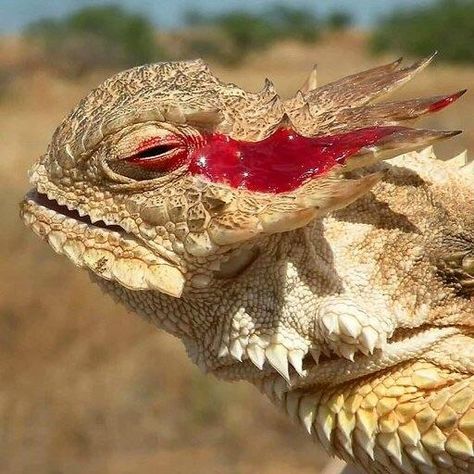
Among the deserts of North America lives a reptile that sounds more like something from mythology than real life. The horned lizard, sometimes called the horned toad, has an extraordinary defense mechanism: it can shoot blood from its eyes when threatened.
This dramatic tactic has fascinated scientists and frightened predators for decades.
What Is a Horned Lizard
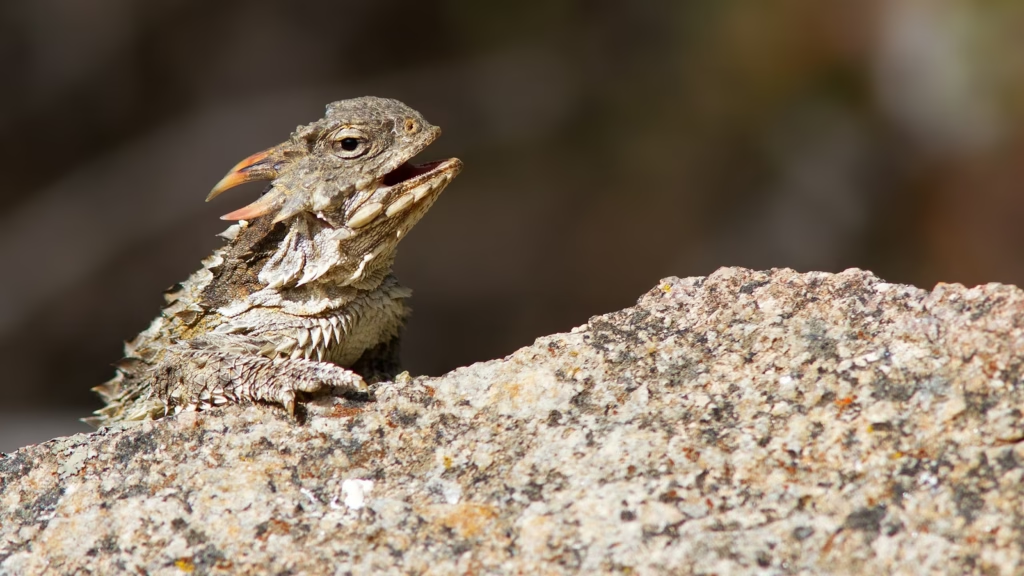
Horned lizards belong to the genus Phrynosoma. They are squat, spiny reptiles with flattened bodies and crown-like horns on the back of their heads. Their camouflage allows them to blend into sandy and rocky terrain across the southwestern United States and Mexico.
Despite their fierce appearance, they are slow-moving and rely heavily on defensive strategies rather than speed.
How the Blood-Squirting Defense Works
When a horned lizard encounters a predator such as a fox or coyote, it may resort to its most extreme option.
Building Pressure in the Head
The lizard constricts tiny muscles around the veins near its eyes, blocking normal blood flow. This causes pressure to build in the sinuses behind the eye sockets.
When the pressure becomes intense enough, small blood vessels rupture, sending a thin jet of blood outward through the corner of the eye.
How Far Can It Shoot
Researchers have recorded streams traveling up to several feet. The sudden spray often startles predators, buying the lizard precious seconds to escape.
Why Blood Is an Effective Weapon
The blood is not just shocking. It also appears to taste unpleasant to some predators, especially canines. Chemical compounds within it may trigger a bitter or irritating sensation, making the horned lizard far less appealing as a meal.
This combination of surprise and bad flavor makes the tactic particularly useful against mammals.
Other Defensive Strategies
Blood-shooting is only one part of the horned lizard’s survival toolkit.
- Camouflage that blends with desert soil
- Spiny scales that make swallowing difficult
- Flattening the body to look larger
- Staying motionless when danger approaches
These reptiles also rely on their horns to discourage attacks from birds and snakes.
Diet and Specialized Feeding
Horned lizards primarily eat ants, especially harvester ants. They can consume hundreds in a single day, using a sticky tongue to pick them off the ground.
Because of this specialized diet, habitat changes that affect ant populations can severely impact horned lizard numbers.
Habitat and Environmental Challenges
They live in arid and semi-arid environments such as deserts, grasslands, and scrublands. Urban development, pesticide use, and the spread of invasive ant species have reduced suitable habitats in some regions.
Conservation groups now work to protect native ant colonies and restore landscapes where horned lizards once thrived.
What Scientists Are Still Studying
Biologists continue to examine the exact chemical makeup of the blood and how the pressure-control mechanism evolved. The horned lizard remains one of the few vertebrates known to use blood as a projectile defense.
A Real-Life Desert Oddity
The horned lizard’s eye-shooting stunt may sound unbelievable, but it is a perfectly natural adaptation shaped by millions of years of survival. In the harsh desert, sometimes the strangest weapon is the one that works best.
