


A Living Lantern of the Sea
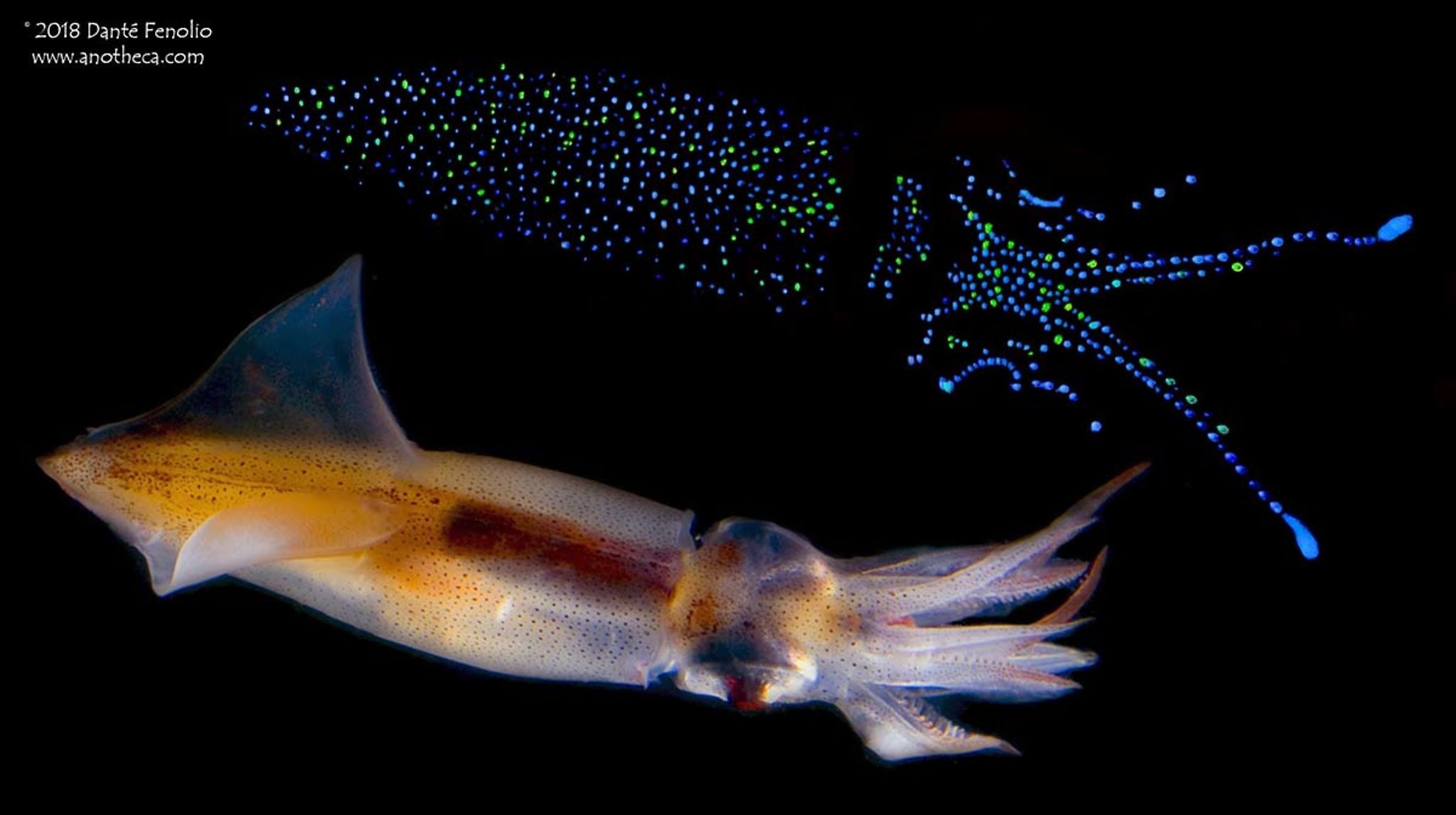
Deep in the cold waters surrounding Japan lives one of the ocean’s most dazzling animals: the firefly squid. Known scientifically as Watasenia scintillans, this small cephalopod produces brilliant blue light from thousands of tiny organs across its body.
During certain seasons, massive groups rise toward the shore, creating glowing waves that look like scenes from science fiction.
What Makes the Firefly Squid Special
Unlike many bioluminescent creatures that glow from just a few points, the firefly squid has photophores, or light-producing organs, scattered across its skin, arms, and eyes.
These organs allow the squid to:
- Communicate with others
- Confuse predators
- Blend into faint surface light
- Attract mates
Its name comes from its resemblance to terrestrial fireflies that flash in the night.
How Bioluminescence Works
The squid’s glow results from a chemical reaction inside its photophores. When specific enzymes interact with light-emitting molecules and oxygen, energy is released as visible blue light.
This color travels well through seawater, making it ideal for underwater signaling.
Tiny Lights, Big Effect
Each glowing spot is small, but together they form patterns that ripple across the squid’s body. Scientists believe the animal can adjust the brightness and timing of these flashes depending on the situation.
Habitat and Migration
Firefly squid live in deep offshore waters for much of the year, sometimes hundreds of meters below the surface. In spring, however, they migrate to shallower coastal regions to spawn.
In Japan’s Toyama Bay, this event draws crowds of spectators who gather at night to watch the shoreline shimmer with blue sparks.
Diet and Daily Life
These squid feed on small fish, shrimp, and planktonic organisms. Their glowing ability may help illuminate prey in the dark depths or create confusion that allows them to strike quickly.
They are relatively small, usually only a few inches long, but their collective light display is massive when thousands gather.
Cultural and Scientific Importance
In Japan, the firefly squid is celebrated in festivals, museums, and even local cuisine. From a scientific standpoint, it is a key subject in bioluminescence research, helping scientists understand how light-producing systems evolve.
Nature’s Underwater Light Show
The firefly squid proves that the ocean still holds wonders beyond imagination. With glowing skin that turns black water into neon blue, this tiny creature ranks among Earth’s most breathtaking natural spectacles.
