
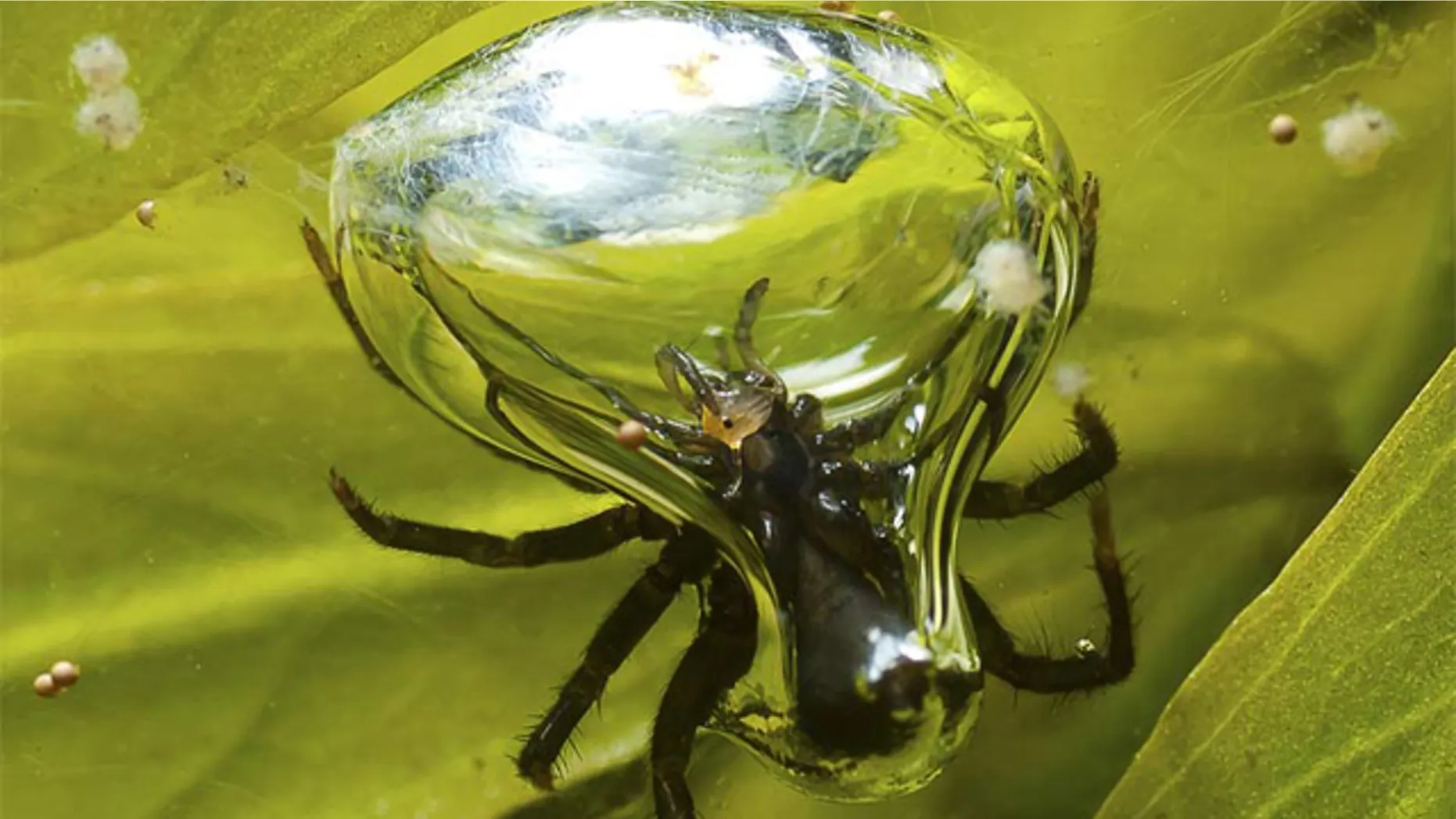
An Arachnid That Refuses to Drown
Spiders are usually associated with dry land, webs in corners, and quick scurrying legs. Yet one remarkable species breaks all expectations. The diving bell spider, also known as Argyroneta aquatica, lives almost its entire life underwater.
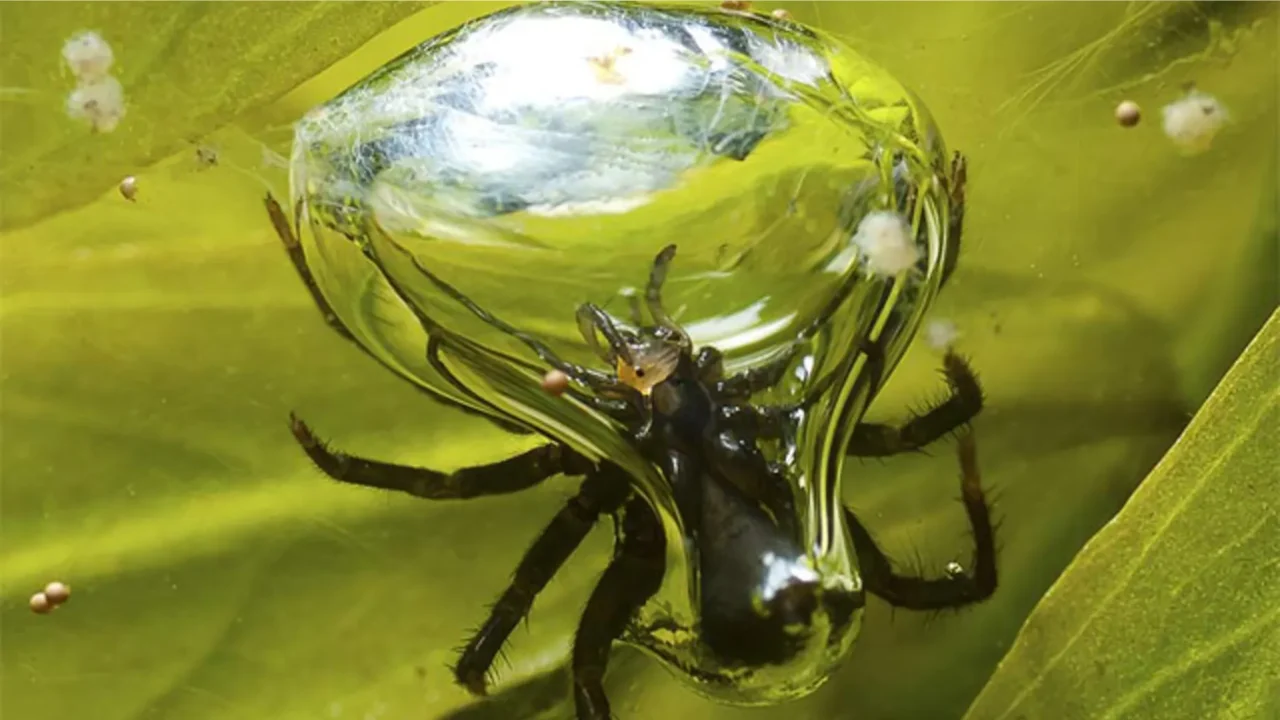
Instead of gills, it survives by building a bubble of air that functions like a portable diving tank.
Meet the Diving Bell Spider
Native to freshwater ponds, slow-moving streams, and marshes across parts of Europe and Asia, the diving bell spider is medium-sized and covered in fine hairs.
Those hairs play a crucial role in underwater survival, trapping tiny pockets of air against the spider’s body whenever it surfaces.
How the Air Bubble Is Built
The spider constructs a silk structure among submerged plants, forming a dome-shaped chamber anchored to stems and leaves.
Step-by-Step Process
- The spider swims to the surface.
- Air clings to its abdomen and leg hairs.
- It dives back down and releases the air into the silk chamber.
- The process is repeated dozens of times until the bell is fully inflated.
The finished product looks like a shimmering silver balloon hidden beneath the water.
How the Bubble Works Like a Lung
The air bell is far more than a simple container.
Oxygen Exchange With Water
As the spider consumes oxygen inside the bubble, the concentration drops. Dissolved oxygen from the surrounding water then diffuses into the bell, effectively replenishing it.
This makes the structure behave like a physical gill, allowing the spider to stay submerged for long periods without surfacing frequently.
Daily Life Beneath the Surface
Inside its bell, the spider rests, digests food, molts, and hides from predators. It ventures out to hunt aquatic insects, mosquito larvae, tadpoles, and small crustaceans.
After capturing prey, the spider returns to its air chamber to feed in relative safety.
Reproduction Underwater
Mating and egg-laying also occur inside specially built bells. Females often construct separate chambers for their eggs, guarding them until spiderlings hatch.
This fully aquatic reproductive cycle is extremely rare among spiders and highlights just how specialized the species has become.
Predators and Threats
Despite its clever adaptations, the diving bell spider is not invincible. Fish, amphibians, and larger aquatic insects may prey upon it.
Pollution, wetland drainage, and changes in water quality pose growing threats to the habitats it relies on.
Scientific Fascination
Researchers study the diving bell spider to better understand gas exchange in small spaces and the physics of underwater respiration. Some scientists even see potential inspiration for new materials or miniature diving technologies based on the spider’s natural design.
Why This Spider Is One of Nature’s Marvels
The ability to build an underwater air chamber sets Argyroneta aquatica apart from nearly every other arachnid on Earth. By turning silk and surface tension into life-saving tools, this spider demonstrates how evolution can produce solutions that seem almost impossible.
In the quiet depths of ponds and marshes, the diving bell spider floats inside its silver bubble, proving that even creatures we think we know well can still surprise us.
