Nature’s Living Balloon
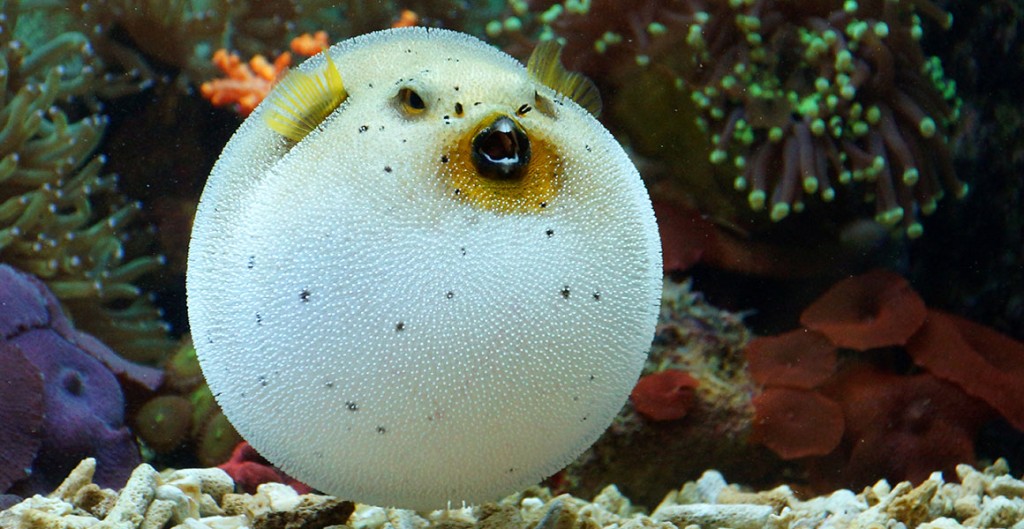
Among the ocean’s most unusual creatures is the pufferfish, a small to medium sized fish famous for its ability to suddenly inflate its body into a round, spiky sphere. This dramatic transformation is not for show. It is a powerful survival mechanism that has fascinated marine biologists and divers for decades.
What Is a Pufferfish
Pufferfish belong to the family Tetraodontidae and live in tropical and subtropical oceans worldwide. Some species also inhabit freshwater rivers. Their name comes from their remarkable defensive behavior, puffing themselves up when threatened.
They are also known for containing tetrodotoxin, one of the most potent natural poisons on Earth, making them doubly dangerous to predators.
How Pufferfish Inflate
When a predator approaches, a pufferfish quickly gulps water or air and forces it into a highly elastic stomach. This causes the body to expand dramatically, sometimes tripling its normal size.
Key advantages of inflation include:
- Making the fish too large to swallow
- Displaying sharp spines that deter attackers
- Creating confusion during surprise encounters
Once the danger passes, the fish slowly releases the water and returns to its normal shape.
The Role of Spines and Toxins
Many species develop spines when inflated, turning themselves into floating pincushions. Combined with tetrodotoxin stored in their organs and skin, this makes the pufferfish one of the most well defended fish in the sea.
In Japan, specially trained chefs prepare pufferfish, called fugu, for consumption. One mistake can be fatal, which shows just how powerful the toxin really is.
Habitat and Daily Life
Pufferfish live near coral reefs, seagrass beds, mangroves, and rocky coastlines. They feed on shellfish, crustaceans, and algae, using strong beak like teeth to crush hard shells.
They are curious and intelligent compared to many fish species, sometimes interacting playfully with divers.
Why Pufferfish Fascinate Scientists
Researchers study pufferfish to understand toxin production, predator deterrence, and evolutionary adaptation. Some species do not produce the toxin themselves but accumulate it from bacteria in their diet, opening new questions about marine chemical ecology.
The pufferfish is a perfect example of how evolution creates dramatic solutions to survival challenges. Its balloon like transformation and lethal chemistry make it one of the ocean’s most unforgettable animals.
