

Nature’s Surface Skaters
Across calm ponds, lakes, and slow moving streams, tiny insects glide effortlessly across the water surface as if gravity does not apply to them. These creatures are water striders, sometimes called pond skaters, and their remarkable ability to walk on water has fascinated scientists for generations.
Their skill is not magic. It is the result of precise anatomy combined with the physics of surface tension.
What Is a Water Strider
Water striders belong to the family Gerridae and live on freshwater bodies around the world. They are predators that hunt insects trapped at the surface, vibrations guiding them toward struggling prey.
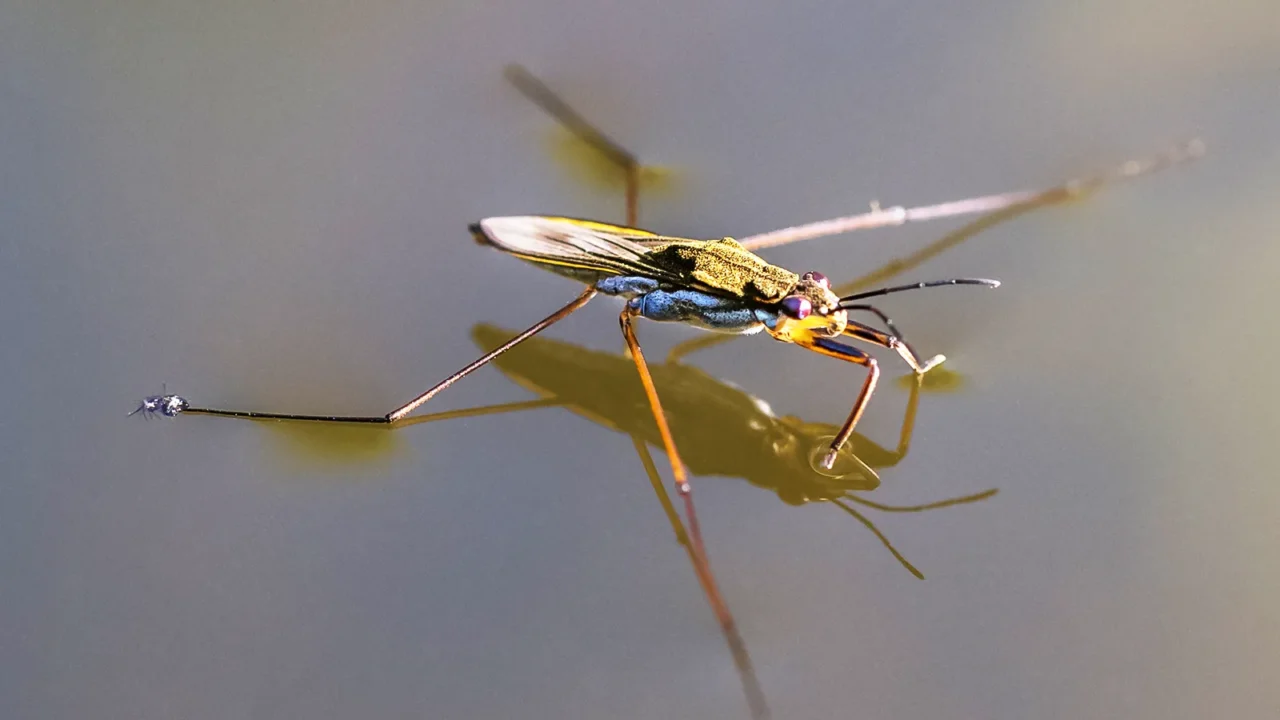
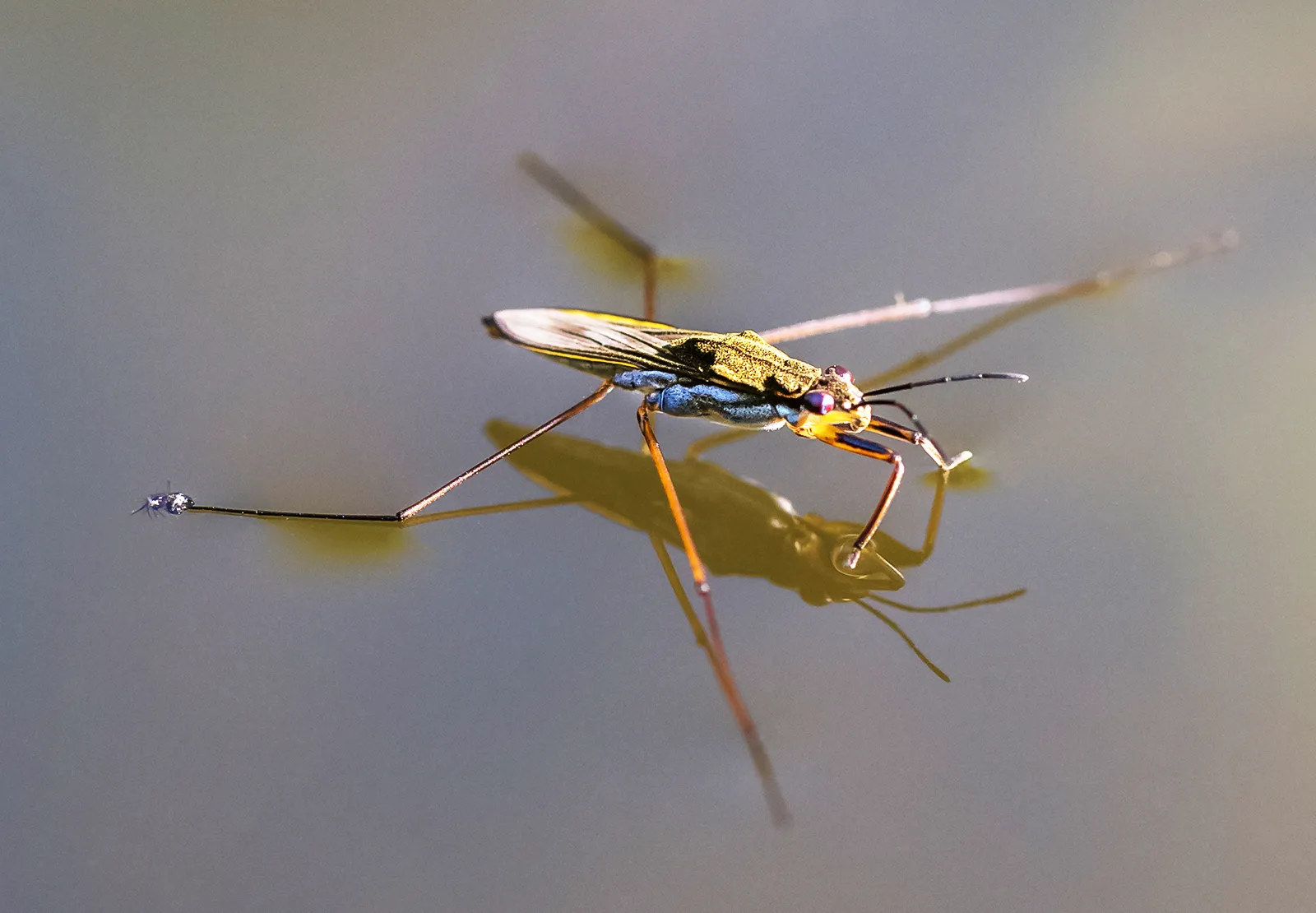
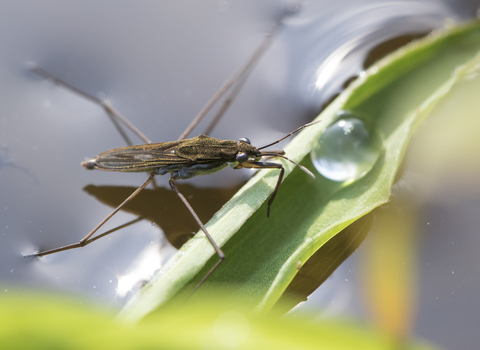
Long, slender legs distribute their weight evenly, preventing them from breaking the water surface.
The Science of Surface Tension
Water molecules attract each other, forming a thin elastic layer at the surface known as surface tension. Water striders exploit this phenomenon perfectly.
Their legs press gently on the surface, creating dimples without puncturing the water film.
Specialized Legs and Hairs
Each leg is covered with microscopic, water repelling hairs coated in waxy substances. These hairs trap tiny air pockets, increasing buoyancy and preventing wetting.
Key features include:
- Thousands of micro hairs per leg
- Hydrophobic coatings
- Broad weight distribution
Together they allow the insect to skate, jump, and pivot rapidly.
How Water Striders Move
Water striders row across water using middle legs while steering with front legs. Their back legs help stabilize turns.
They can leap quickly to escape predators, pushing off the surface tension layer with sudden force.
Ecological Importance
By feeding on mosquitoes and other insects, water striders help regulate freshwater ecosystems. They also serve as prey for fish, frogs, and birds, linking surface dwelling life to deeper aquatic food webs.
Water striders demonstrate how evolution harnesses physical laws for survival. Their ability to glide on water reminds us that nature often solves engineering problems long before humans attempt them.
