
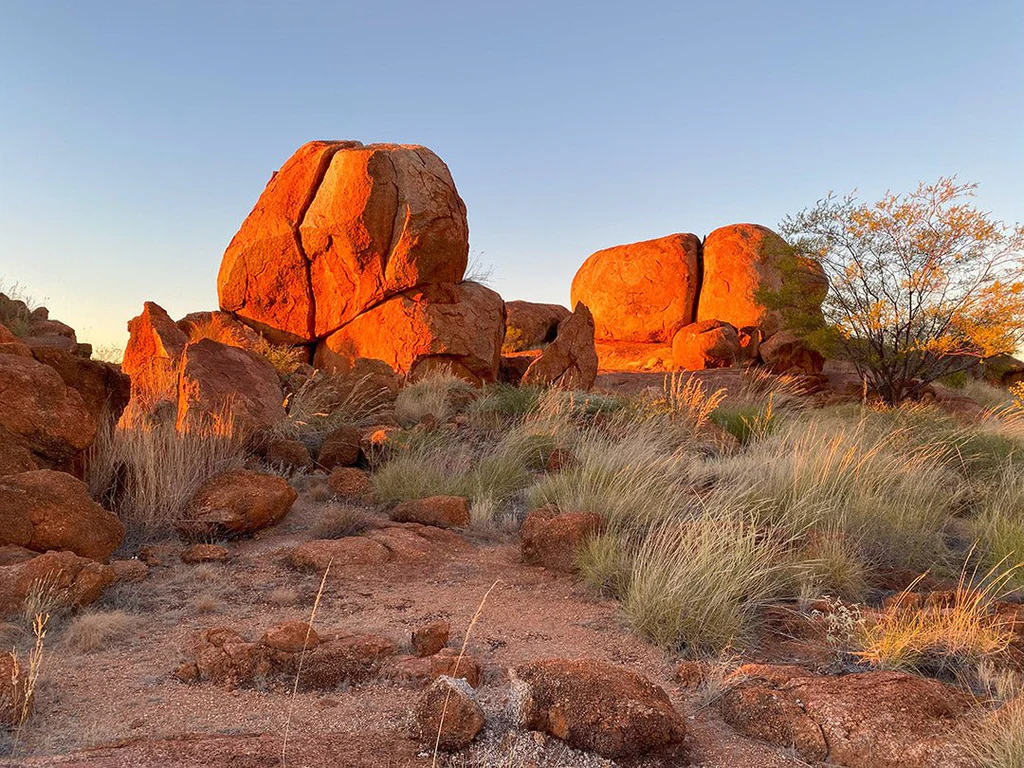
A Landscape Painted by Nature
Scattered across Western Australia are unusual mountain formations tinged with hues of pink, orange, and red — landscapes that seem almost surreal. While there’s no single “Pink Mountain” officially named, several regions display rock coloration so vivid that photographers and travelers describe them as pink mountains. These natural canvases captivate anyone who witnesses them.
Geological Origins: Why the Rocks Are Pink
The striking pink tones in Western Australia’s rock formations come from iron oxide and mineral staining. Over millions of years, sedimentary rocks rich in iron interacted with oxygen and water, creating rust-like oxidation that produces red and pink hues.
Iconic Pink Landscapes of Western Australia
Rainbow Valley and Surrounding Regions
One of the most photographed areas with “pink mountain” vibes is Rainbow Valley, where iron-rich sandstone glows under the sun. While technically in the Northern Territory, the broader geological features extend toward Western Australia’s arid zones, giving rise to similar landscapes.
These red and pink hills shift colors dramatically with light, especially at sunrise and sunset.
The Outback’s Palette: Shades of Red, Orange, and Pink
Western Australia’s outback regions — particularly around the Pilbara and Goldfields — show off spectacular rock colors:
- Pilbara Ranges: Rust-red mesas and slopes formed from ancient iron-rich rocks.
- Goldfields: Desert terrain with scattered pinkish granite and limestone.
- Nullarbor Plain Edges: Flat landscapes punctuated by colorful rock outcrops.
Explanation: Iron oxidizes when exposed to air and moisture, much like rust forms on metal. This process colors rock surfaces in earthy reds, yellows, and sometimes — under specific mineral balances — pinkish tones.
Best Times to Visit and Photograph
For the richest color displays:
- Golden Hour (Sunrise & Sunset): Light angles enhance warm hues.
- Clear Skies: Contrast between blue sky and pink earth.
- After Rain: Colors deepen as moisture darkens minerals.
Photographers recommend composition techniques like:
- Foreground framing with wildflowers or spinifex
- Panoramic shots to capture vastness
- Using polarizing filters to reduce glare
Flora and Fauna of the Pink Zones
Despite harsh conditions, the outback supports life:
Vegetation
- Spinifex grasses
- Eucalyptus shrubs
- Hardy wildflowers after rains
These plants adapt to low nutrients and intense sun.
Wildlife
- Kangaroos
- Emus
- Reptiles like goannas and thorny devils
Many species are masters of camouflage, blending with the reddish landscape.
Indigenous Connections and Cultural Meaning
Aboriginal communities have lived in Western Australia for tens of thousands of years. The land’s colors — from ochres to deep reds and pinks — are integral to:
- Dreamtime stories
- Traditional art
- Ceremonial practices
Ochre pigments from the earth’s iron-rich deposits are still used in artwork and cultural rites.
Tourism and Conservation
Western Australia’s pink landscapes are popular for:
- Outback road trips
- 4×4 adventures
- Photography tours
- Geological field studies
Conservation efforts focus on protecting fragile soils and native vegetation from off-road damage and erosion. Responsible travel ensures that future generations can admire these natural wonders.
Comparing Pink Rocks Elsewhere
Pink mountains aren’t unique to Australia — similar effects occur in:
- Zhangye Danxia, China
- The Vermilion Cliffs, USA
- The Painted Hills, USA
But Western Australia’s wide open spaces and unique geology give its formations a distinctive character.
A Natural Masterpiece
Western Australia’s pink mountains aren’t just colorful rocks they are chapters in Earth’s long history, showcasing geological processes, cultural meaning, and raw beauty. Whether you’re a scientist, artist, or adventurer, these landscapes offer stories written in stone.
