
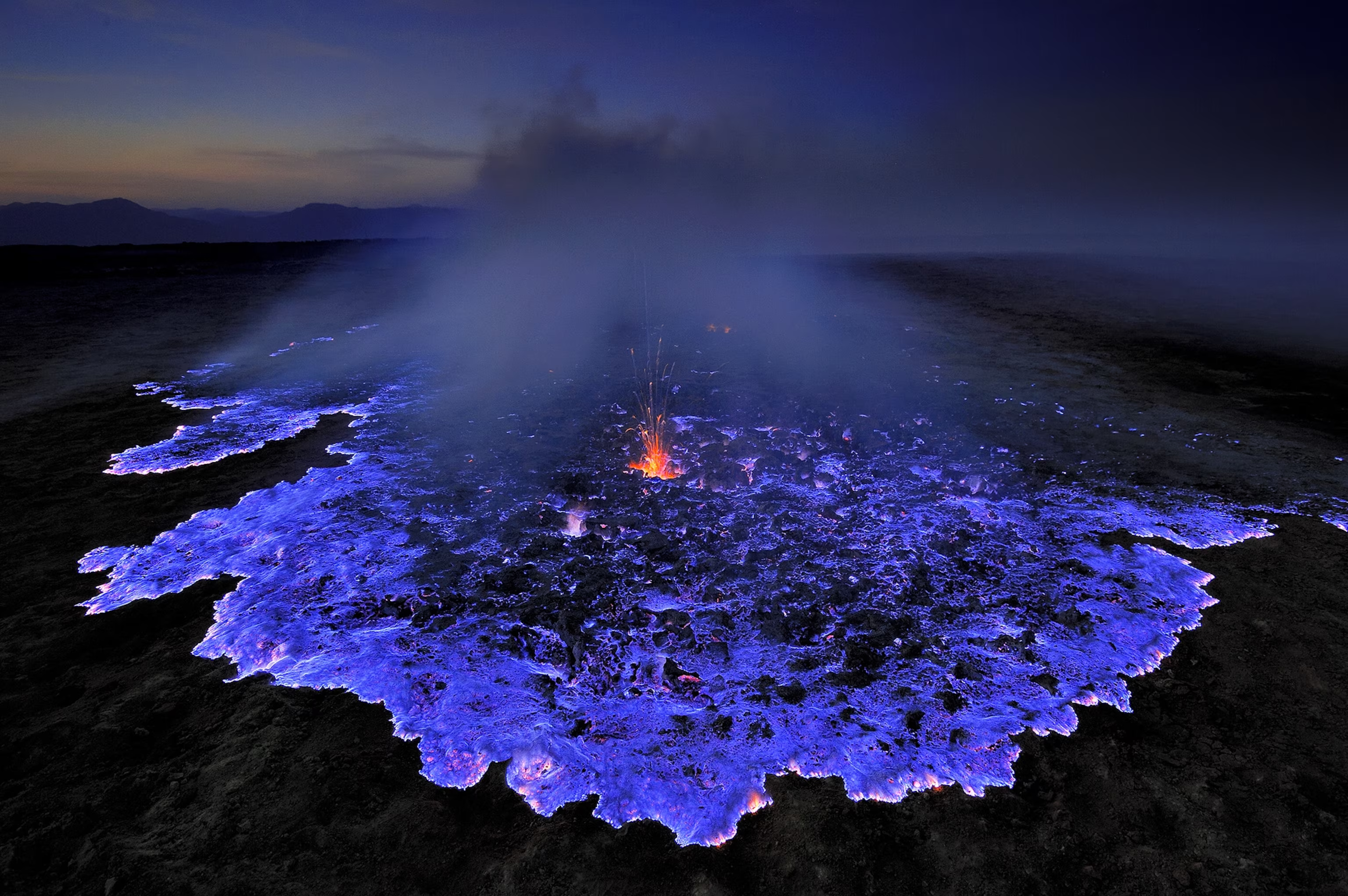
Imagine a mountain that breathes fire not in red and orange, but in mesmerizing blue hues. This isn’t fantasy it’s the reality of volcanic wonders like Kawah Ijen in Indonesia, where sulfur gases ignite into ethereal blue flames. These “blue gas” emissions captivate scientists and adventurers alike, offering a glimpse into Earth’s fiery underbelly. In this comprehensive guide, we’ll explore the science, history, and allure of these phenomena, perfect for geology buffs and travel enthusiasts seeking off-the-beaten-path wonders.
The Science of Blue Volcanic Flames
The blue “gas” is actually flames from burning sulfur dioxide. At Kawah Ijen, volcanic gases escape at high pressures, carrying molten sulfur that condenses into liquid form. When exposed to air, it ignites at temperatures around 600°C, producing blue flames visible at night. This chemiluminescence results from excited sulfur molecules emitting light in the blue spectrum.
Geologically, these emissions occur in solfataras volcanic vents rich in sulfur. Kawah Ijen’s crater lake, the world’s largest acidic lake, amplifies the spectacle with its turquoise waters. According to volcanologists from the Smithsonian Global Volcanism Program, the blue flames can reach 5 meters high, fueled by continuous gas release from magma below.
Historical and Cultural Significance
Kawah Ijen has been known for centuries, with local Javanese communities mining sulfur since the Dutch colonial era. Miners carry up to 90kg loads in bamboo baskets, a grueling task amid toxic fumes. Historically, sulfur was used for matches, gunpowder, and medicine. Today, it’s vital for fertilizers and chemicals.
Culturally, the mountain holds spiritual importance. Indigenous beliefs view it as a sacred site, with rituals to appease volcanic spirits. Tourism has surged since the 2010s, thanks to photographers like Olivier Grunewald, whose images popularized the blue flames globally.
Exploring Kawah Ijen and Similar Sites
Hiking Kawah Ijen involves a 3km trek starting at midnight to witness the flames. Safety gear like gas masks is essential due to sulfuric acid vapors. The site is part of the Ijen volcano complex in East Java, accessible from Banyuwangi. Similar phenomena occur at Ethiopia’s Dallol and Iceland’s volcanoes, though Ijen’s scale is unmatched.
Eco-tourism here supports local economies but raises environmental concerns. Acid rain from emissions affects agriculture, and mining impacts health. Sustainable practices, promoted by UNESCO’s Geopark status, aim to balance preservation and livelihood.
Environmental and Health Impacts
The blue gases, while beautiful, are hazardous. Sulfur dioxide contributes to acid rain and respiratory issues. Miners suffer from chronic conditions, prompting calls for better protections. Climate-wise, volcanic emissions influence global cooling, as seen in historical eruptions.
Research from institutions like NASA’s Earth Observatory monitors these sites via satellites, tracking gas plumes for air quality and eruption predictions.
The Allure for Adventurers and Scientists
For travelers, witnessing the blue flames is a bucket-list experience, often combined with sunrise views over the crater. Scientists study these for insights into planetary geology, even comparing to extraterrestrial volcanoes on Io, Jupiter’s moon.
In summary, mountains emitting blue gas like Kawah Ijen blend danger and beauty, reminding us of Earth’s dynamic forces. Whether for science or spectacle, they invite exploration with respect for their power.
