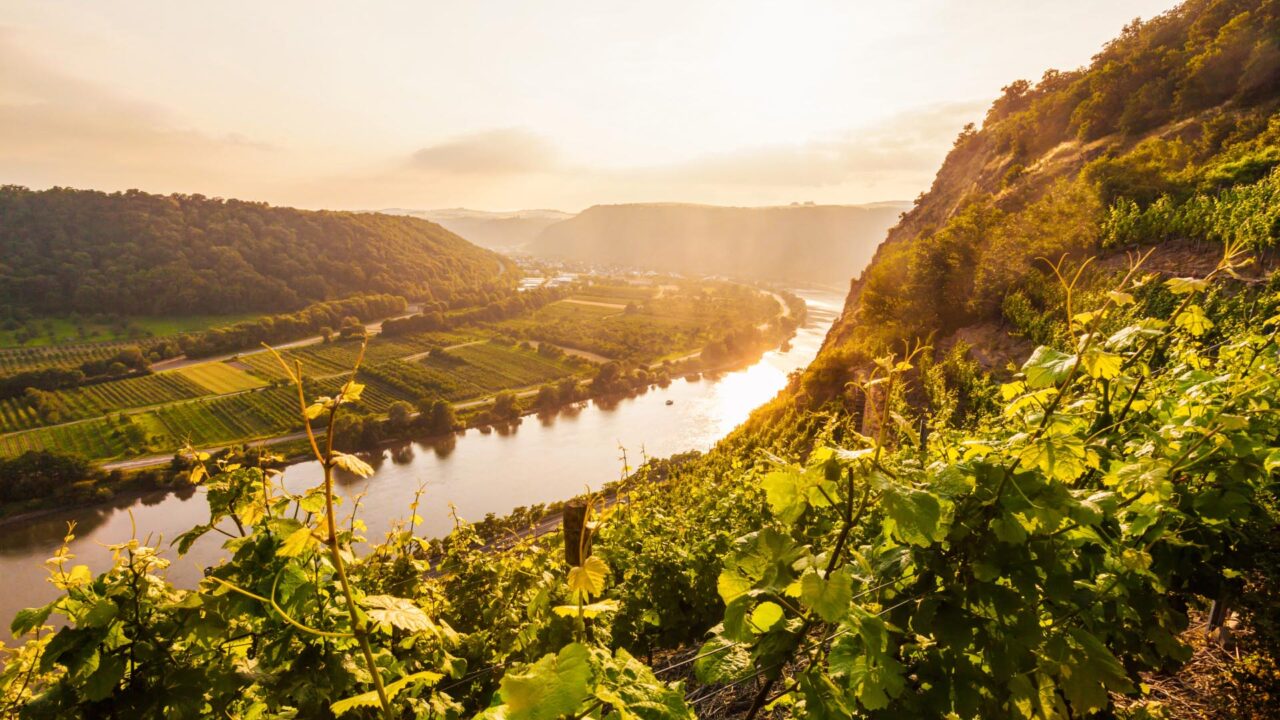
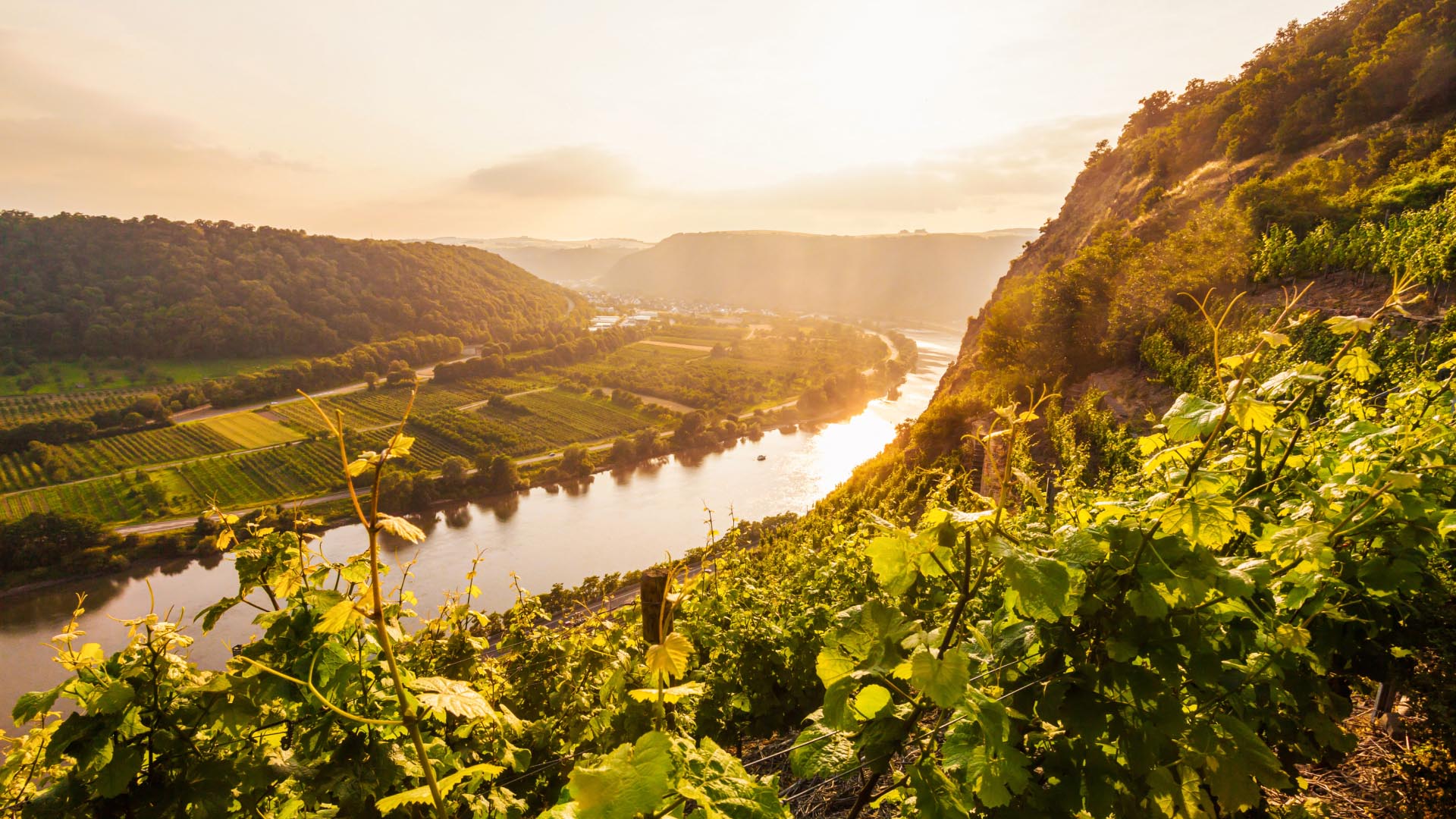
The Moselle Valley (Moseltal) in Rhineland-Palatinate features some of Europe’s steepest vineyards, cascading down dramatic slopes to the winding Moselle River. Known for crisp Riesling wines and fairy-tale villages like Cochem and Bernkastel-Kues, this region offers a unique blend of viticulture, scenery, and river cruises. Among unique German landscapes, the Moselle stands out for its terraced hillsides and wine heritage.
The Wine Legacy of the Moselle Valley
Shaped by Roman settlers over 2,000 years ago, the valley’s microclimate and slate soils produce world-class white wines. Medieval castles overlook the vines, while annual festivals celebrate harvests, preserving traditions of family-run wineries and steep-slope farming techniques.
What Makes Moselle Valley Vineyards Unique?
The vineyards climb at angles up to 65 degrees, creating terraced patterns that shimmer in sunlight and reflect in the river. Hiking trails like the Moselsteig wind through them, offering tastings and views of loops in the river a photogenic mosaic of green, blue, and stone not found elsewhere in Germany.
Tips for Exploring Moselle Valley Vineyards
Rent a bike or join a river cruise from Trier to Koblenz for scenic routes. Visit in late summer for grape-picking or October for wine festivals. Stay in a vineyard guesthouse and sample local Rieslings; combine with Reichsburg Castle for a full day of history and flavor.
Ultimately, the Moselle Valley Vineyards showcase one of Germany’s most picturesque and flavorful unique natural features, ideal for wine enthusiasts and scenic road trippers.
