
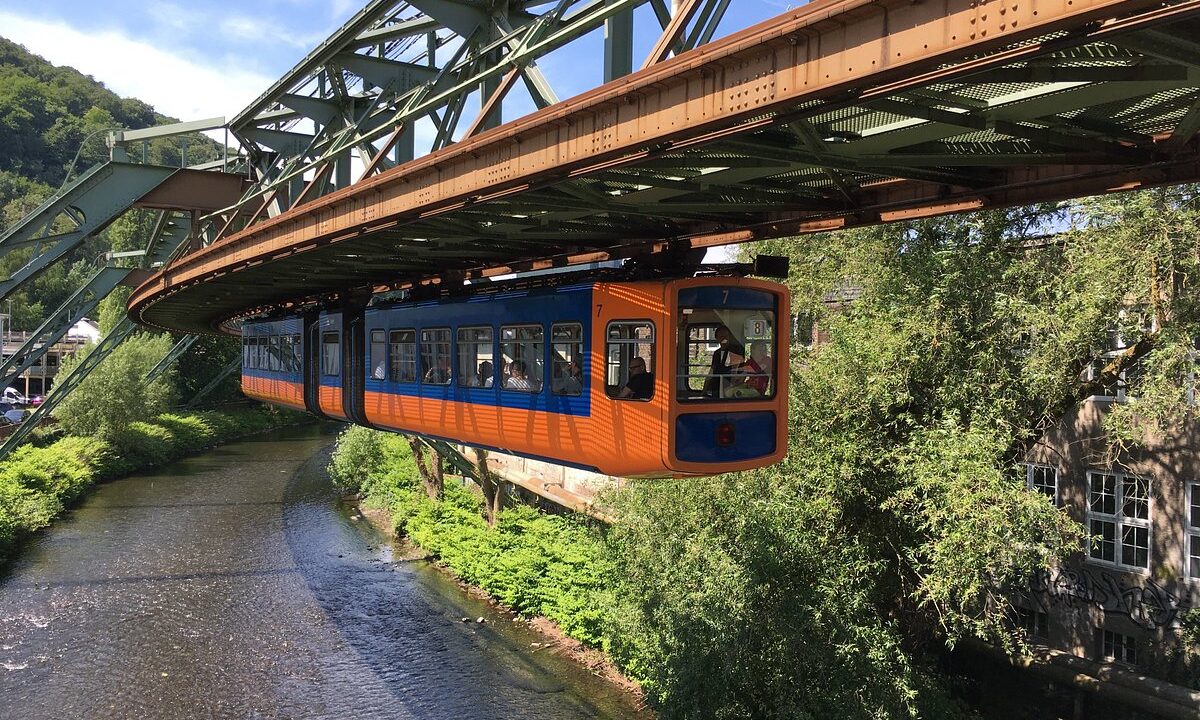
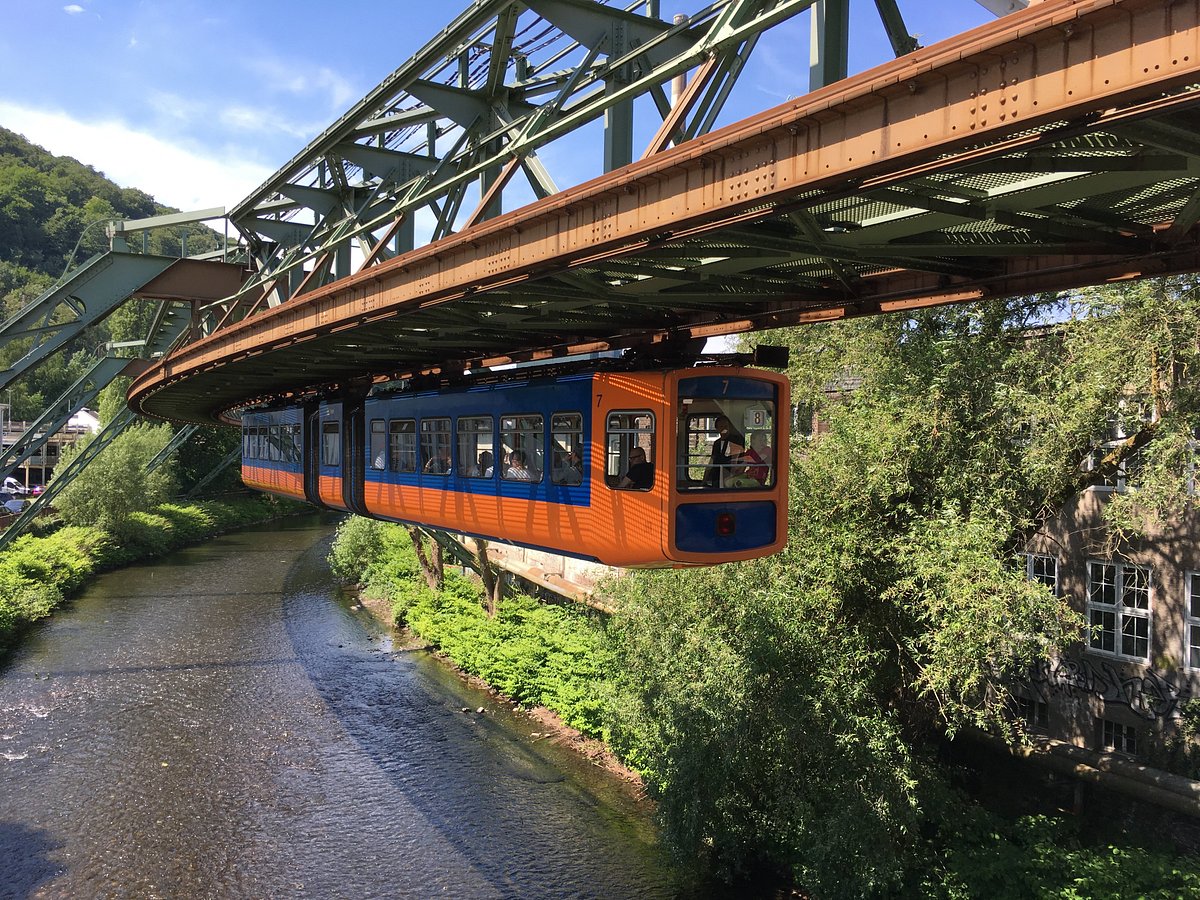
The Wuppertal Schwebebahn is one of Germany’s most innovative and unique transportation systems: a suspended monorail that glides upside-down above the Wupper River in North Rhine-Westphalia. Operational since 1901, this engineering marvel carries passengers through the city on an elevated track, offering scenic views and a smooth, futuristic ride. Among unique phenomena in Germany, the Schwebebahn stands out as a blend of historical ingenuity and daily urban life.
The History Behind the Schwebebahn
Invented by engineer Eugen Langen, the railway was built to navigate Wuppertal’s hilly terrain and narrow valleys without disrupting the river below. Spanning 13.3 kilometers with 20 stations, it survived wars and modernizations, becoming a protected monument and a symbol of industrial-era innovation. Today, it transports over 80,000 people daily.
What Makes the Wuppertal Schwebebahn Unique?
Hanging from a single rail, the cars dangle 12 meters above the water or streets, providing panoramic glimpses of factories, greenery, and cityscapes. It’s the world’s oldest electric elevated railway of its kind, with a famous “elephant incident” in 1950 adding quirky lore. The smooth, quiet journey feels like floating, setting it apart from traditional trains.
Tips for Experiencing the Schwebebahn
Buy a day ticket and ride the full line from Oberbarmen to Vohwinkel. Start early to avoid rush hour; summer offers open-window breezes. Combine with a visit to the Schwebebahn Museum or nearby Zoo Wuppertal for a complete day. It’s family-friendly and accessible, with special vintage cars on weekends.
In short, the Wuppertal Schwebebahn showcases one of Germany’s most whimsical and functional unique inventions, perfect for transport enthusiasts and casual explorers.
