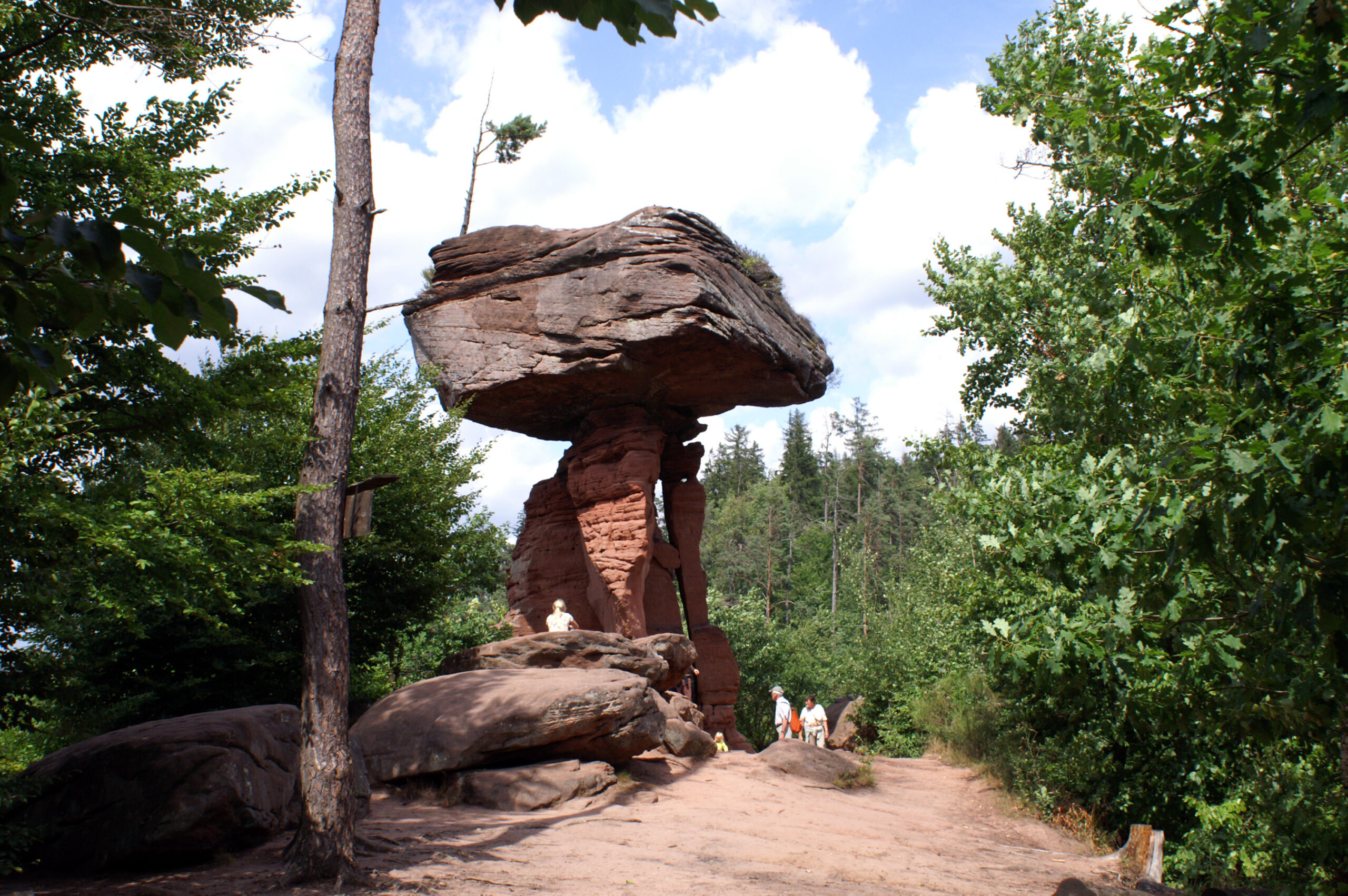
The Devil’s Table, or Teufelstisch, is a striking natural rock formation in the Palatinate Forest of Rhineland-Palatinate, resembling a giant mushroom with a massive flat top balanced precariously on a narrow pillar. This geological oddity, formed by erosion over millions of years, towers about 14 meters high and is steeped in local legends of the devil’s handiwork. For hikers and geology fans exploring unique German places, Teufelstisch offers a whimsical yet impressive sight amid lush woodlands.
The Legend and Geology of Devil’s Table
According to folklore, the devil created the “table” in one night to win a bet against God, only for it to be struck by lightning. Scientifically, it’s a result of weathering on Triassic sandstone, where softer layers eroded faster than the hard capstone. The surrounding Palatinate Forest Biosphere Reserve adds biodiversity, with trails leading to similar formations.
What Makes Devil’s Table Truly Unique?
Its improbable balance defies gravity, making it one of Europe’s most photogenic mushroom rocks. Unlike man-made landmarks, it’s a pure natural sculpture, with a small tree often growing atop for added charm. The site’s accessibility and mythical backstory set it apart from typical hikes, providing a short, rewarding adventure.
Tips for Visiting Devil’s Table
Park in Hinterweidenthal and follow the 1-km easy trail (family-friendly). Visit in spring for blooming forests or autumn for colorful foliage. Wear sturdy shoes for rocky paths; combine with nearby rock climbing or the Palatinate Forest’s other “tables” like Jungfernsprung for a themed day.
In summary, Devil’s Table highlights one of Germany’s most curious and legendary unique rock formations, perfect for nature lovers seeking a touch of folklore in the wilderness.
