




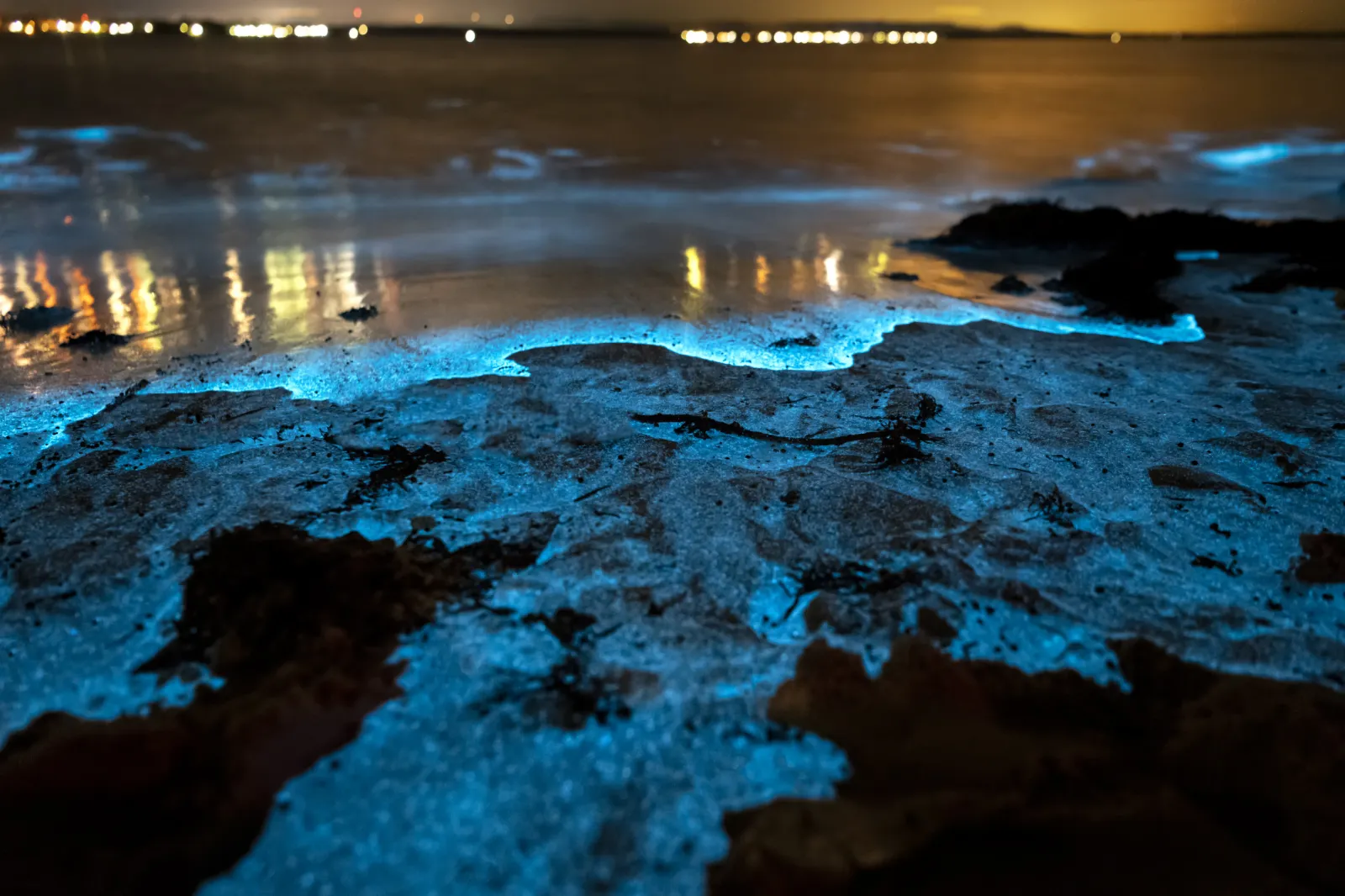
The Milky Sea phenomenon in India is one of the rarest and most mysterious natural events on the planet. It transforms vast areas of the ocean into a glowing white field that can stretch for tens or even hundreds of kilometers. Sailors have reported this strange sight for centuries, describing the water as looking like a glowing blanket of milk. Today, modern science has confirmed that the Milky Sea is real, and India is one of the few places on Earth where it occurs regularly. This breathtaking event attracts worldwide attention because it challenges our understanding of ocean biology and natural light.
Milky Sea events typically happen in the Indian Ocean, especially along the southwestern coast of India and near the Lakshadweep Islands. Satellite observations have detected massive glowing patches in this region, some spanning more than 100 kilometers in length. This makes the phenomenon far larger than typical bioluminescent events seen in beaches around the world. While bioluminescent waves usually appear bright blue and flicker with movement, the Milky Sea glows steadily and covers a far wider area, creating a steady white or pale blue radiance.
The cause of the Milky Sea is believed to be bioluminescent bacteria known as Vibrio harveyi. These bacteria emit light through a chemical process called luciferase reaction. What makes the Milky Sea unique is the incredible density of these bacteria. Instead of glowing in scattered patches, they gather in enormous numbers, forming a giant sheet of glowing organisms across the surface of the ocean. The light they produce is continuous and uniform, giving the water its mysterious white appearance that can last for hours or even days.
Researchers believe that specific environmental conditions trigger this massive bacterial bloom. Warm ocean temperatures, nutrient rich waters, and stable nighttime conditions in the Indian Ocean create the perfect environment for Vibrio bacteria to thrive. The southwestern coast of India experiences these conditions due to seasonal monsoon patterns and unique ocean currents. These factors make the region one of the most active hotspots for Milky Sea sightings in the world.
Although the phenomenon looks supernatural, the Milky Sea has a scientific explanation that continues to evolve. Recent satellite technology has allowed scientists to track the glow from space. One of the most famous satellite detections occurred in 2005, when scientists captured an enormous glowing patch near the Indian Ocean that matched descriptions from passing ships. This discovery confirmed that the Milky Sea can be observed not only from boats but from hundreds of kilometers above the Earth.
For sailors who encounter it, the sight is unforgettable. The ocean appears as though it is glowing from within, with no clear boundary between the water and the horizon. Boats seem to glide over a luminous blanket. The glow is soft and steady, creating a calm and surreal atmosphere. Historical accounts describe ships leaving glowing trails behind them as they move, and the waves light up softly as they break. Many sailors once believed the Milky Sea was supernatural or a sign of dangerous waters.
Today, the Milky Sea has become a subject of tourism and scientific interest in India. Although the phenomenon is rare and unpredictable, travelers and photographers are fascinated by its beauty. Places like Kerala, Karnataka, and the Lakshadweep Islands are known for occasional sightings. Some coastal communities have even developed night boat tours during seasons when bioluminescence is more likely. While normal blue bioluminescence is much more common, the possibility of witnessing a Milky Sea makes the region even more attractive to nature enthusiasts.
The Milky Sea also holds valuable ecological and scientific importance. Understanding how Vibrio bacteria coordinate to produce such massive glowing events could offer insights into microbial communication and ocean health. Scientists are studying the chemical signals that allow these bacteria to glow simultaneously across huge areas. This behavior, known as quorum sensing, may help researchers learn more about how bacteria survive, communicate, and respond to environmental changes.
Climate patterns may also influence the frequency of Milky Sea events. Warmer waters, changing currents, and altered nutrient cycles could affect the distribution of bioluminescent bacteria in the Indian Ocean. Researchers are monitoring trends to understand how the phenomenon might change in the future. Protecting marine ecosystems is essential, as pollution and overfishing can disrupt the delicate balance that allows such events to occur.
The Milky Sea in India remains one of the ocean’s most captivating secrets. Its vast glowing waters create a sense of wonder that connects ancient maritime legends with modern scientific discoveries. Whether viewed from a ship or captured by satellites, the glowing ocean continues to fascinate everyone who encounters it. The Milky Sea reminds us that the world still holds mysteries waiting to be explored, especially in the depths of the natural environments we often overlook.
