



Planaria are small flatworms that have become one of the most fascinating animals in the world of science. They are famous for an incredible ability that very few organisms on Earth possess. Planaria can regenerate almost their entire body even after being cut into multiple pieces. This remarkable power has made them an important subject in biological research genetics and medical studies focused on healing and tissue repair.
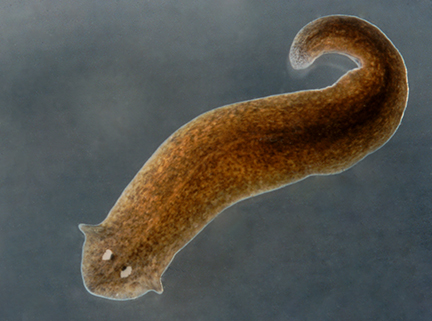
Planaria belong to the phylum Platyhelminthes and are usually found in freshwater environments such as ponds streams and lakes. Their appearance is simple with soft flat bodies and a triangular head that has two eye spots. Although they look ordinary their internal biology is extraordinary. The secret behind their regeneration ability lies in a special type of stem cell that can transform into any required body part. These cells can replace damaged tissues rebuild organs and even recreate the head or brain.
One of the most surprising facts about planaria is that if you cut a single worm into several pieces each piece can grow into a complete new worm. This includes the regeneration of the nervous system the digestive system and the entire body plan. Scientists have observed that a tiny fragment of planaria as small as one two hundred seventy fifth of the original body can still regenerate into a fully formed animal. This puts planaria among the most efficient regenerators on the planet.
Researchers study planaria to understand how regeneration works at the cellular level. Their stem cells called neoblasts are constantly active and capable of dividing into many types of tissues. This research has important implications for human medicine. By learning how planaria regenerate scientists hope to develop new treatments for injuries neurodegenerative diseases and possibly even ways to encourage human tissues to heal more effectively.
Planaria also have a unique ability related to memory and the brain. Studies show that even after planaria lose their heads they can grow a new brain and still retain certain learned behaviors. This unusual biological feature challenges what scientists know about memory storage and opens new research possibilities.
These flatworms are also interesting from an ecological perspective. They are predators in freshwater ecosystems feeding on small organisms such as protozoa and insect larvae. Their presence is often a sign of a healthy water environment. They move using tiny hair like structures on their body and glide gracefully over surfaces in search of food.
In recent years planaria have become popular in science education and biology demonstrations because of their visible regeneration process. Students and researchers use them to study cellular repair DNA behavior and tissue regrowth. Their simple body structure makes experiments easier while still offering deep scientific insights.
The animal that can regenerate whole bodies continues to fascinate experts and nature enthusiasts. Planaria represent one of nature’s most powerful examples of biological resilience and natural healing. Their ability to rebuild themselves almost endlessly shows how complex and adaptable life can be. For now these tiny flatworms remain a symbol of nature’s surprising abilities and a valuable model in the search for scientific breakthroughs that could benefit future generations.
