




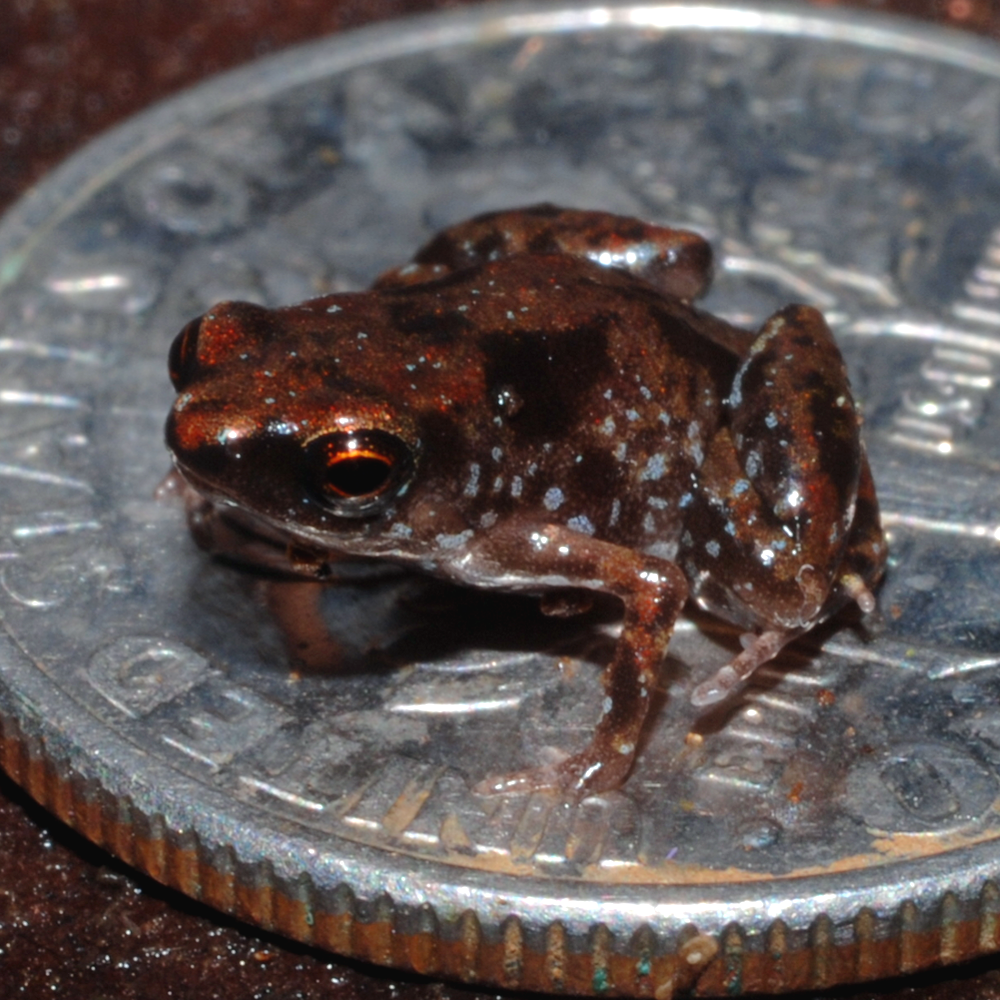
Paedophryne amauensis holds the title as the smallest known vertebrate on Earth. This tiny frog species, discovered in Papua New Guinea in 2009, has fascinated biologists and nature enthusiasts because of its exceptional size and its ability to survive in a complex rainforest ecosystem. With an average length of only 7.7 millimeters, Paedophryne amauensis is smaller than a common housefly and is challenging to notice even when observed up close. Despite its microscopic scale, this species plays an important role in the food chain and represents a remarkable example of evolutionary adaptation.
One of the most interesting aspects of Paedophryne amauensis is how it navigates its environment. Instead of walking or hopping like typical frogs, it uses a form of constant micro jumping, which helps it move through leaf litter on the forest floor. Scientists believe that its miniature size helps it thrive in moist, shaded habitats where other amphibians cannot survive. The leaf litter ecosystem is rich in insects and arthropods, which provide a steady source of food for the species. The frog is also perfectly camouflaged, blending with decaying leaves and soil textures, making it virtually invisible to predators and researchers.
Paedophryne amauensis also stands out because of its unique evolutionary path. Most vertebrates have biological limitations that prevent them from shrinking too small, especially because vertebral structures must support the body. Yet this species seems to have pushed those limits to the extreme. Researchers believe that this tiny frog represents a phenomenon called extreme miniaturization, where animals reduce size over long evolutionary periods to adapt to highly specific microhabitats. Understanding this process helps biologists learn more about anatomical constraints and the evolutionary possibilities of small-bodied animals.
The frog’s discovery is also a reminder of how little is known about the world’s rainforests. Its presence underscores the importance of conserving habitats that may still hide thousands of unidentified species. Scientists found Paedophryne amauensis using acoustic surveys because the frog produces a high pitched chirping call. The call is so sharp that it is easy to confuse it with insect sounds. Only after tracing the audio did researchers uncover the tiny frog, marking a groundbreaking moment in amphibian research. This discovery highlights how advanced techniques are essential for studying areas where traditional exploration methods fall short.
From an ecological perspective, Paedophryne amauensis plays a meaningful role despite its small size. It helps maintain insect populations and contributes to the balance of the forest floor ecosystem. The frog also serves as an indicator species, meaning its presence or absence can reflect the health of its environment. Because amphibians are sensitive to temperature changes, moisture shifts, and pollution, monitoring species like Paedophryne amauensis helps scientists understand the broader impacts of climate change on tropical habitats.
For conservationists and biologists, protecting the species involves preserving the integrity of Papua New Guinea’s forests. Habitat destruction, logging, and climate shifts threaten the delicate ecosystems these frogs rely on. Although the frog is not currently classified as endangered, its extremely limited range makes it vulnerable to environmental disruption. Continued research and conservation programs are essential to ensure that miniature species like Paedophryne amauensis continue to survive and thrive.
Paedophryne amauensis proves that evolutionary wonders do not always come in large forms. Sometimes the most extraordinary species are the smallest ones hidden on the forest floor. Its existence reveals how nature continues to surprise and challenges our understanding of size, adaptation, and survival. As scientists explore more remote habitats, the discovery of this tiny vertebrate serves as a reminder of the limitless mysteries that still await.
