
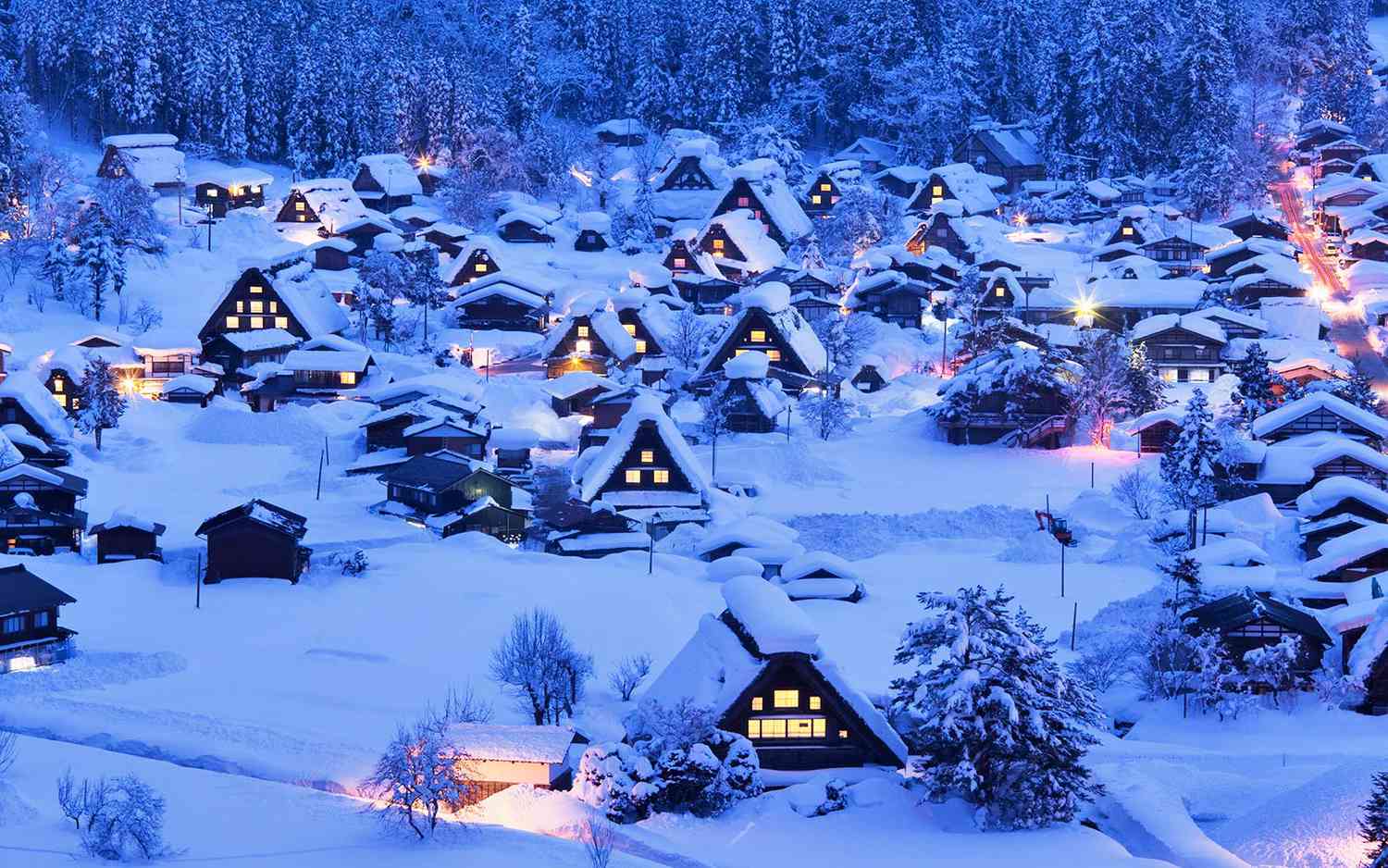
Shirakawa-go is one of Japan’s most enchanting traditional villages, known for its heavy snowfall that blankets the region for nearly eight months a year. Located in the remote mountains of Gifu Prefecture, this UNESCO World Heritage Site is famous for its unique gassho-zukuri farmhouses, peaceful rural atmosphere, and pristine winter scenery that attracts travelers from around the world.
A Village Frozen in Time
Shirakawa-go feels like a step back into old Japan. The village is home to centuries-old wooden houses built in the gassho-zukuri architectural style, which translates to “hands pressed together.” This refers to the steep, triangular roofs designed to withstand massive amounts of snow. These roofs not only prevent collapse under the weight of winter snow but also provide large attic spaces traditionally used for raising silkworms.
The village’s remote location and limited modern development help preserve its historic character, offering visitors a rare glimpse into traditional mountain life.
Snowfall That Shapes the Culture
Shirakawa-go experiences some of the heaviest snowfall in all of Japan. Snow can begin as early as October and last until late May, covering the village in thick layers of white. This extended period of snowfall influences nearly every aspect of local life, from architecture and agriculture to festivals and community traditions.
During winter, the landscape transforms into a serene world of snow-covered rooftops, silent forests, and glowing windows. The contrast between the white snow and the dark wooden houses creates one of Japan’s most iconic winter views.
Winter Light-Up Events
One of the most popular attractions in Shirakawa-go is the annual winter light-up event. On selected evenings, the village illuminates its gassho-zukuri houses, creating a magical spectacle that resembles a snow globe brought to life. Photographers and travelers flock to the hillside viewpoints to capture the warm golden lights shining through the deep winter night.
Attendance is limited to protect the village, so reservations are usually required for viewing areas and parking lots.
What to See and Do
Visitors to Shirakawa-go can explore traditional houses that have been converted into museums, such as the Wada House and Kanda House. These provide insights into daily life, craftsmanship, and the history of the region. The Shirakawa-go Observation Deck offers panoramic views of the entire village, especially stunning during winter.
Local crafts, such as handmade soba noodles, mountain vegetables, and silk products, showcase the cultural heritage shaped by centuries of isolated village life.
How to Reach Shirakawa-go
Although the village was once difficult to access, it is now reachable by bus from major cities like Takayama, Kanazawa, and Toyama. Winter travelers should check weather conditions, as heavy snow can affect transportation schedules. Staying overnight in one of the traditional farmhouses offers an unforgettable experience, especially when snow falls quietly outside.
Best Travel Tips
- Visit during winter for the most iconic scenery, but expect cold temperatures and icy roads.
- Book accommodations early, as traditional farmhouses fill up months in advance.
- Bring warm clothing and waterproof boots due to deep snow.
- Check the schedule for winter light-up events and secure reservations if needed.
Why Shirakawa-go Is a Must-Visit Destination
Shirakawa-go stands out as one of the world’s most picturesque winter villages. Its combination of deep cultural history, unique architecture, and long-lasting snow creates a destination unlike anywhere else in Japan. Travelers seeking tranquility, stunning landscapes, and authentic rural traditions will find Shirakawa-go unforgettable in every season, especially during its long and magical winter.
