




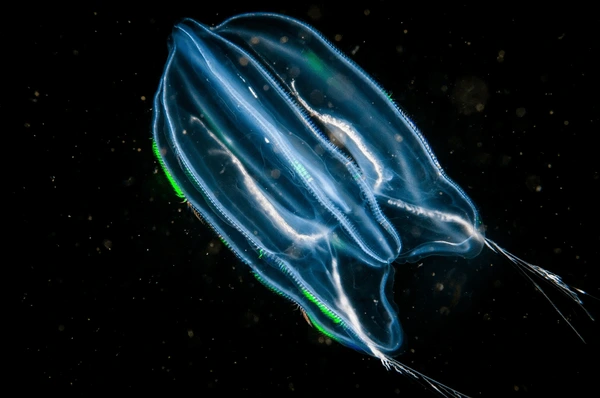
In the dark depths of the ocean, few creatures create a more enchanting spectacle than the comb jelly (also known as ctenophore). This gelatinous marvel appears to emit white light or soft glowing flashes, transforming the night sea into a living light show. Often mistaken for jellyfish, comb jellies are a separate phylum with unique biology that makes them one of nature’s most stunning bioluminescent animals.
What Makes Comb Jellies Glow White Light?
Comb jellies produce bioluminescence – their own natural light – through a chemical reaction involving photoproteins and calcium. When disturbed (by touch, water movement, or predators), special cells called photocytes along their eight “comb rows” flash bright light. This light often appears white or pale blue-green, creating ethereal glowing trails in the water.
- Daytime rainbow magic: Their comb rows (rows of cilia) refract sunlight into dazzling rainbow iridescence – but this is not true bioluminescence.
- Nighttime white glow: The real bioluminescence kicks in in darkness, emitting short, brilliant flashes of white light for defense or communication.
This light is produced by luciferin and luciferase-like proteins, and some species even synthesize their own glowing compounds without relying on diet.
Why Do Comb Jellies Emit Light?
Bioluminescence serves key survival purposes:
- Defense: The sudden flash startles predators or attracts larger threats to scare them away.
- Communication: Possible signaling to mates or other comb jellies.
- Camouflage in deep sea: In pitch-black waters, the light helps them blend or confuse.
Many species, like Mnemiopsis leidyi (the sea walnut), are famous for their vivid displays in coastal waters.
10 Fascinating Facts About Comb Jellies
- Ancient survivors: Evolved over 500 million years ago – older than dinosaurs!
- Not jellyfish: Comb jellies belong to phylum Ctenophora; they lack stinging cells and use sticky colloblasts to catch prey.
- Locomotion masters: The largest animals to swim using only cilia – eight rows beating like combs.
- Bioluminescent experts: Many species glow white-blue when touched; some can regenerate and keep glowing.
- Transparent bodies: 95% water, making them almost invisible except when lit up.
- No brain or heart: Yet they have a simple nervous system and can detect light.
- Invasive superstars: Some species, like Mnemiopsis, have invaded new oceans and disrupted ecosystems.
- Deep-sea dwellers: Some produce light in the twilight zone to hide their glowing meals.
- Hands-on wonder: In places like Florida’s lagoons, you can gently hold them and watch them light up.
- Evolutionary clues: Their genes help scientists understand the origins of light production and even vision.
Comb jellies prove the ocean is full of alien wonders – fragile, translucent, and capable of creating their own light in the darkness.
