


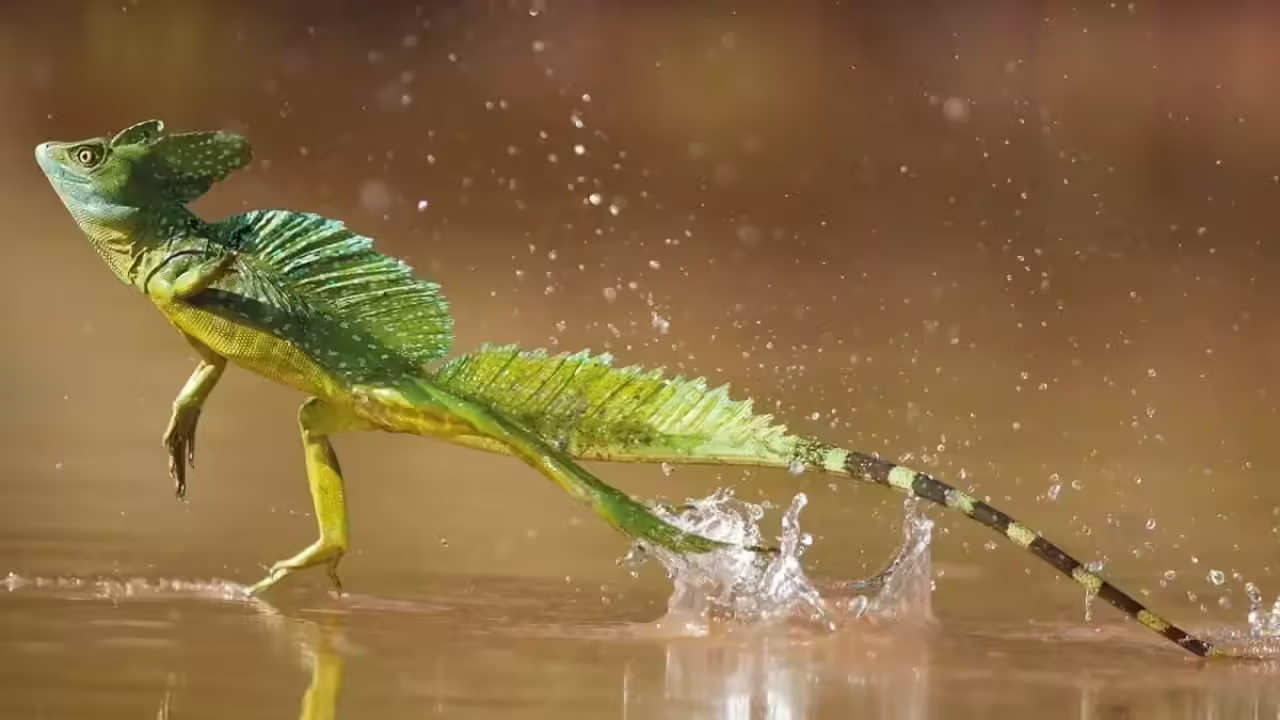
The basilisk lizard, often called the “Jesus Christ lizard,” is one of the most extraordinary reptiles in the world. Its most famous ability is its power to run across the surface of water, a skill that has made the species a subject of fascination for biologists, wildlife photographers, and nature enthusiasts alike. Found mainly in the rainforests of Central America, the basilisk lizard is a perfect example of how evolution shapes animals to thrive in their environments.
How the Basilisk Lizard Runs on Water
The basilisk lizard’s ability to run on water is made possible by a combination of speed, anatomy, and technique. When threatened by predators, the lizard sprints upright on its hind legs, slapping the water with enough force to create a pocket of air beneath each step. This air pocket briefly keeps the lizard from sinking, allowing it to run several meters across rivers, ponds, or streams before diving underwater or climbing onto land.
Their long toes, fringed with tiny scales, increase surface area and help support their weight during each step. Young basilisk lizards are especially fast and lightweight, allowing them to run even farther across water than adults.
Physical Characteristics
Basilisk lizards are slender, agile reptiles with bright green, brown, or olive-colored bodies. Males often have tall head crests and back fins that give them a dragon-like appearance. Their long tails make up most of their body length and help them balance when running upright.
Most species grow between 60 and 90 centimeters, including the tail. They are excellent climbers and swimmers, making them well adapted to life in dense tropical forests and riverside habitats.
Habitat and Behavior
Basilisk lizards live near freshwater sources throughout Central America, including Costa Rica, Honduras, Panama, and Nicaragua. They spend most of their time in trees or shrubs close to riverbanks, ready to leap into the water at the first sign of danger.
These reptiles are omnivores, feeding on insects, small fish, fruits, flowers, and even small vertebrates. Their ability to escape predators by running on water plays a crucial role in their survival.
Why the Basilisk Lizard Runs on Water
Running on water is primarily an escape strategy. Predators such as birds, snakes, and larger reptiles often hunt basilisk lizards. Instead of relying solely on climbing or swimming, these lizards use their unique ability to outpace threats on an unexpected surface. This rapid, unpredictable movement gives them an advantage during chase situations.
Reproduction and Life Cycle
Female basilisk lizards lay multiple clutches of eggs each year, typically burying them in warm, sandy soil near forest floors. The eggs hatch after several weeks, and the young lizards are independent from birth. Juveniles are incredibly agile and rely heavily on their water-running ability to avoid predators in their early months.
Conservation Status
Most basilisk species are not currently endangered, but habitat loss from deforestation poses a long-term threat. As Central American rainforests continue to shrink, the natural ecosystems that support these lizards face increasing pressures. Conservation efforts focused on forest preservation are crucial to maintaining healthy basilisk populations.
Why the Basilisk Lizard Fascinates Scientists
The basilisk lizard is a prime example of biomechanical efficiency in nature. Researchers study it to understand how animals can manipulate physical forces to perform remarkable feats. Its ability to run on water has inspired robotics research, including the development of machines that mimic the lizard’s movements on liquid surfaces.
